
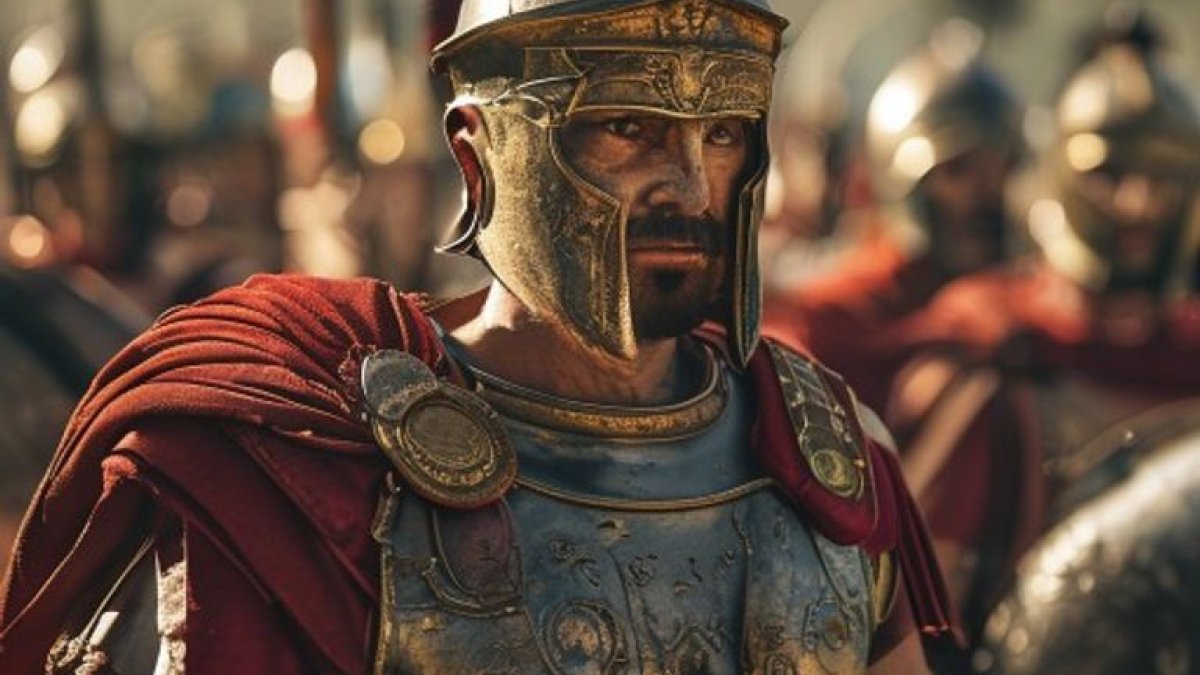
In the annals of Roman history, few conflicts encapsulate the brutal cost of imperial ambition as profoundly as the Battle of Mursa Major. Fought on September 28, 351 AD, near the city of Mursa (modern-day Osijek, Croatia), this titanic clash between the forces of Emperor Constantius II and the usurper Magnentius stands as one of the bloodiest engagements ever recorded in the Roman world. It was a fratricidal struggle that saw Roman legionaries arrayed against their compatriots, with casualties reaching staggering numbers, weakening the empire’s military strength against external threats for decades to come. While Constantius II emerged victorious, solidifying his claim to the throne, the victory came at a devastating price, leaving an indelible scar on the Late Roman Empire and highlighting the perilous instability of an empire fractured by internal strife.
The Seeds of Conflict: Magnentius’ Usurpation
The Tyranny of Constans
The stage for the monumental clash at Mursa Major was set by the growing unpopularity of Emperor Constans, the younger brother of Constantius II. Constans, who ruled the Western Roman Empire, had alienated both the civilian populace and the military elite through his alleged tyranny, moral failings, and favoritism. His oppressive rule created a vacuum of loyalty, ripe for exploitation by an ambitious figure.
Magnentius Rises
It was amidst this discontent that Flavius Magnus Magnentius, a commander of the Ioviani and Herculiani guard regiments, seized his opportunity. In January 350 AD, Magnentius orchestrated a coup in Augustodunum (Autun, Gaul), proclaiming himself emperor. The swiftness and widespread support for his usurpation shocked the imperial court. Magnentius quickly secured control over Gaul, Hispania, Britannia, and Africa, effectively challenging Constantius II’s sole authority over the vast Roman world. This direct affront ignited a devastating civil war, setting two powerful Roman armies on a collision course.
The Armies Converge: Strategy and Strength
Assembling Imperial Might
As Constantius II marshaled his forces from the East, Magnentius consolidated his control in the West. Both emperors understood the decisive nature of the impending conflict and assembled armies of unprecedented scale for a civil war. Constantius, commanding the larger and arguably better-disciplined Eastern legions, was reputed to have around 80,000 to 100,000 men. His forces included heavy cavalry units, particularly the formidable cataphracts, armored horsemen equipped with lances, which would prove crucial.
The Western Challenge
Magnentius, though outnumbered, led a veteran army of approximately 50,000 to 70,000 soldiers, largely drawn from the Western legions, renowned for their martial prowess. His forces included significant contingents of Gallic and Germanic auxiliaries, as well as a strong infantry core. The city of Mursa, strategically located on the Drava River in Pannonia, became the inevitable point of confrontation. Its position controlled vital routes, and a victory there would grant immense strategic advantage.
The Day of Carnage: A Brother’s War
Prelude to Battle
On September 28, 351 AD, the two Roman armies clashed outside Mursa. Constantius II, known for his cautious nature and religious fervor, spent much of the battle in a nearby church, praying for divine intervention, leaving the direct command to his generals. Magnentius, on the other hand, actively led his troops, fighting bravely at the front lines.
The Bloody Engagement
The battle was a brutal, protracted affair, lasting from dawn until late into the night. It began with fierce cavalry engagements, where Constantius’s cataphracts reportedly broke Magnentius’s lighter cavalry. The main infantry lines then met in a horrific melee. The sheer numbers involved meant that the fighting was hand-to-hand, relentless, and unforgiving. Accounts describe rivers running red with blood and fields strewn with bodies. Ultimately, the superior numbers and strategic deployment of Constantius’s Eastern forces, combined with a crucial flanking maneuver, began to turn the tide. Magnentius’s army was eventually routed, suffering catastrophic losses.
Fleeing the Field
Magnentius himself narrowly escaped the battlefield, riding for his life as his army disintegrated. The scale of the defeat for the usurper was absolute, but the cost to the victor was almost equally devastating.
A Pyrrhic Triumph and Lasting Scars
Staggering Casualties
The victory for Constantius II was undeniable, yet it came at an appalling cost. Contemporary sources, though possibly exaggerated, claim that as many as 50,000 to 54,000 Roman soldiers perished in the Battle of Mursa Major. Even conservative estimates place the combined losses between 30,000 and 40,000 men. These were not barbarian invaders, but the professional soldiers of the Roman Empire – experienced legionaries, cavalrymen, and auxiliaries whose lives were extinguished in a single, fratricidal day. This immense depletion of manpower severely weakened the empire’s ability to defend its frontiers against the burgeoning threats from the Goths, Alamanni, and Sassanid Persians.
The End of Magnentius
Magnentius continued his resistance for another two years, but his army was fatally crippled at Mursa. After further defeats, he committed suicide in August 353 AD, bringing an end to the civil war. While Constantius II finally achieved sole rule over the Roman world, the military vacuum created by Mursa Major had profound long-term implications, contributing to the instability that characterized the later Roman Empire and foreshadowing its ultimate decline.
Frequently Asked Questions
What caused the civil war leading to the Battle of Mursa Major?
The civil war was primarily sparked by the usurpation of Magnentius, who rebelled against the unpopular Western Emperor Constans. Following Constans’s assassination, Magnentius claimed the throne, challenging the authority of Constantius II, Constans’s surviving brother and Emperor of the East.
Who were the main commanders at Mursa Major?
The primary commanders were Emperor Constantius II, leading the Eastern Roman forces, and the usurper Magnentius, commanding the Western Roman legions. While Constantius II largely remained in prayer, his generals directed the battle, while Magnentius was actively involved in the fighting.
What were the immediate consequences of the battle for Constantius II?
Constantius II secured a decisive, though extremely costly, victory, solidifying his claim as the sole legitimate emperor. The battle severely crippled Magnentius’s forces, ultimately leading to his suicide two years later. However, Constantius’s triumph came at the expense of tens of thousands of Roman lives.
How did the Battle of Mursa Major affect the long-term stability of the Roman Empire?
The immense loss of Roman manpower, particularly experienced soldiers, significantly weakened the empire’s defensive capabilities. This depletion made the empire more vulnerable to external threats from barbarian tribes along its frontiers and the Sassanid Persians in the East, contributing to the broader military and political instability of Late Antiquity.
Where did the Battle of Mursa Major take place?
The Battle of Mursa Major was fought near the city of Mursa, which is modern-day Osijek in Croatia. This strategic location in Pannonia was crucial for controlling vital routes in the Roman Empire.
Related posts:
 Constantius II and the Diplomacy of Antioch: Rome Meets Persia in 358 AD
 Valentinian I on the Rhine: Fortifying the Empire’s Northern Shield, 370 AD
 The Vandal Sack of Rome in 455 CE: Genseric’s Forty-Day Plunder and Its Lasting Impact
 The Antonine Plague: The Invisible Enemy That Shook the Roman Empire