The mid-2nd century AD witnessed the Roman Empire under the unique co-emperorship of Marcus Aurelius and Lucius Verus, an era often celebrated as the golden age of the Pax Romana, yet fraught with external pressures. Among the most significant challenges was the protracted conflict on Rome’s eastern frontier, culminating in the Lucius Verus Parthian War (161–166 AD). This monumental struggle, fought across the vast and often unforgiving landscapes of Mesopotamia and Armenia, represented a crucial test of Roman military might and imperial resolve against its perennial rival, the Parthian Empire. While the war ultimately ended in a resounding Roman victory, expanding Rome’s influence and reinforcing its prestige in the East, it unknowingly brought a far more insidious enemy back to the heart of the empire: the Antonine Plague. Understanding this campaign is not merely about appreciating Roman military prowess, but also recognizing how seemingly glorious triumphs can sow the seeds of future widespread devastation, impacting the empire’s demographic, economic, and social fabric for decades to come, thereby marking a complex turning point in Roman history.
Origins of the Conflict: Parthian Aggression
The longstanding rivalry between the Roman and Parthian Empires was characterized by intermittent warfare over control of client kingdoms, particularly Armenia. In AD 161, upon the ascension of Marcus Aurelius and Lucius Verus, the Parthian King Vologases IV seized the opportunity presented by the imperial transition. He invaded Armenia, replacing the Roman client king with his own appointee, and then launched a devastating assault into Roman Syria. The initial Parthian incursions were highly successful, inflicting a heavy defeat on a Roman legion at Elegeia and threatening the stability of Rome’s entire eastern frontier. This overt act of aggression could not be ignored, demanding a strong and decisive Roman response to restore imperial authority and prestige.
Lucius Verus, the junior co-emperor, was specifically dispatched to the East to lead the Roman forces. While Marcus Aurelius remained in Rome to manage the broader affairs of the empire, Verus’s presence was crucial for rallying the legions and coordinating the counter-offensive. His mission was not just to repel the invaders but to push deep into Parthian territory, aiming to deliver a decisive blow that would secure Rome’s eastern borders for years to come. The scale of the Parthian attack underscored the urgency and danger of the situation, setting the stage for one of the most significant Roman military campaigns of the 2nd century AD.
The Campaign Unfolds: Roman Advance and Leadership
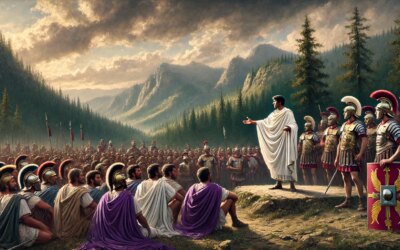
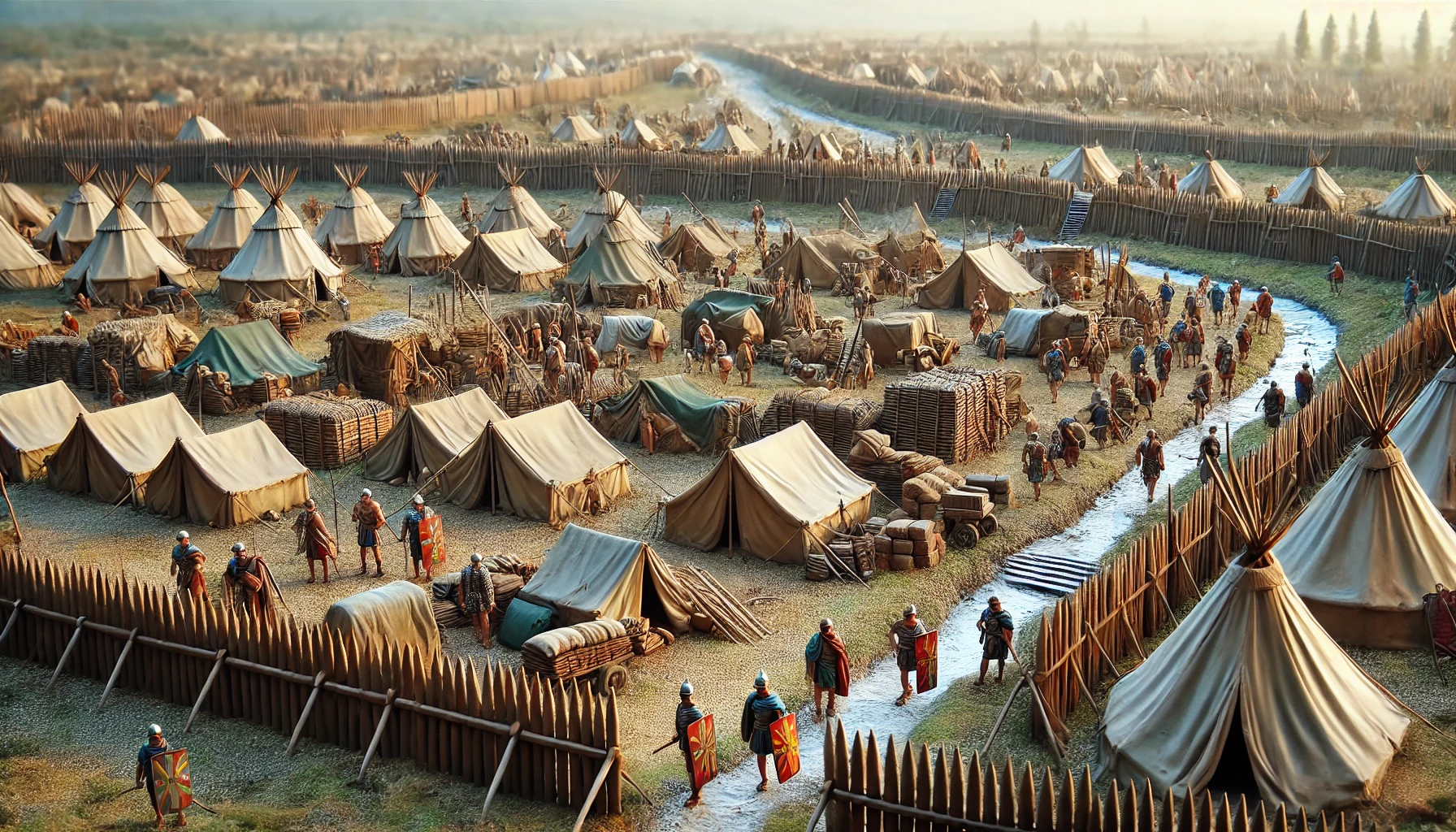
Lucius Verus established his headquarters at Antioch and later at Epheus, overseeing the intricate preparations for war. Despite some initial challenges and a reputation for enjoying the luxurious aspects of his eastern assignment, Verus surrounded himself with highly capable generals. Chief among them was Gaius Avidius Cassius, a brilliant military strategist who would prove instrumental in the Roman triumph. Under Cassius’s leadership, the Roman legions were reorganized, retrained, and reinforced, transforming them into an effective fighting force ready to confront the Parthian army on their home ground.
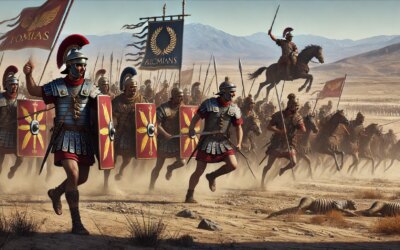
The Roman advance began in earnest around 163 AD. Legions under various commanders, including Statius Priscus and Avidius Cassius, launched a multi-pronged invasion. Statius Priscus successfully campaigned in Armenia, restoring Roman control and capturing the Parthian capital of Artaxata. Meanwhile, Cassius led the main thrust into Mesopotamia, systematically defeating Parthian forces and capturing key cities. The Roman tactics involved disciplined legionary assaults combined with effective logistical support, enabling them to overcome the vast distances and formidable Parthian cavalry.
The Sack of Ctesiphon and Roman Victory
The pinnacle of the Lucius Verus Parthian War came with the Roman invasion of Parthia proper. In AD 165, Avidius Cassius led his legions deep into Mesopotamia, pushing towards the Parthian capital, Ctesiphon. Ctesiphon, a grand and strategic city on the Tigris River, represented the heart of the Parthian Empire. After a successful siege, the city was captured and thoroughly sacked by the Roman forces. This was a monumental achievement, echoing earlier Roman triumphs over the Parthians and severely damaging the Parthian King Vologases IV’s authority and prestige.
Following the sack of Ctesiphon, the Roman army continued its advance, reaching as far as Media before the campaign concluded. The Romans established new client states and fortified their positions in northern Mesopotamia, effectively extending their imperial frontier. Lucius Verus, returning to Rome in 166 AD, celebrated a magnificent triumph alongside Marcus Aurelius, bearing the honorary title ‘Parthicus Maximus’. The victory was complete: Roman influence was firmly re-established in Armenia, Mesopotamia was subjugated, and the Parthian threat was, for a time, neutralized. New Roman provinces were also created, further solidifying the gains.
The Unintended Consequence: The Antonine Plague
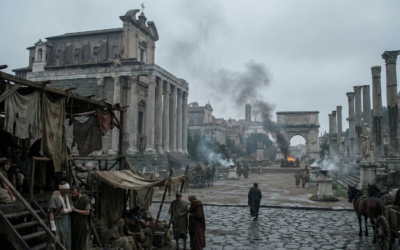
While the military victory of the Lucius Verus Parthian War was undeniable, it came at an unforeseen and catastrophic cost. As the victorious Roman legions returned from the East in 166 AD, they unwittingly carried with them a deadly contagion – now widely believed to be smallpox or measles. This disease, which originated in the East, became known as the Antonine Plague (or Plague of Galen, after the physician who described it). The plague rapidly spread throughout the Roman Empire, facilitated by the very networks of communication and movement that Rome had built.
The impact of the Antonine Plague was devastating, leading to widespread sickness and death. It significantly depopulated cities, ravaged the military, and caused severe economic disruption. Estimates suggest that millions may have died, profoundly affecting the empire’s manpower, agricultural output, and administrative capacity. This ‘hidden peril’ overshadowed the glory of the Parthian triumph, marking a turning point from which the Roman Empire arguably never fully recovered its demographic strength, thus initiating a period of increased vulnerability that would manifest in later crises.
Frequently Asked Questions
Who were the main Roman emperors during the Parthian War of Lucius Verus?
The main Roman emperors were the co-augusti, Marcus Aurelius and Lucius Verus. Lucius Verus was specifically put in command of the eastern campaign, while Marcus Aurelius managed the empire from Rome.
What was the primary cause of the Lucius Verus Parthian War?
The war was initiated by Parthian aggression. King Vologases IV of Parthia invaded the Roman client kingdom of Armenia and then Roman Syria in 161 AD, challenging Roman imperial authority on its eastern frontier.
What was the most significant military outcome of the Roman victory?
The most significant military outcome was the decisive defeat of the Parthian Empire, including the capture and sack of its capital, Ctesiphon, and the re-establishment of Roman control over Armenia and parts of Mesopotamia.
How did the Lucius Verus Parthian War impact the Roman Empire beyond military gains?
The most profound impact was the unwitting introduction of the Antonine Plague into the Roman Empire. The returning legions brought the disease, which then devastated the population, military, and economy for decades.
Which Roman general played a crucial role in the campaign?
Gaius Avidius Cassius was a particularly crucial Roman general during the campaign. He led the main thrust into Mesopotamia and was responsible for many of the Roman victories, including the sack of Ctesiphon.