
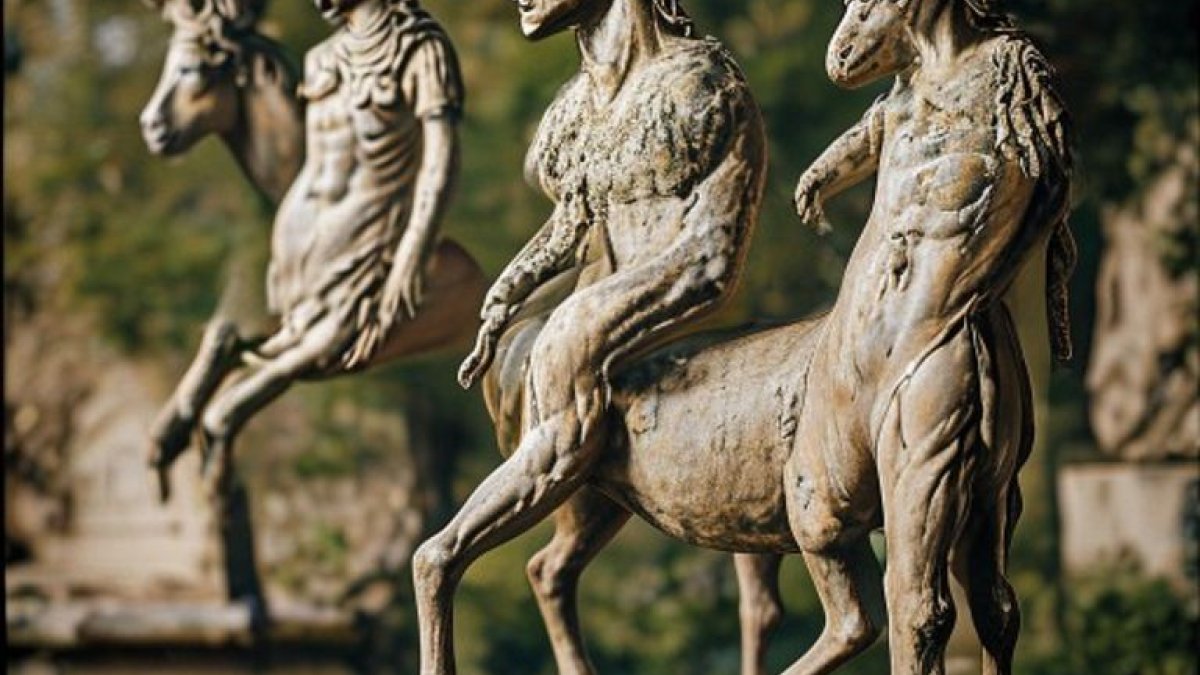
Hadrian’s Villa, a sprawling imperial retreat nestled in the hills near Tivoli, has long been a treasure trove of ancient Roman art and architecture, captivating scholars, artists, and excavators for centuries. In the 18th century, as Europe embarked on the Grand Tour and a fervent interest in classical antiquity blossomed, the villa became a focal point for ambitious archaeological endeavors. Amidst these efforts, one particular find would capture the imagination of the age and profoundly influence the nascent Neoclassical movement: the remarkable Furietti Centaurs discovery. Unearthed around 1736 under the patronage of Cardinal Alessandro Furietti, these exquisite marble sculptures not only offered a vivid glimpse into Roman artistic mastery but also underscored the enduring allure of classical mythology, cementing their place as iconic examples of ancient craftsmanship that continue to inspire awe.
The Grandeur of Hadrian’s Villa: A Canvas for Discovery
Hadrian’s Villa, constructed in the 2nd century AD by Emperor Hadrian, was an unparalleled architectural complex, designed to replicate and integrate various wonders of the Roman world and beyond. This vast estate, encompassing palaces, baths, theaters, temples, and gardens, served as a personal sanctuary and administrative center for the emperor. By the 18th century, while much of its former glory lay in ruins, the sheer scale and known artistic richness of the site made it a magnet for antiquarians and collectors. Its scattered fragments and buried treasures hinted at a wealth of classical art awaiting rediscovery, providing a fertile ground for significant finds that would shape modern understanding of Roman aesthetics.
Cardinal Furietti’s Ambition: The Quest for Antiquities
Cardinal Alessandro Furietti (1684–1764) was a prominent Italian prelate, humanist, and avid collector of antiquities during a period when the acquisition of classical art was a hallmark of status and intellectual sophistication. Drawn by the promise of Hadrian’s Villa, Furietti initiated extensive excavations on his property within the villa complex, demonstrating the blend of private patronage and academic curiosity that characterized 18th-century archaeology. His relentless pursuit of ancient relics was not merely for personal enrichment but also contributed significantly to the growing body of classical art, paving the way for more systematic approaches to excavation in later decades.
The Furietti Centaurs Discovery: Art and Impact
It was around 1736 that Furietti’s excavations yielded their most celebrated treasures: two exquisite black marble sculptures known as the Furietti Centaurs. These masterpieces depict a ‘Young Centaur’ and an ‘Old Centaur’, both bound by Cupid, symbolizing the mastery of love over both youthful passion and aged wisdom. The sculptures, believed to be Roman copies of 2nd-century BC Hellenistic bronze originals by Aristeas and Papias of Aphrodisias, captivated immediately upon their unearthing. Their dynamic composition, intricate details, and poignant narrative made them instant sensations, offering a profound connection to the artistic achievements of classical antiquity and fueling the emerging Neoclassical appreciation for idealized forms and mythological themes.
Legacy in Marble: The Centaurs’ Enduring Influence
Following their initial Furietti Centaurs discovery, Cardinal Furietti kept the sculptures within his private collection for some time. However, their renown quickly spread across Europe. Upon his death, the Centaurs were acquired by Pope Clement XIII and subsequently moved to the Capitoline Museums in Rome, where they remain a central attraction to this day. Their journey from the earth of Hadrian’s Villa to one of the world’s premier art institutions illustrates their profound aesthetic and historical value. The Centaurs became iconic examples of Roman artistic prowess, widely copied and admired, profoundly influencing sculptors and artists of the Neoclassical era who sought to emulate the beauty and emotional depth of classical works. They continue to be studied for their artistic merit, mythological narrative, and their crucial role in the rediscovery of ancient art.
Frequently Asked Questions
Who discovered the Furietti Centaurs?
The Furietti Centaurs were discovered during excavations funded and overseen by Cardinal Alessandro Furietti, a prominent Italian collector and antiquarian of the 18th century.
Where exactly were the Furietti Centaurs found?
The sculptures were unearthed around 1736 within the ruins of Hadrian’s Villa, specifically on a section of the property owned by Cardinal Furietti near Tivoli, Italy.
What is the artistic significance of the Furietti Centaurs?
The Furietti Centaurs are highly significant for their artistic quality, representing excellent Roman copies of Hellenistic originals. They embody dynamic composition, intricate detailing, and convey profound mythological themes, influencing the Neoclassical movement and demonstrating the enduring appeal of classical art.
What materials are the Furietti Centaurs made of?
The Furietti Centaurs are famously sculpted from high-quality black marble, which contributes to their striking visual impact and distinct aesthetic appeal.
Where can the Furietti Centaurs be seen today?
Today, the Furietti Centaurs are proudly displayed as part of the permanent collection at the Capitoline Museums (Musei Capitolini) in Rome, Italy, where they attract visitors from around the globe.