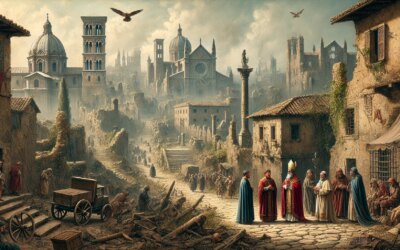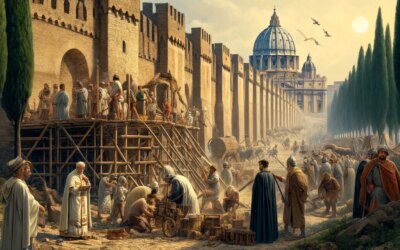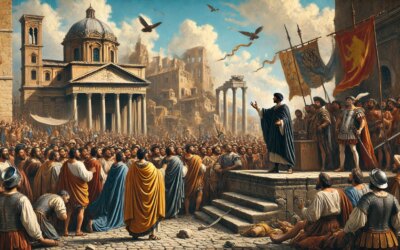
The annals of Roman history are replete with tales of intrigue, power struggles, and extraordinary events, but few can rival the sheer bizarre nature of the Cadaver Synod 897 AD. This grotesque and unprecedented event, which unfolded in Rome during the tumultuous early Middle Ages, saw a deceased pope exhumed, dressed in papal vestments, and put on trial for various alleged offenses. The spectacle of Pope Stephen VI presiding over the posthumous judgment of his predecessor, Formosus, was not merely a macabre curiosity; it was a vivid, if disturbing, illustration of the intense political and theological factions that vied for control of the papacy and the city of Rome itself. This period, often characterized by instability and moral decay within the Holy See, reached a nadir with the Cadaver Synod, an event that shocked contemporaries and continues to fascinate and appall historians centuries later, marking a truly dark and singular chapter in the lengthy saga of the Roman Church.
The Complex Legacy of Pope Formosus
Born in Rome around 816 AD, Formosus was a prominent figure in papal politics long before his elevation to the pontificate. His career was marked by significant diplomatic missions, notably to Bulgaria, and a complex relationship with various factions vying for power. Formosus served as Bishop of Porto and was, at one point, excommunicated by Pope John VIII in 872 AD for allegedly conspiring against the emperor and abandoning his diocese. He was later reinstated by John VIII’s successor, Marinus I. Despite these tumultuous early years, Formosus was elected Pope in 891 AD. His papacy was largely defined by his interventions in the volatile political landscape of the fragmented Carolingian Empire. He crowned Arnulf of Carinthia as Holy Roman Emperor in 896 AD, a move intended to counter the influence of the Italian contender, Guy III of Spoleto, and his son Lambert. This decision, however, entangled the papacy deeply in imperial succession disputes, laying the groundwork for the fierce animosity that would pursue him even beyond the grave. His actions were driven by a desire to restore order and assert papal authority, but they ultimately made him a target for powerful enemies.
Rome’s Tumultuous Political Landscape Under Stephen VI
Following Formosus’ death in April 896 AD, a period of intense instability gripped the papacy. His immediate successor, Boniface VI, reigned for only 15 days, reportedly dying of gout. Stephen VI, who had previously been Bishop of Anagni (a see Formosus had likely conferred upon him), was elevated to the papacy in May 896 AD, allegedly under pressure from the powerful House of Spoleto. This family, led by Lambert of Spoleto and his mother Ageltrude, harbored deep resentment towards Formosus for his support of Arnulf of Carinthia and his perceived betrayal of their imperial ambitions. Stephen VI, therefore, ascended the papal throne in an environment rife with political vendettas and partisan animosity. His papacy became a battleground for these entrenched rivalries. The Spoleto faction, seeking to invalidate Formosus’s actions, particularly the crowning of Arnulf, saw Stephen VI as their instrument. The stage was set for an unprecedented act of judicial vengeance that would disgrace the Holy See and expose the brutal realities of early medieval Roman politics.
The Grotesque Proceedings of the Cadaver Synod
In January of 897 AD, Pope Stephen VI convened an ecclesiastical court in the Basilica of St. John Lateran, an event that would forever be known as the Cadaver Synod (Synodus Horrenda). The deceased Pope Formosus, who had been dead for nine months, was exhumed from his tomb, clad in papal vestments, and seated on a throne to face his accusers. A deacon was appointed to stand beside the corpse and speak on its behalf. The charges against Formosus were numerous and politically motivated:
- Violating canon law by transferring from one see (Porto) to another (Rome).
- Perjury.
- Serving as a bishop while still excommunicated.
- Performing sacred rites after his excommunication.
- Usurping the papacy.
The trial was a gruesome parody of justice. Stephen VI vehemently condemned the silent defendant, demanding answers from the decaying corpse. Unsurprisingly, Formosus was found guilty on all counts. His papacy was retroactively declared null and void. The papal vestments were stripped from the corpse, and the three fingers of his right hand, which he had used for consecrations, were cut off. His body was then dragged through the streets of Rome and thrown into the Tiber River. This horrific spectacle was a clear attempt by the Spoleto faction to delegitimize Formosus’s papacy and all his official acts, including the imperial coronation of Arnulf, and thereby solidify their own power.
The Immediate Aftermath and Lingering Stain on the Papacy
The brazen and sacrilegious nature of the Cadaver Synod elicited a deeply polarized reaction, even among a populace accustomed to political violence. While some, particularly the Spoleto faction, celebrated the verdict, many Romans were appalled by the desecration of a former pope. Public outrage eventually turned against Stephen VI. Within months of the synod, a popular uprising led to his imprisonment and eventual strangulation in August 897 AD. His successor, Romanus, reigned briefly before John IX convened two synods, one in Rome and another in Ravenna, which formally annulled the Cadaver Synod, reinstated Formosus’s acts, and decreed that no such trial of a deceased person could ever take place again.
A Cycle of Retaliation
However, the saga was far from over. Subsequent popes, embroiled in the same political factionalism, would sometimes reinstate or re-annul the Cadaver Synod’s findings, reflecting the shifting tides of power. It took over a decade for Formosus’s reputation and acts to be definitively restored. The Cadaver Synod became a symbol of the “Saeculum Obscurum” (Dark Age) of the Papacy, a period characterized by widespread corruption, political manipulation, and moral degradation within the Church. It irrevocably stained the papacy’s image, highlighting the extent to which secular ambition and personal vendettas could corrupt even the highest spiritual office. The event remains a stark reminder of the fragile balance between spiritual authority and temporal power in early medieval Rome.
Frequently Asked Questions
What was the Cadaver Synod?
The Cadaver Synod was a bizarre and unprecedented ecclesiastical trial held in Rome in 897 AD, where Pope Stephen VI put the exhumed corpse of his predecessor, Pope Formosus, on trial for various charges.
Why was Pope Formosus put on trial after his death?
Pope Formosus was put on trial posthumously primarily due to political vendettas. His successor, Pope Stephen VI, was under the influence of the powerful Spoleto faction, who sought to invalidate Formosus’s acts, particularly his decision to crown Arnulf of Carinthia as Holy Roman Emperor, thereby challenging the Spoleto family’s imperial ambitions.
What was the outcome of the Cadaver Synod?
Formosus’s corpse was found guilty on all charges. His papacy was declared null and void, his papal vestments were stripped, the fingers he used for consecrations were cut off, and his body was dragged through Rome before being thrown into the Tiber River.
How did the Cadaver Synod affect the Papacy?
The Cadaver Synod severely damaged the papacy’s reputation, highlighting the extreme political corruption and factionalism of the era. It led to widespread public outrage, the eventual deposition and strangulation of Pope Stephen VI, and a series of subsequent synods attempting to annul and then re-annul its findings, contributing to a period of papal instability.
Who was Pope Stephen VI?
Pope Stephen VI was the pope who orchestrated the Cadaver Synod in 897 AD. He reigned for a short period (896–897 AD) and is believed to have been heavily influenced by the powerful Spoleto faction, who harbored deep animosity towards his predecessor, Formosus. He was eventually imprisoned and strangled due to public backlash against his actions.