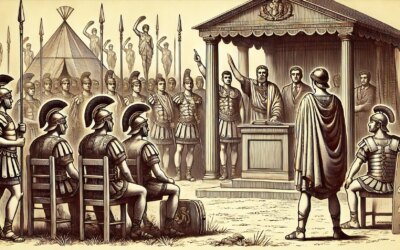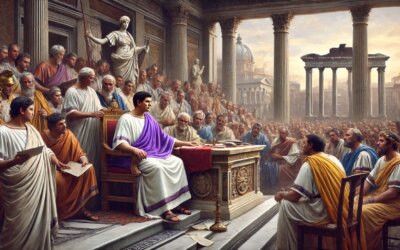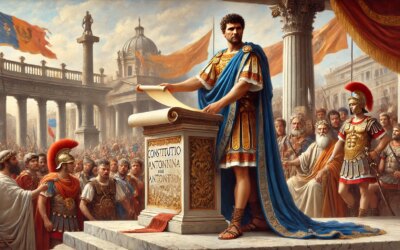

After nearly two decades of devastating conflict, the protracted Gothic War finally concluded in 554 AD, leaving Italy a ravaged landscape. Cities lay in ruins, populations were decimated, and the once-thriving Roman legal and administrative structures had crumbled under the weight of ceaseless warfare. It was against this backdrop of widespread desolation and chaos that Emperor Justinian I, from his distant capital in Constantinople, sought to reassert imperial authority and establish a framework for recovery. His answer came in the form of a sweeping legislative decree known as the Pragmatic Sanction of 554 AD. This pivotal document, issued at the request of Pope Vigilius, was not merely an administrative edict; it was a grand blueprint designed to restore order, reaffirm Roman legal traditions, and integrate Italy firmly back into the Byzantine Empire’s fold. Its provisions touched upon virtually every aspect of Italian life, from religious appointments and land ownership to military administration and economic reconstruction, attempting to bring stability to a land long suffering.
Setting the Stage: Italy After the Gothic War
A Shattered Peninsula
The Gothic War (535–554 AD) had been an unparalleled catastrophe for Italy. What began as an imperial effort to reclaim the ancestral heartland of the Roman Empire spiraled into a grueling, twenty-year struggle that laid waste to the peninsula. Cities like Rome itself, which changed hands multiple times, suffered immense damage, while agricultural lands lay fallow and trade networks collapsed. The populace, already strained by famine and plague, faced an uncertain future under new Byzantine rule.
Byzantine general Narses, who had achieved the decisive victories against the Goths, was tasked with the unenviable role of governor, effectively the first Exarch of Italy. His immediate challenges were immense: securing the remaining pockets of resistance, re-establishing a functioning administration, and initiating the monumental task of rebuilding. Justinian’s Pragmatic Sanction was intended to provide Narses with the legal and political tools necessary to undertake this colossal endeavor.
Re-establishing Order: Key Decrees of the Sanction
Restoring Law and Property
The Pragmatic Sanction of 554 was a comprehensive document addressing numerous facets of Italian society. Its primary aims included:
- Restoration of Property: Lands and estates confiscated by the Goths were to be returned to their original Roman owners, including those belonging to the Church. This was a crucial step in stabilizing the economic elite and winning their loyalty to the new regime.
- Confirmation of Roman Law: The edict formally re-established Roman legal traditions and institutions, replacing the Gothic legal framework. It mandated the application of Justinian’s own Corpus Juris Civilis in Italy, signifying a complete legal re-integration with the Eastern Empire.
- Clerical Appointments: The election of bishops and other clerical offices was to follow established canonical procedures, ensuring ecclesiastical order and asserting imperial oversight over the influential Church.
- Taxation and Administration: While aiming for economic recovery, the Sanction also formalized the Byzantine tax system and administrative structures. Magistrates and governors were appointed directly by the emperor, centralizing power.
- Education and Public Works: Provisions were made for the rebuilding of public infrastructure, such as aqueducts and walls, and for the restoration of public education, though progress on these fronts would be slow given the widespread devastation.
These provisions were a clear attempt to rewind the clock to the pre-Gothic conquest era, erasing the impact of barbarian rule and firmly planting Byzantine imperial authority.
Narses’ Implementation and Italy’s Byzantine Future
Governor and Rebuilder
General Narses, having brilliantly concluded the military phase of the Gothic War, now faced the equally daunting task of implementing the Pragmatic Sanction. His administration from 554 AD onwards was marked by efforts to stabilize the peninsula:
- Security: Narses continued to campaign against lingering Gothic resistance and various barbarian incursions, particularly from the Franks and Alamanni, ensuring the nascent Byzantine peace. His effective military control was vital for any form of recovery.
- Economic Policy: While the Sanction aimed for economic revival, the reality of Italy’s condition meant that Byzantine taxation was often seen as burdensome. Narses had to balance imperial demands with the desperate need for local recovery.
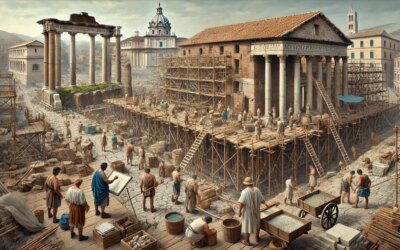
- Infrastructure Repair: Under Narses’ direction, some key infrastructure projects, such as the restoration of Rome’s aqueducts, began. These efforts, though limited by resources, demonstrated a commitment to rebuilding.
The Pragmatic Sanction of 554, coupled with Narses’ capable if sometimes unpopular administration, laid the groundwork for Byzantine Italy. However, its long-term success was hampered by the devastation of the war, recurrent plagues, and most critically, the Lombard invasion in 568 AD, just a few years after Narses’ departure or death. While it successfully re-established imperial legal and administrative norms, the dream of a fully restored, prosperous Roman Italy under Byzantine rule proved fleeting.
Frequently Asked Questions
What was the primary purpose of the Pragmatic Sanction of 554 AD?
The primary purpose of the Pragmatic Sanction was to formally re-establish Roman imperial authority, legal structures, and administrative order in Italy after the devastating Gothic War, integrating the peninsula back into the Byzantine Empire.
Who issued the Pragmatic Sanction and at whose request?
The Pragmatic Sanction was issued by the Byzantine Emperor Justinian I from Constantinople, reportedly at the urgent request of Pope Vigilius, who sought imperial intervention to restore stability to the Church and the region.
How did the Pragmatic Sanction address property rights in Italy?
The Sanction mandated the restoration of lands and estates that had been seized by the Goths back to their original Roman owners, including significant properties belonging to the Catholic Church, thereby aiming to stabilize the socio-economic structure.
What was Narses’ role in the implementation of the Pragmatic Sanction?
Narses, the successful Byzantine general who defeated the Goths, became the first Exarch of Italy. He was responsible for enforcing the provisions of the Pragmatic Sanction, securing the province, and overseeing the initial phases of administrative and infrastructural reconstruction.
Did the Pragmatic Sanction successfully restore Italy to its former glory?
While the Pragmatic Sanction re-established legal and administrative order, Italy had suffered immense devastation. Its long-term impact was cut short by the devastating Lombard invasion in 568 AD, which fractured Byzantine control and prevented a full return to pre-war prosperity.