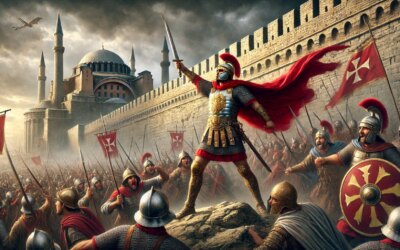
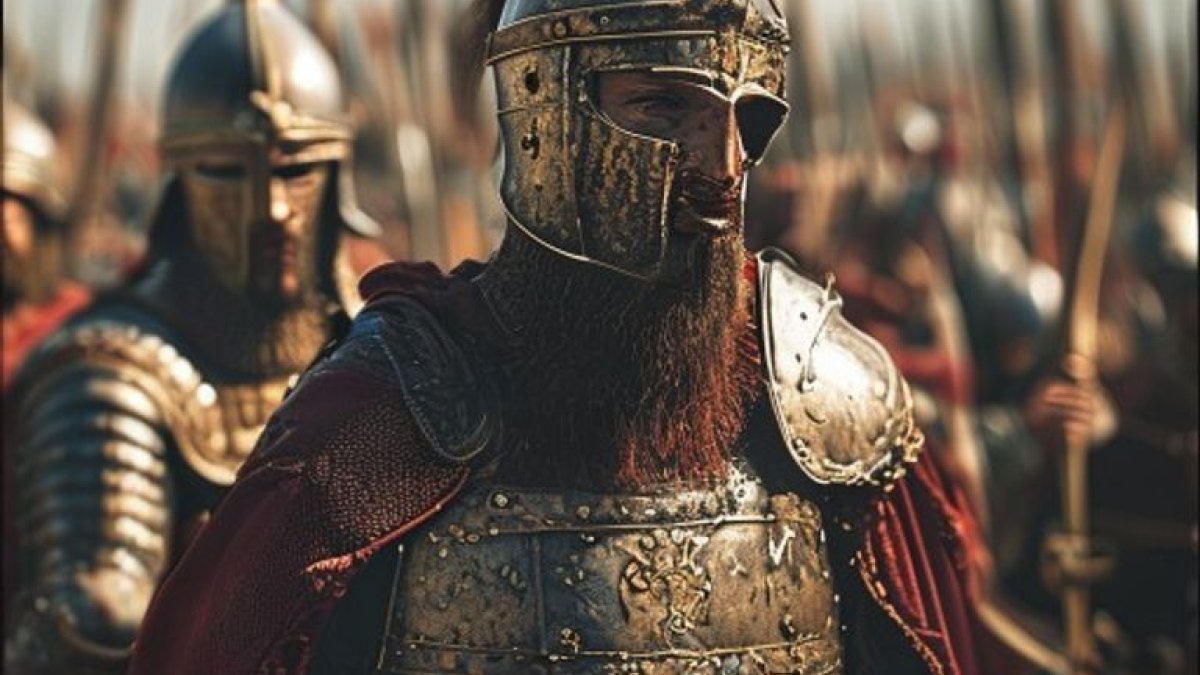
In the tumultuous landscape of 11th-century Southern Italy, a clash of empires and nascent powers was unfolding, forever altering the geopolitical map of the Mediterranean. One of the defining moments in this struggle for regional dominance was the decisive Battle of Olivento 1041. This engagement, fought between the forces of the Byzantine Empire and a coalition of Lombard rebels and Norman mercenaries, represented a turning point in the fortunes of the Eastern Roman Empire’s dwindling Italian possessions. As the Byzantines, still clinging to their Roman legacy, faced internal unrest and external aggression, the Normans were steadily consolidating their formidable presence, transitioning from hired swords to powerful rulers. The outcome of this particular battle would not only establish the Normans as an undeniable force but also initiate a cascade of events leading to their eventual dominion over much of Southern Italy and Sicily, shaping the region for centuries to come and marking a significant chapter in the decline of Byzantine influence in the West.
Byzantine Presence in Southern Italy: A Fading Legacy
By the early 11th century, the Byzantine Empire, the direct continuation of the Roman Empire in the East, maintained a precarious hold over parts of Southern Italy, primarily the theme of Langobardia, encompassing much of Apulia and Calabria. This region, often referred to as Magna Graecia, had been a Roman and then Byzantine stronghold for centuries, a crucial bridge between East and West. However, internal strife, coupled with constant pressure from Lombard princes, the Holy Roman Empire, and emerging Saracen raids from Sicily, gradually eroded Constantinople’s control. The local population was a complex mix of Greeks, Lombards, and other groups, often disaffected with Byzantine administration and heavy taxation. This fertile ground of discontent proved ripe for opportunistic outsiders.
The Role of Mercenaries
The Byzantines frequently employed mercenaries, including Norsemen (Varangians) and Normans, to bolster their armies. Ironically, it was these very Norman mercenaries, initially arriving in small numbers in the early 1000s, who would eventually become their undoing. Skilled warriors, they quickly learned the political intricacies of the region, often switching allegiances or demanding their own territories as payment. The Byzantine catapan (governor) of Italy at the time, Michael Dokeianos, faced a challenging task, attempting to quell a Lombard rebellion that found ready allies in these ambitious Norman adventurers.
The Clash at Olivento: Norman and Lombard Victory
The Lombard rebellion, led by figures like Arduin of Melfi, escalated in the spring of 1041. Having secured significant Norman mercenary support, the rebels confronted the Byzantine forces. The critical engagement took place near the Olivento River, a tributary of the Ofanto, in modern-day Apulia. The Byzantine army, under the command of Michael Dokeianos, was composed of various units, including Greek regulars, local levies, and a contingent of Varangian Guards. Facing them was a smaller, but highly motivated and tactically agile force of Lombard and Norman warriors. The Norman knights, renowned for their heavy cavalry charges, were particularly effective.
Tactics and Outcome
The exact details of the battle are sparse, but chronicles suggest the Norman cavalry played a decisive role, breaking the Byzantine lines. Despite the Varangians’ legendary ferocity, they could not stem the tide of the Norman assault. The Byzantines suffered a devastating defeat, with Michael Dokeianos himself captured and later executed. This victory, while perhaps not the largest in terms of sheer numbers, was monumental in its psychological and strategic impact. It demonstrated the vulnerability of Byzantine rule and the formidable power of the Normans, who, despite being relatively few, leveraged their martial prowess and tactical acumen to great effect.
Consequences and the Norman Hegemony
The Battle of Olivento 1041 was far more than just another skirmish; it was a watershed moment for Byzantine power in Italy. The immediate aftermath saw further Norman advances, solidifying their control over significant portions of Apulia. This victory emboldened other Norman groups and accelerated their settlement in the region. Over the next few decades, under leaders such as Robert Guiscard and his brothers, the Normans systematically dismantled Byzantine authority. They captured major Byzantine cities like Bari (1071), ending nearly 500 years of Eastern Roman rule in the city, and eventually conquered Sicily from the Saracens.
A New Era for Southern Italy
The Norman ascendancy brought profound changes to Southern Italy. They established a new, unified political entity, culminating in the Kingdom of Sicily, which encompassed the entire southern peninsula and the island. This kingdom, with its unique blend of Norman, Lombard, Greek, and Arab cultural influences, became one of the most dynamic and prosperous states in medieval Europe. The Battle of Olivento thus stands as a crucial early step in this grand transformation, illustrating how a seemingly peripheral clash could precipitate a complete redrawing of regional power dynamics and contribute to the enduring legacy of the Roman world through its successor states.
Frequently Asked Questions
Who were the main combatants in the Battle of Olivento?
The main combatants were the Byzantine Empire’s forces, led by Catapan Michael Dokeianos, against a coalition of Lombard rebels and Norman mercenaries, including figures like Arduin of Melfi.
What was the significance of the Battle of Olivento 1041?
The Battle of Olivento 1041 was significant as it marked a decisive victory for the Norman mercenaries and Lombard rebels over the Byzantine Empire in Southern Italy. It signaled the growing vulnerability of Byzantine rule and greatly accelerated the Norman conquest and establishment of their own power in the region.
Where is Olivento located?
The Battle of Olivento took place near the Olivento River, a tributary of the Ofanto River, in the region of Apulia, which is located in southeastern Italy.
How did the Normans come to be in Southern Italy?
Normans first arrived in Southern Italy as pilgrims returning from Jerusalem in the early 11th century. Their martial skills quickly led to their employment as mercenaries by various local powers, including Lombard princes and the Byzantines, often fighting against each other or against Saracen invaders. Over time, they began to carve out their own territories.
What was the long-term impact of Norman victories in Southern Italy?
The long-term impact was the complete displacement of Byzantine and Saracen rule in Southern Italy and Sicily, leading to the establishment of the Norman Kingdom of Sicily. This kingdom was a major medieval power, renowned for its unique blend of cultures and its sophisticated administration, profoundly shaping the history and identity of the region.