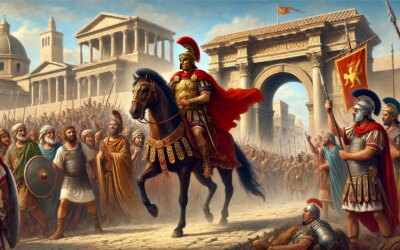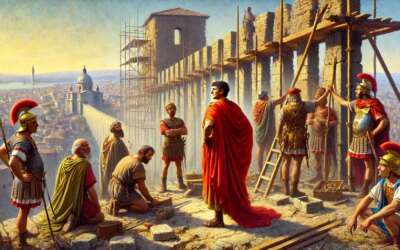
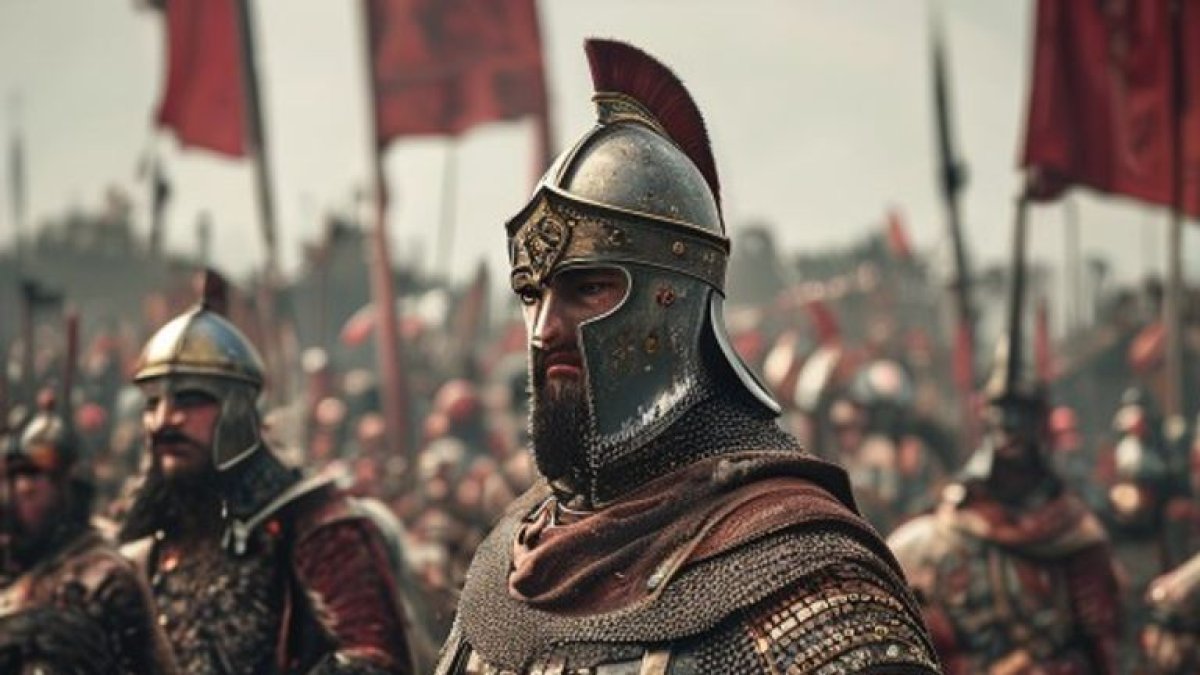
The year 568 AD marked a catastrophic turning point for the already beleaguered Italian peninsula. Barely a decade after Emperor Justinian I had seemingly restored Roman authority through the grueling Gothic War, a new and far more persistent wave of invaders swept across the Alps: the Lombards. This pivotal event, known as the Lombard Invasion of Italy, irrevocably altered the demographic, political, and cultural landscape of the region, ending any realistic hope of a unified imperial restoration in the West. Under the leadership of King Alboin, these Germanic warriors, along with their allies, descended upon a land exhausted by two decades of conflict and ravaged by the Justinianic Plague. The Byzantine Empire, weakened and overstretched, found itself ill-prepared to defend its newly re-acquired Italian territories from this formidable incursion, leading to a long and fragmented period for the former heartland of the Roman Empire. The immediate aftermath of Justinian’s death in 565 AD had left a power vacuum and a financially depleted state, creating fertile ground for this dramatic shift in power.
Italy After Justinian: A Vulnerable Prize
The Aftermath of the Gothic War
By the time Justinian I died in 565 AD, Italy was a shadow of its former self. The two-decade-long Gothic War (535-554 AD), fought between the Byzantine Empire and the Ostrogoths, had devastated the peninsula. Cities lay in ruins, the population had plummeted due to warfare, famine, and the devastating Justinianic Plague (which began in 541-542 AD and had recurrent outbreaks). Despite the Byzantine victory and the promulgation of the Pragmatic Sanction in 554 AD, which aimed to re-establish imperial administration, the reality on the ground was one of widespread desolation and administrative fragility.
Imperial Neglect and Overstretch
Emperor Justin II, Justinian’s successor, inherited an empire that was financially exhausted and militarily overstretched. Resources were being diverted to defend the eastern frontier against the Sassanid Persians and to deal with Avars and Slavs in the Balkans. Italy, while symbolically important, became a secondary concern. The few Byzantine garrisons were often underpaid and undermanned, struggling to maintain order in a fragmented and depopulated land. This critical weakness would prove fatal when faced with a new, large-scale invasion.
The Lombard Migration and Alboin’s Leadership
The Origins of the Lombards
The Lombards were a Germanic people who had migrated from Scandinavia to central Europe, eventually settling in Pannonia (modern-day Hungary) by the mid-6th century. They had a fearsome reputation as warriors and had previously served as allies or mercenaries for both the Byzantines and the Gepids. After defeating the Gepids with Avar assistance, the Lombards under King Alboin began to eye the rich, albeit devastated, lands of Italy.
A Motley Alliance
Alboin did not lead the Lombards into Italy alone. His army was a diverse host, comprising not only Lombards but also other Germanic groups like Saxons, Suebi, and Gepids, as well as a large contingent of Pannonian Avars. This multi-ethnic confederation was drawn by the promise of plunder and new lands, and their sheer numbers and ferocity presented an overwhelming challenge to the fragmented Byzantine defenses.
The Rapid Conquest and Lasting Impact
The Initial Incursion (568 AD)
In the spring of 568 AD, the Lombard hordes crossed the Julian Alps and poured into northern Italy. The Byzantine defenses crumbled swiftly. Important cities like Cividale, Vicenza, Verona, and Milan fell with little resistance. The Exarchate of Ravenna, the center of Byzantine power in Italy, found itself largely cut off. Within a few years, much of northern Italy, including the fertile Po Valley, was under Lombard control, forming the nucleus of the future Kingdom of the Lombards.
A Fragmented Italy
The Lombard invasion did not result in a complete conquest of Italy. Rather, it led to a lasting political fragmentation that would characterize the peninsula for centuries. The Byzantines managed to hold onto significant coastal areas, including Ravenna, Rome, Naples, and parts of southern Italy and Sicily. This division between Lombard-controlled territories and Byzantine-held areas (the “Roman duchies” and the Exarchate) created a complex political mosaic. The Lombard Invasion of Italy effectively shattered the dream of a fully restored Roman Empire in the West and initiated a distinct early medieval period for Italy, profoundly influencing its political, social, and cultural development.
Cultural Transformation
The arrival of the Lombards also brought significant cultural changes. While they gradually adopted elements of Roman culture and Christianity, their presence introduced new Germanic legal traditions and social structures. The long-term interaction and eventual fusion of Roman, Gothic, and Lombard elements would contribute to the unique identity of medieval Italy, distinct from its Byzantine and Frankish neighbors.
Frequently Asked Questions
Who led the Lombard invasion of Italy in 568 AD?
The Lombard invasion was led by King Alboin, who commanded a diverse host of Germanic warriors and their allies, including Saxons and Avars.
What was the state of Italy before the Lombard invasion?
Before the Lombard invasion, Italy was economically devastated and depopulated by the two-decade-long Gothic War and successive outbreaks of the Justinianic Plague. Byzantine control was tenuous and garrisons were stretched thin.
Did the Lombards conquer all of Italy?
No, the Lombards did not conquer all of Italy. They established control over much of the north and central regions, but the Byzantine Empire retained important coastal areas, including Rome, Ravenna, and parts of the south, leading to centuries of political fragmentation.
How did the Lombard invasion impact the Byzantine Empire?
The Lombard invasion represented a significant loss of territory and prestige for the Byzantine Empire, especially after Justinian’s costly reconquest. It further strained imperial resources and solidified the empire’s focus on its eastern and Balkan frontiers, reducing its ability to intervene effectively in the West.
What lasting legacy did the Lombard invasion have on Italy?
The Lombard invasion led to the enduring political fragmentation of Italy, establishing a patchwork of Lombard and Byzantine territories. It introduced new Germanic cultural and legal elements that blended with existing Roman traditions, shaping the unique early medieval identity of the Italian peninsula for centuries to come.