
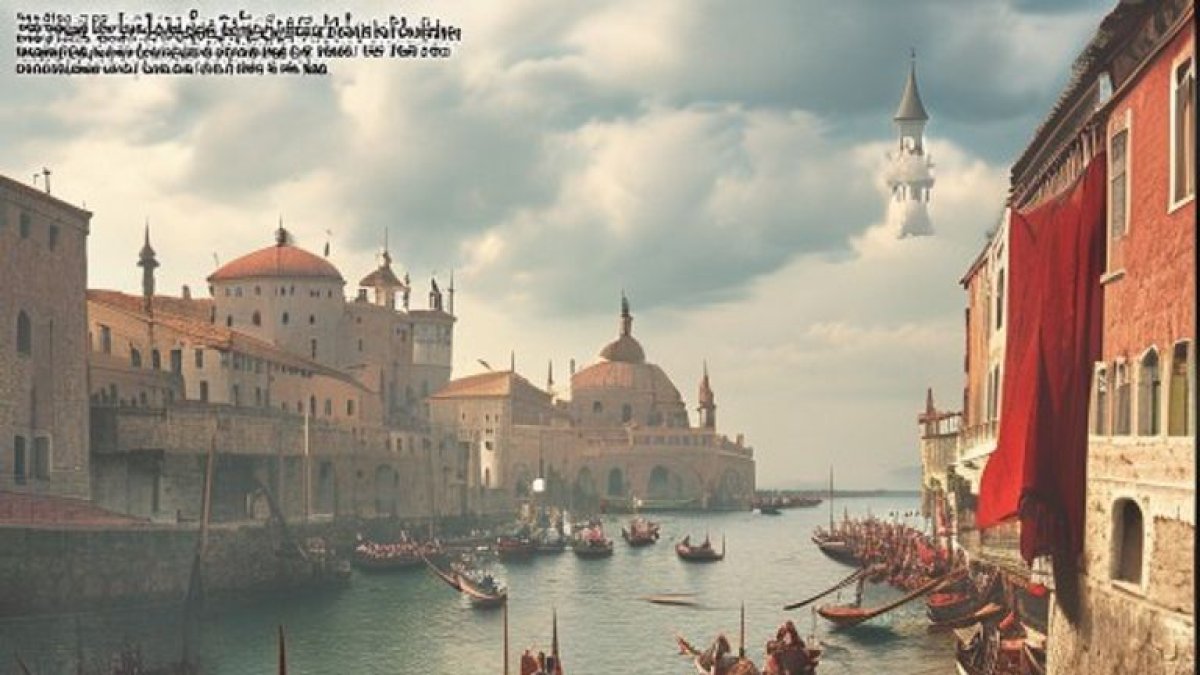
The early 9th century was a crucible of shifting powers, with the nascent Carolingian Empire in the West challenging the long-established authority of the Byzantine Empire in the East. A particularly tense flashpoint occurred during the Venetian Crisis of 809-810 AD, an ambitious military campaign led by Pippin, Charlemagne’s son and King of Italy, against the strategically vital Byzantine duchy of Venice. This period encapsulates the complex interplay of imperial ambitions, local loyalties, and naval power that characterized the transition from late antiquity to the High Middle Ages. Pippin’s objective was clear: to bring the wealthy trading city under Frankish dominion, thereby asserting Carolingian control over the Adriatic and weakening Byzantine influence in Italy. However, the resilient Venetians, backed by their imperial overlords, were prepared to defend their independence with cunning and naval strength, turning this episode into a defining moment for the city’s unique identity.
Imperial Rivalry and the Seeds of Conflict
By the turn of the 9th century, Italy was a mosaic of competing influences. The Byzantine Empire, though weakened, still held significant coastal territories and cultural sway, particularly in the south and along the Adriatic. In the north, Charlemagne’s Carolingian Empire was expanding its dominion, culminating in his imperial coronation in Rome in 800 AD, a move that directly challenged Byzantine claims to universal imperial authority. Pippin, Charlemagne’s son and King of Italy since 781, was tasked with consolidating Frankish power across the peninsula. Venice, with its burgeoning maritime trade and unique lagoon geography, represented a crucial strategic prize. It was nominally under Byzantine suzerainty, but its growing economic power and semi-autonomous status made it an attractive target for Carolingian expansionists eager to control the lucrative trade routes of the Adriatic.
The Fragile Balance of Power
The relationship between the Frankish and Byzantine empires was marked by a delicate balance of diplomacy and intermittent skirmishes. The Byzantines viewed Charlemagne’s imperial title as an usurpation, while Charlemagne saw his rule as a restoration of the Western Roman Empire. Venice, caught between these two giants, skillfully navigated its allegiances, often playing one power against the other to preserve its own commercial interests and political autonomy. However, this precarious balance was destined to break, particularly as Carolingian ambitions in Italy became more pronounced. Pippin’s campaign against Venice was not merely a conquest, but a direct assertion of Frankish claims over the former Byzantine territories in Italy and a challenge to the Eastern Empire’s naval supremacy in the Adriatic.
Pippin’s Campaign and Venetian Resilience
In 809 AD, Pippin launched his ambitious campaign against Venice. His forces, likely a combination of Frankish and Lombard troops, marched towards the lagoon city. The traditional narrative describes a concerted Frankish assault, with Pippin attempting to breach the Venetian defenses. However, Venice’s unique geography proved to be its greatest asset. The city, built on a labyrinth of islands and mudflats, was exceptionally difficult for a land-based army to attack effectively. The Venetians, led by their Doge Obelerio, understood their environment intimately, using their shallow-draft boats to great advantage and strategically moving their capital from Malamocco to the more defensible Rialto islands.
Naval Tactics and the Byzantine Intervention
The Frankish army, unaccustomed to lagoon warfare, struggled against the Venetian’s agile fleet and their intricate knowledge of the waterways. Legends tell of Pippin’s heavy ships running aground in the shallow waters, becoming easy targets for the lighter, more maneuverable Venetian vessels. Furthermore, as the siege dragged on, the Byzantine Emperor Nicephorus I dispatched a formidable fleet under the command of the patrician Paulus to relieve Venice. This Byzantine naval presence effectively cut off Pippin’s supply lines and threatened his forces from the sea. Faced with determined Venetian resistance, logistical challenges, and the arrival of the powerful Byzantine fleet, Pippin’s assault ultimately faltered. He was compelled to withdraw his forces, a significant setback for Carolingian ambitions in the region.
The Aftermath and Venice’s Path to Autonomy
Pippin’s failed campaign during the Venetian Crisis 809-810 AD had profound implications for all parties involved. For Venice, it solidified its position as a semi-independent entity, effectively a de facto republic under nominal Byzantine suzerainty. The crisis demonstrated Venice’s strategic importance and its formidable defensive capabilities, fostering a stronger sense of communal identity. The event is often seen as a crucial step in Venice’s long journey towards complete independence and its eventual rise as a powerful maritime republic.
Diplomatic Resolution and Lasting Legacy
The immediate consequence of Pippin’s defeat was a series of diplomatic negotiations between the Carolingian and Byzantine empires. The Treaty of Aachen in 812 or 814 formally recognized Charlemagne’s imperial title in the West, while in return, the Byzantines reaffirmed their sovereignty over Venice and other coastal regions of Dalmatia and southern Italy. This treaty helped to stabilize the imperial relationship, at least for a time. For Venice, the crisis served as a powerful reminder of the need for a strong naval defense and astute political maneuvering. It underlined the city’s unique position as a bridge between East and West, a role it would skillfully leverage for centuries to come, laying the groundwork for its future commercial and political dominance in the Mediterranean.
Frequently Asked Questions
What was the main cause of the Venetian Crisis of 809-810 AD?
The main cause was the Carolingian Empire’s ambition, led by Pippin (Charlemagne’s son), to extend Frankish control over Italy and the Adriatic Sea. Venice, a wealthy trading city under Byzantine influence, became a key target in this imperial expansion.
Who was Pippin and what was his role in the crisis?
Pippin was the son of Charlemagne and King of Italy. He led the Frankish forces in the military campaign against Venice, aiming to conquer the city and integrate it into the Carolingian Kingdom of Italy.
How did Venice manage to repel the Frankish forces?
Venice utilized its unique lagoon geography, shallow-draft boats, and superior knowledge of the local waterways to its advantage. The Frankish land army struggled in the unfamiliar marshy terrain, and the Venetian fleet effectively defended against their advances.
What was the significance of the Byzantine fleet’s arrival during the Venetian Crisis 809?
The arrival of the Byzantine fleet under Patrician Paulus was crucial. It provided vital naval support to the Venetians, threatened Pippin’s supply lines, and ultimately forced the Frankish forces to withdraw, ensuring Venice remained under Byzantine suzerainty.
What was the long-term impact of this crisis on Venice?
The Venetian Crisis of 809-810 AD solidified Venice’s semi-independent status, confirming its strategic importance and naval power. It reinforced the city’s unique identity and laid the groundwork for its eventual rise as a powerful, independent maritime republic and a vital link between the Eastern and Western worlds.