The First Crusade, launched in 1095 by Pope Urban II, aimed to reclaim Jerusalem for Christendom. However, before the Holy City could be reached, a formidable obstacle stood in the Crusaders’ path: the ancient city of Antioch. The Siege of Antioch 1098 was not merely a military engagement; it was a grueling, year-long ordeal that pushed the limits of human endurance, faith, and strategic ingenuity. Nestled in a crucial strategic position, controlling access to Syria and the Levant, Antioch was a massive, well-fortified city, once a jewel of the Roman Empire and a significant center for early Christianity. Its capture was deemed essential for the Crusade’s success, yet it demanded a price in blood, famine, and despair that few could have anticipated, profoundly shaping the trajectory of the entire Crusader movement and the geopolitical landscape of the Eastern Mediterranean.
The Crusader Advance and Antioch’s Strategic Importance
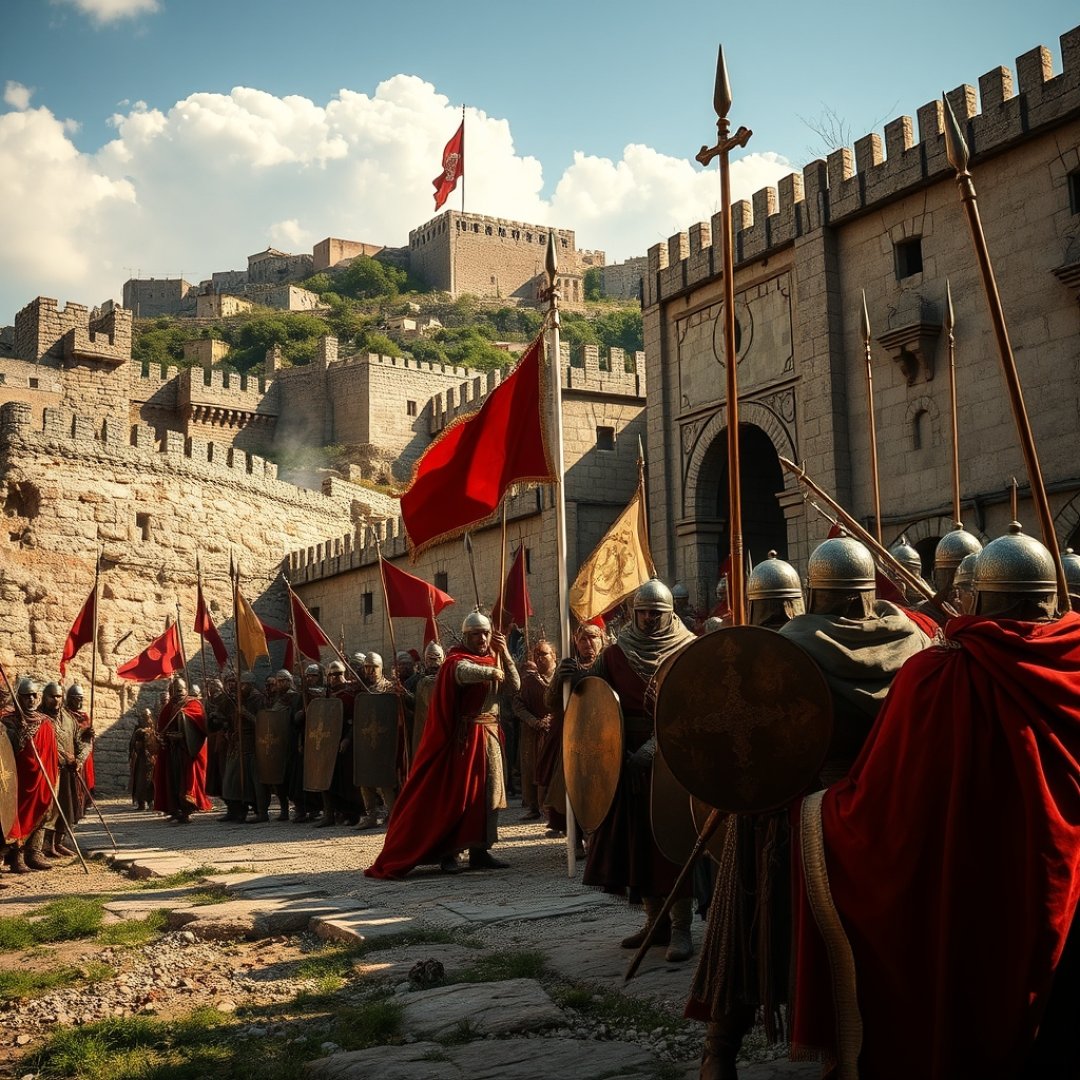
After the successful, albeit brutal, Siege of Nicaea in 1097, the Crusader armies continued their arduous march eastward. Their destination was Antioch, a city of immense historical and strategic value. Founded in 300 BC by Seleucus I Nicator, it had been one of the largest cities in the Roman Empire, a center for trade, culture, and later, a significant early Christian metropolis. By 1097, it was under the control of Yaghi-Siyan, the Seljuk Turkish governor. Its massive walls, reinforced by 400 towers, made it a formidable fortress, thought by many to be impregnable. The Crusaders, a diverse mix of Norman, French, Flemish, and German contingents, arrived before its walls in October 1097, initially underestimating the sheer scale of the undertaking. Their goal was not just to besiege the city, but to starve it into submission, a tactic that would soon turn against them.
Early Struggles and Supply Lines
The sheer size of the Crusader army, numbering perhaps 30,000 to 40,000 combatants plus camp followers, made logistics a constant nightmare. The initial encirclement of Antioch was incomplete due to the vastness of its defenses, leaving the Iron Bridge gate to the east open for some time, allowing supplies and reinforcements to reach the city. The Crusaders quickly faced severe supply shortages, compounded by the harsh winter of 1097-1098. Foraging expeditions became increasingly dangerous and yielded diminishing returns. This early period was marked by fierce skirmishes outside the city walls, where Crusader leaders like Bohemond of Taranto distinguished themselves in combat, yet the primary challenge remained the city’s stubborn resistance and the Crusaders’ dwindling resources.
Famine, Disease, and Disunity within the Crusader Ranks
As the siege dragged on through the winter months, the situation for the Crusaders became dire. Famine swept through the camp, forcing them to eat horses and even, in extreme cases, resort to cannibalism. Disease, exacerbated by poor sanitation and malnutrition, decimated their numbers. The Byzantine Emperor Alexios I Komnenos, a crucial ally, had promised support, but his direct military assistance was slow to materialize, leading to growing resentment among the Crusader leaders. Desertion became rampant, with many lesser knights and even some prominent figures abandoning the campaign. The constant internal squabbling among the Crusader princes – notably between Bohemond, Raymond IV of Toulouse, and Godfrey of Bouillon – further undermined morale and strategic cohesion.
The Arrival of Relief and Fortification Efforts
Despite the hardships, the Crusaders managed to withstand several attempts by Muslim relief armies to break the siege. Key victories against forces from Aleppo and Damascus, often led by Bohemond’s tactical prowess, were crucial. To improve their position and tighten the blockade, the Crusaders gradually built siege towers and fortified their own positions. They eventually secured control of key gates, like the Bridge Gate, constructing the ‘Mahomerie’ castle to prevent supplies from entering from the east. However, the city itself remained firmly in Turkish hands, and the long siege seemed destined to fail due to the sheer depletion of the besiegers.
The Fall of Antioch and the Desperate Second Siege
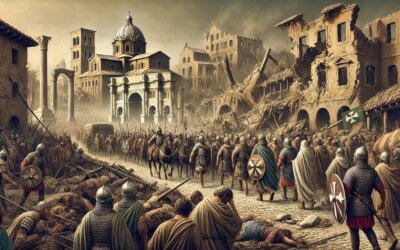
The stalemate was finally broken through an act of treachery. Bohemond, who had long harbored ambitions for Antioch, secretly negotiated with a disgruntled Armenian commander named Firouz, who controlled a section of the city walls. In the pre-dawn hours of June 3, 1098, Firouz opened a gate for a small group of Crusaders, who then allowed the main army to pour into the city. A terrible massacre ensued as the Crusaders took their revenge for the months of suffering. Yaghi-Siyan was killed, and Antioch fell, seemingly ending the long ordeal. However, their triumph was short-lived. Just days later, a massive Seljuk relief army, led by Kerbogha of Mosul, arrived and immediately besieged the now-exhausted and famished Crusaders within Antioch’s walls. The hunters had become the hunted.
The Miracle of the Holy Lance
Trapped and facing annihilation, the Crusaders’ morale plummeted. It was at this desperate juncture that a miraculous event occurred. A peasant-monk named Peter Bartholomew claimed to have had visions guiding him to the spot where the Holy Lance, the spear that pierced Christ’s side, was buried. Despite skepticism from some leaders, the excavation on June 14, 1098, indeed yielded an iron spearhead. This discovery, whether genuine relic or pious fraud, had an electrifying effect on the starving and disheartened Crusader army. It revitalized their faith and instilled a renewed sense of divine purpose, transforming them from a besieged, defeated force into one ready for a final, desperate battle.
The Decisive Battle and the Birth of the Principality of Antioch
Inspired by the Holy Lance, the Crusaders, led by Bohemond, launched a desperate sally against Kerbogha’s vastly superior forces on June 28, 1098. Despite their weakened state, their ferocity and belief in divine aid overwhelmed the surprised Turkish army. Kerbogha’s forces, already plagued by internal divisions, broke and fled, suffering a crushing defeat. This victory was nothing short of miraculous and secured Antioch for the Crusaders.
The Establishment of a Crusader State
Following the victory, there was intense debate among the Crusader leaders regarding the fate of Antioch. Bohemond, having played a pivotal role in its capture and defense, successfully asserted his claim, establishing the Principality of Antioch, one of the first Crusader states in the Levant. This move, however, violated his earlier oath to Emperor Alexios I Komnenos, to whom he had promised to return all former Byzantine territories. The establishment of the Principality marked a significant shift in Crusader objectives, from purely religious pilgrimage to territorial conquest and settlement. The Byzantine Empire, despite its earlier assistance, found its influence in the region further diminished, while the Latin West had gained a crucial foothold in the Middle East, paving the way for the establishment of other Crusader states and prolonged conflict in the region.
Frequently Asked Questions
What was the strategic importance of Antioch during the First Crusade?
Antioch was strategically vital because it controlled key trade routes between Anatolia and Syria, and served as a major stronghold guarding access to the Holy Land. Its massive fortifications also made it a significant military challenge.
Who were the main commanders involved in the Siege of Antioch?
On the Crusader side, key leaders included Bohemond of Taranto, Raymond IV of Toulouse, and Godfrey of Bouillon. The city’s Seljuk Turkish governor was Yaghi-Siyan, and the relief force was led by Kerbogha of Mosul.
How did the Crusaders manage to capture Antioch after such a long siege?
The city fell due to treachery. Bohemond of Taranto secretly negotiated with an Armenian guard commander named Firouz, who allowed a small Crusader force to scale the walls, opening a gate for the main army.
What was the significance of the “Holy Lance” discovery during the siege?
The alleged discovery of the Holy Lance, the spear that pierced Christ’s side, by Peter Bartholomew, dramatically boosted the morale of the starving and desperate Crusaders, convincing them of divine intervention and galvanizing them to launch a decisive, victorious sally against Kerbogha’s relief army.
What was the long-term impact of the Siege of Antioch on the First Crusade?
The successful capture and defense of Antioch secured a crucial base for the Crusaders, allowing them to continue their march to Jerusalem. It also led to the establishment of the Principality of Antioch, one of the first and most enduring Crusader states, and significantly strained relations between the Latin Crusaders and the Byzantine Empire.