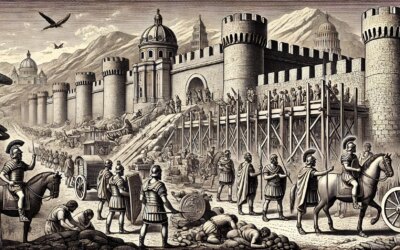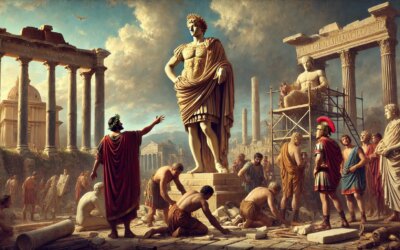
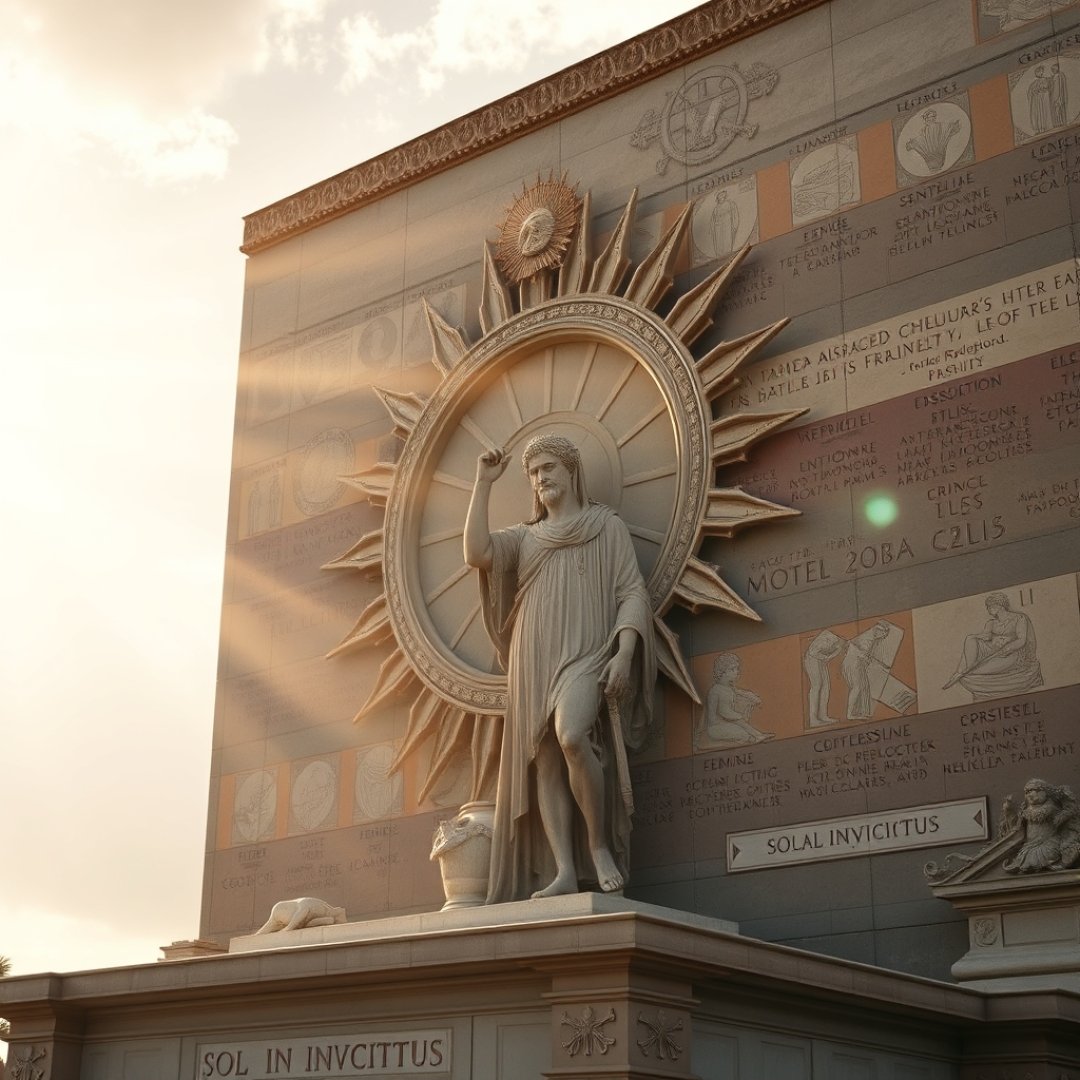
In the tumultuous period of the late 3rd century AD, amidst a backdrop of political instability, economic distress, and constant barbarian incursions, the Roman Empire desperately sought unifying forces. It was within this climate of existential crisis that Emperor Aurelian, a soldier-emperor who had largely succeeded in reunifying the fractured empire, turned his attention to religious matters. Around AD 274, he formally established the cult of Aurelian’s Sol Invictus as the principal state religion, a move that would have profound and lasting implications for Roman imperial ideology. This wasn’t merely the promotion of another deity in Rome’s vast pantheon; it was a deliberate and strategic effort to harness the power of a universal solar deity to strengthen the emperor’s authority and instill a sense of shared identity across the diverse provinces. The Undefeated Sun God, already popular among soldiers and various eastern cults, offered a potent symbol of eternal power and resilience, mirroring Aurelian’s own ambition to restore Rome’s lost glory.
The Rise of Sol Invictus Before Aurelian
Long before Emperor Aurelian’s reign, the cult of Sol, the Roman sun god, had a venerable place in the Roman pantheon, albeit one that evolved significantly over centuries. Initially associated with Sol Indiges, a more ancient, indigenous deity, the concept of a powerful, universal sun god gained traction, particularly with influences from Eastern mystery cults. From the 2nd century AD onwards, the Syrian sun god Sol Elagabal and the Persian Mithras, also a solar deity, contributed to a growing fascination with solar worship across the empire. Soldiers, in particular, were drawn to these vigorous and victorious sun gods, viewing them as protectors and symbols of resilience. This widespread reverence laid a crucial groundwork, making the populace receptive to a stronger, more centralized solar cult. By the time Aurelian ascended the throne in 270 AD, the sun god, often identified as Sol Invictus, the “Undefeated Sun,” was already a potent symbol of divine power and military victory, making it an ideal candidate for an imperial patron.
Aurelian’s Vision: Unifying the Empire Through the Sun God
Emperor Aurelian, often hailed as the “Restorer of the World,” recognized the immense potential of a unifying state religion to consolidate his hard-won military victories and rebuild a fractured empire. His decision to elevate Aurelian’s Sol Invictus to the status of principal state cult around AD 274 was a masterstroke of political and religious strategy. Having successfully defeated the Palmyrene Empire in the East and reconquered the Gallic Empire in the West, Aurelian sought a deity whose appeal transcended regional boundaries and diverse cultural traditions. The Undefeated Sun, with its connotations of universal power and victory, perfectly mirrored the emperor’s own achievements in restoring unity and order. Aurelian dedicated a magnificent new temple to Sol Invictus on the Campus Martius in Rome, funding it with the spoils of his eastern campaigns. This grand edifice, staffed by a college of priests, became the focal point of the new state religion, emphasizing the emperor’s divine mandate and linking imperial prosperity directly to the favor of the sun god.
The Legacy and Influence of Sol Invictus
The establishment of Aurelian’s Sol Invictus had a profound and lasting impact on Roman religious and imperial traditions, even well into the Christian era. The cult reinforced the idea of a single, supreme deity, an concept that subtly paved the way for monotheistic thought within the empire. Subsequent emperors, including Diocletian and, notably, Constantine the Great, continued to show reverence for Sol Invictus. Constantine, before his conversion to Christianity, was a worshipper of Sol Invictus, and early Christian imagery and traditions sometimes adapted solar symbolism. For instance, the celebration of the winter solstice, traditionally associated with the birth of Sol Invictus on December 25th, may have influenced the timing of Christmas. However, as Christianity gained dominance, the cult of Sol Invictus gradually faded, losing its official imperial patronage by the late 4th century. Despite its eventual decline, Aurelian’s state cult left an indelible mark on Roman identity, symbolizing a period of imperial resurgence and contributing to the complex religious landscape from which Christianity would ultimately emerge as the empire’s dominant faith.
Frequently Asked Questions
Who was Sol Invictus?
Sol Invictus, meaning ‘The Undefeated Sun’, was a solar deity worshipped in the Roman Empire. He represented the sun’s unconquerable power and was associated with victory, strength, and divine favor, becoming particularly popular among soldiers and in various Eastern cults before being elevated to state religion status by Emperor Aurelian.
Why did Emperor Aurelian promote Sol Invictus?
Emperor Aurelian promoted Sol Invictus around AD 274 as a strategic move to unify the Roman Empire after decades of crisis and fragmentation. He believed a universal, powerful deity could provide a common religious identity across diverse provinces, strengthening imperial authority and reflecting his own military successes in restoring the empire’s unity.
What was the significance of the temple of Sol Invictus in Rome?
The temple of Sol Invictus, dedicated by Aurelian on the Campus Martius, served as the central hub for the new state cult. It symbolized the emperor’s divine mandate and the empire’s renewed strength, funded by the spoils of war. Its grand scale underscored the official importance of the Undefeated Sun god within Roman state religion.
How did the cult of Sol Invictus influence later Roman history?
The cult of Sol Invictus played a significant role in fostering monotheistic tendencies within the Roman pantheon, influencing later emperors like Constantine. Its symbolism and festival dates (e.g., December 25th for the ‘Dies Natalis Solis Invicti’) may have also influenced early Christian traditions before Christianity became the dominant religion.
Is there a connection between Sol Invictus and Christmas?
Historians suggest a possible connection between the celebration of the ‘Dies Natalis Solis Invicti’ (Birthday of the Undefeated Sun) on December 25th and the later Christian observance of Christmas on the same date. While definitive proof is debated, the proximity in dates and themes of light and rebirth suggests some cultural syncretism in early Christian traditions.