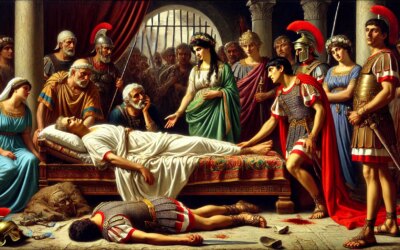
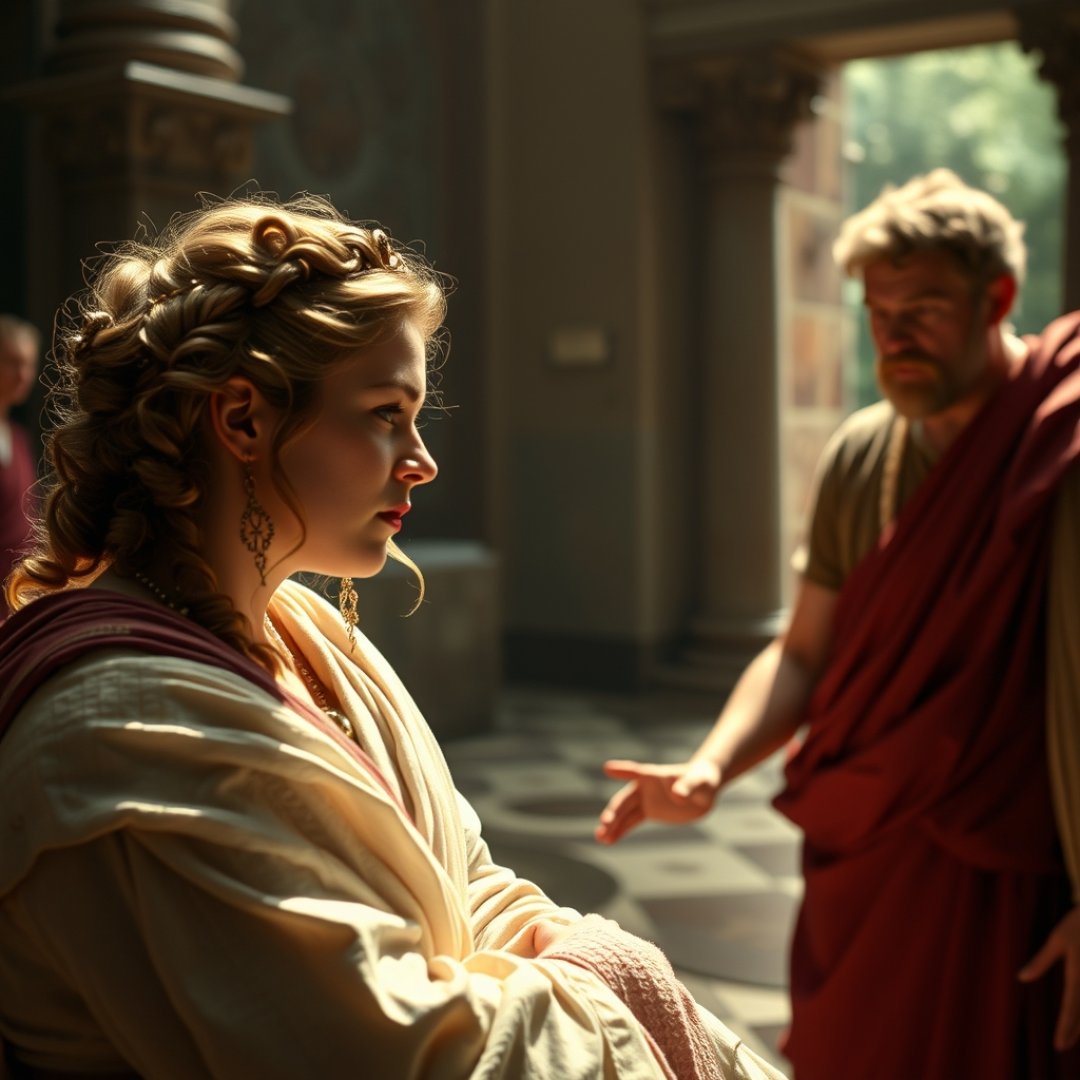
In the tense political climate of AD 28, the Roman Empire witnessed the escalating campaign against one of its most prominent women, Agrippina the Elder. As Emperor Tiberius retreated further into his self-imposed exile on Capri, the formidable Praetorian Prefect Sejanus seized the opportunity to consolidate his power, systematically eliminating perceived rivals and threats to his ambition. A key target in this ruthless power play was Agrippina, the revered widow of Germanicus and granddaughter of Augustus himself. Her popularity, fierce independence, and the high regard in which her sons were held by the Roman populace made her a formidable obstacle to Sejanus’s designs. The year AD 28 marked a critical phase in the relentless Agrippina the Elder persecution, as accusations mounted and her isolation deepened, setting the stage for one of the most tragic imperial family sagas of the Julio-Claudian era. This period encapsulates the dark undercurrents of court politics, where loyalty was fluid and survival hinged on navigating the treacherous whims of absolute power.
The Shadow of Sejanus: Controlling the Emperor’s Will
By AD 28, Lucius Aelius Sejanus had become the undisputed architect of imperial policy and the gatekeeper to Emperor Tiberius, who had largely withdrawn from Rome to his villas on Capri. This physical distance allowed Sejanus to manipulate information, control access, and effectively govern the empire through the increasingly paranoid and suspicious Tiberius. Sejanus harbored a deep ambition to succeed Tiberius, and to achieve this, he needed to neutralize any potential claimants to the throne, especially those with strong ties to the revered Germanicus. Agrippina the Elder and her three surviving sons—Nero Caesar, Drusus Caesar, and Gaius Caesar (later Caligula)—represented the direct lineage of Augustus through Germanicus, making them prime targets. Sejanus meticulously exploited Tiberius’s inherent mistrust, fueling his suspicions about Agrippina’s supposed arrogance and ambition, painting her as a threat to his reign.
Accusations and Isolation
The campaign against Agrippina was multifaceted, involving both overt accusations and subtle psychological warfare. She was repeatedly accused of insubordination, pride, and even of planning to seek sanctuary with the legions in Germany, echoing her late husband’s popularity there. These charges, whether true or fabricated, played directly into Tiberius’s fears of potential usurpation. At court, her allies were systematically removed or discredited, leaving her increasingly isolated. Even innocuous actions were twisted into signs of sedition, creating an environment where Agrippina felt constantly under surveillance and subject to malicious interpretations. This constant pressure in AD 28 was designed to break her spirit and diminish her influence among the Roman elite.
Agrippina the Elder: A Legacy of Defiance
Agrippina the Elder was no ordinary Roman matron; she was a woman of exceptional pedigree and considerable spirit. Daughter of Marcus Agrippa and Julia the Elder, she was a direct granddaughter of Emperor Augustus. Her marriage to Germanicus, Tiberius’s adopted son and a celebrated general, had further cemented her position and popularity. She had accompanied Germanicus on his campaigns and was famously courageous, even rallying troops after a Roman defeat on the Rhine. After Germanicus’s sudden death in AD 19, which many suspected was foul play orchestrated by Tiberius’s associates, Agrippina returned to Rome with his ashes, carrying herself with immense dignity and public grief, which only amplified her standing with the people.
Popularity and Peril
Her public image as a virtuous, strong, and noble Roman woman, fiercely loyal to her late husband and devoted to her children, stood in stark contrast to the brooding image of Tiberius and the cunning machinations of Sejanus. This popularity, however, became her greatest vulnerability. In a system where imperial power was consolidating, any independent source of popular affection or loyalty was viewed with suspicion. Agrippina refused to remarry, which further highlighted her dedication to Germanicus’s memory and indirectly maintained her children’s strong claim to the succession. Her outspoken nature and refusal to conform to Tiberius’s increasing tyranny were interpreted as direct challenges to his authority, making her a dangerous adversary in Sejanus’s eyes.
The Fateful Decline: Events Leading to Exile
The year AD 28 saw the full weight of Sejanus’s influence brought to bear on Agrippina. Tiberius, swayed by Sejanus, grew increasingly hostile. Tacitus recounts numerous instances of accusations and slights. For example, when Agrippina appealed to Tiberius for a husband, citing the need for protection, he angrily dismissed her, interpreting her request as an attempt to gain a political ally. Furthermore, Sejanus skillfully used informers to report on her every move and word, distorting them to confirm Tiberius’s worst fears. The Praetorian Guard, loyal to Sejanus, likely played a role in isolating her household and preventing contact with potential supporters.
The Point of No Return
By the end of AD 28, Agrippina’s fate was all but sealed. The constant psychological pressure, public humiliation, and systematic erosion of her support network left her vulnerable. The attacks extended to her eldest sons, Nero Caesar and Drusus Caesar, who were also becoming targets of Sejanus’s machinations. The culmination of this growing persecution came shortly after AD 28, when Agrippina and Nero Caesar were formally exiled to the island of Pandateria in AD 29, followed by Drusus Caesar’s arrest and eventual death. Agrippina ultimately perished in exile, a victim of imperial jealousy and the ruthless ambition of Sejanus, whose own downfall would come years later.
Frequently Asked Questions
Who was Agrippina the Elder?
Agrippina the Elder was a prominent Roman noblewoman, granddaughter of Emperor Augustus, daughter of Marcus Agrippa and Julia the Elder, and the widow of the beloved general Germanicus. She was the mother of future Emperor Caligula.
What role did Sejanus play in her persecution?
Lucius Aelius Sejanus, the Praetorian Prefect, was the primary orchestrator of Agrippina’s persecution. He manipulated Emperor Tiberius’s paranoia and suspicions to systematically eliminate Agrippina and her sons, who he viewed as obstacles to his own ambition to succeed Tiberius.
Why was Agrippina considered a threat to Tiberius and Sejanus?
Agrippina’s direct lineage from Augustus, her immense popularity with the Roman people and military, and her defiant character made her a powerful potential rival. Sejanus feared her influence and her sons’ strong claims to the succession, while Tiberius viewed her independence as a challenge to his authority.
What tactics were used in the Agrippina the Elder persecution during AD 28?
During AD 28, tactics included public accusations of ambition and insubordination, spreading rumors through informers, systematic isolation from her allies, and manipulating Tiberius’s fears. Her requests and actions were consistently twisted to appear seditious.
What was the eventual outcome for Agrippina the Elder?
Following the intense persecution that built up in AD 28, Agrippina the Elder was formally exiled to the island of Pandateria in AD 29. She ultimately died in exile in AD 33, likely from starvation, while her sons Nero Caesar and Drusus Caesar also met tragic ends.