
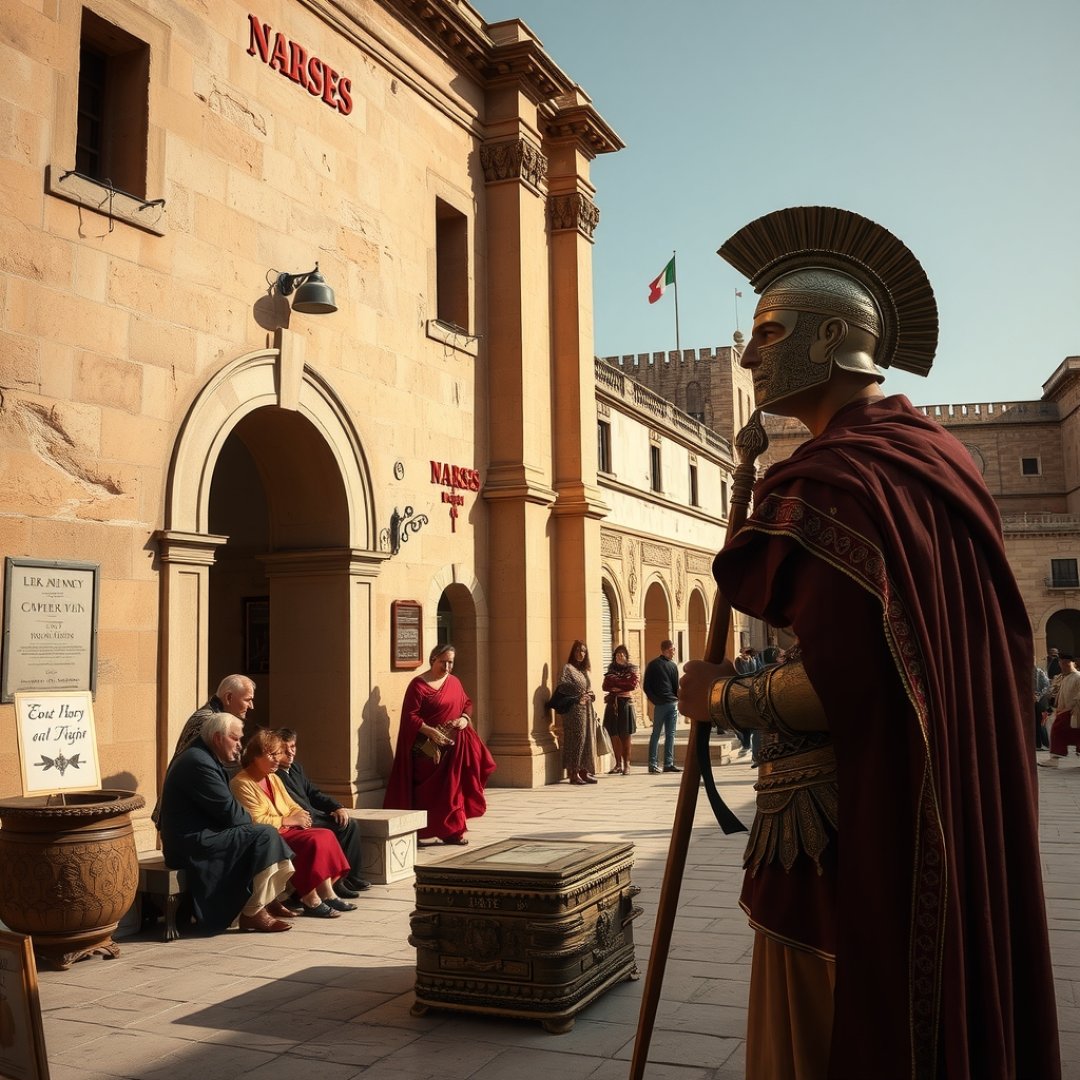
Following nearly two decades of brutal conflict that had ravaged the Italian peninsula, the end of the Gothic War in 553 AD marked a precarious new beginning for a land utterly exhausted by constant warfare. It fell upon the Eunuch General Narses, the architect of the decisive Byzantine victory over the Ostrogoths, to undertake the monumental task of restoring order and establishing imperial authority. His subsequent period of rule, often referred to as Narses’ Italian Administration, became a critical but often overlooked chapter in Italy’s transition from a post-Roman Gothic kingdom to a Byzantine province. Arriving in Italy as a military commander, Narses quickly pivoted to civil administration, tasked by Emperor Justinian I with implementing the Pragmatic Sanction of 554 AD and reconstructing a society shattered by famine, plague, and relentless fighting. This comprehensive effort sought to reassert Roman law, repair infrastructure, stabilize the economy, and integrate Italy firmly back into the Eastern Roman Empire, setting the stage for centuries of Byzantine influence despite the immense challenges that lay ahead.
The Devastated Landscape of Italy After the Gothic War
A Land in Ruins
The Gothic War (535–554 AD) had been catastrophic for Italy. What was once the heartland of the Western Roman Empire lay in ruins. Cities like Rome, Milan, and Ravenna had been besieged multiple times, their populations decimated by famine and disease, and their infrastructure severely damaged. Agricultural production plummeted, trade routes were disrupted, and the traditional social order had been shattered. Many Italians had fled, others perished, and those who remained faced an uncertain future under a new, distant imperial rule. The peninsula was a patchwork of desolation and pockets of resistance, particularly in the north where Franks and Alamanni had also invaded during the conflict.
The Challenge of Reintegration
Reintegrating this devastated land into the Byzantine administrative structure was an immense challenge. The Ostrogothic kingdom, despite its Germanic origins, had largely maintained Roman administrative practices. However, years of war had eroded these structures, leaving a void that the Byzantines, with their own highly centralized bureaucracy, now had to fill. The local Italian elites, many of whom had collaborated with the Goths or simply survived the chaos, were wary of new masters and the heavy taxation typically associated with imperial rule from Constantinople.
Narses’ Reforms and Governance
Establishing Order and Law
Narses, a shrewd diplomat and administrator as much as a military genius, was given extensive powers as the Byzantine governor, effectively acting as viceroy. His primary task was to enforce Justinian’s Pragmatic Sanction of 554 AD, a decree designed to restore order and re-establish imperial control. This included the reinstatement of Roman law, the restitution of lands to their former owners (especially the Roman senatorial aristocracy and the Church), and the cancellation of debts incurred during Gothic rule. Narses initiated the reconstruction of public buildings, bridges, and roads, understanding that economic recovery depended on functional infrastructure. He also oversaw the collection of taxes, a necessary but often unpopular measure to fund the new administration and the Byzantine garrison.
Military and Administrative Structure
Under Narses, Italy was organized into a series of military districts, each commanded by a dux, and civil administration was largely managed by civilian governors. Ravenna became the effective capital of Byzantine Italy, reflecting its strategic importance and strong defensive capabilities. Narses maintained a significant military presence, comprising Byzantine regulars and various allied contingents, to suppress remaining Gothic resistance and deter new invasions. He proved adept at managing these diverse forces and maintaining a degree of stability that had been absent for decades. His long tenure, lasting until 568 AD, allowed for a sustained period of rebuilding, though much remained fragile.
The Legacy and Challenges of Narses’ Rule
Seeds of Future Conflict
Despite Narses’ efforts, Italy’s recovery was incomplete and fragile. The burden of taxation, coupled with the lingering effects of war and occasional outbreaks of plague, meant that the population remained impoverished. The Pragmatic Sanction, while aiming for restitution, often favored the Church and large landowners, doing little to alleviate the plight of the common people. Furthermore, the Byzantine administrative system, while robust, was often seen as foreign and unresponsive by the local Italian population, creating a fertile ground for resentment.
The Lombard Invasion and Its Aftermath
The true test of Narses’ Italian Administration came shortly after his recall. In 568 AD, the Lombards, a Germanic people, invaded Italy. The peninsula, still weak and sparsely populated, offered little sustained resistance. The Byzantine garrisons, spread thin and possibly demoralized, were unable to stem the tide effectively. Within a few decades, most of Italy, except for coastal areas and some key cities like Rome and Ravenna, fell to the Lombards. While Narses’ administration had brought a measure of stability and re-established Roman legal frameworks, it ultimately could not secure Italy against the next wave of barbarian incursions, leading to centuries of fragmented rule and the definitive end of unified Roman control over the entire peninsula.
Frequently Asked Questions
Who was Narses and what was his primary role in Italy?
Narses was a highly skilled eunuch general and administrator of the Byzantine Empire under Emperor Justinian I. His primary role in Italy, particularly after 553 AD, was to complete the Byzantine reconquest from the Ostrogoths and then to govern and rebuild the devastated peninsula, implementing imperial law and administration.
What was the Pragmatic Sanction of 554 AD?
The Pragmatic Sanction of 554 AD was an imperial decree issued by Emperor Justinian I, outlining the legal and administrative framework for the newly reconquered Italy. It aimed to restore Roman law, return lands, cancel debts, and establish Byzantine governmental structures after the Gothic War.
How did Narses attempt to rebuild Italy’s infrastructure?
Narses focused on repairing essential infrastructure crucial for economic recovery and governance. This included the reconstruction of public buildings, bridges, and roads, which were vital for trade, communication, and the movement of troops across the war-torn peninsula.
What were the main challenges Narses faced during his administration?
Narses faced numerous challenges, including the widespread devastation from two decades of war, famine, and plague, a depleted population, local resistance, the heavy burden of taxation imposed by Constantinople, and the constant threat of new barbarian invasions from groups like the Franks and later, the Lombards.
What was the ultimate legacy of Narses’ Italian Administration?
Narses’ administration successfully re-established Byzantine authority and Roman law in Italy for a time, providing a period of much-needed stability and reconstruction. However, it ultimately proved unable to secure the peninsula against the subsequent Lombard invasion in 568 AD, leading to the fragmentation of Italy and the end of unified Byzantine control over most of the region.
Related posts:
 The Fall of Constantinople: The End of the Byzantine Empire
 The Siege of Rome: Belisarius and the Gothic Wars
 Emperor Heraclius’s Seizure of Church Wealth (c. 621 AD): Funding the Byzantine-Sasanian War
 The Completion of Justinian’s Digest and Institutes (533 AD): Codifying Roman Law for a New Empire