In the turbulent latter half of the 9th century, as the Carolingian Empire fractured and new threats emerged from the south, Rome found itself perpetually vulnerable to external aggression. Among the most persistent and devastating were the incursions of Saracen raiders, who, having established bases in southern Italy and Sicily, regularly plundered coastal regions, including the very environs of the Eternal City. It was in this precarious climate that Pope John VIII, a pontiff renowned for his energy, political acumen, and military resolve, ascended to the See of Peter in AD 872. Unlike many of his predecessors, John VIII did not merely appeal to distant Frankish emperors for aid; he actively organized Rome’s defenses, engaged in complex diplomatic maneuvers, and, perhaps most remarkably, personally led military campaigns. His pontificate saw continuous efforts to protect the patrimony of St. Peter, culminating in significant moments of direct resistance. One such decisive confrontation, a testament to his unique leadership, was Pope John VIII’s Naval Victory at Circeo in AD 877, where papal forces successfully repelled a Saracen fleet, offering a rare but vital respite from the relentless pressure.
The Persistent Saracen Threat to 9th-Century Italy
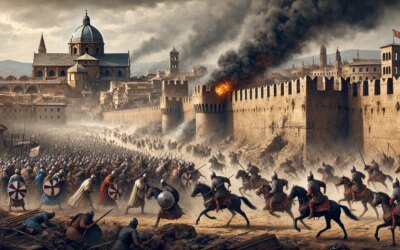
By the 9th century, the political landscape of Italy was fragmented, with various powers—Lombard dukes, Byzantine enclaves, and nascent Frankish kingdoms—struggling for dominance. This disunity created fertile ground for external predators. From the early decades of the century, Arab-Muslim forces, referred to in contemporary sources as ‘Saracens,’ had established strongholds in Sicily and southern Italy, particularly at Bari and Taranto. From these bases, their fast-moving fleets launched devastating raids across the Mediterranean, targeting wealthy coastal cities and fertile agricultural lands. The Papal States, lying exposed along the Tyrrhenian coast, were particularly vulnerable. Churches and monasteries were plundered, pilgrims often attacked, and the very safety of Rome itself was frequently compromised, leading to the Sack of Rome in 846 AD. The economic and human toll of these constant incursions was immense, creating a climate of fear and instability.
Pope John VIII: A Pontiff of Action and Diplomacy
Elected in AD 872, Pope John VIII inherited a papacy under siege. Recognizing the inadequacy of relying solely on distant and often preoccupied Carolingian emperors, John VIII adopted a remarkably proactive stance. He understood that the survival of the Papal States and, indeed, the Christian heartland of Italy, depended on a combination of diplomacy and direct military intervention. His efforts were multifaceted:
- Fortifications: He invested heavily in strengthening Rome’s defenses, including repairing walls and constructing new strongholds.
- Diplomatic Leagues: John VIII tirelessly attempted to forge alliances with local Italian princes, the Byzantines, and various Frankish rulers, often offering imperial crowns in exchange for military support against the Saracens.
- Papal Fleet: Perhaps his most audacious initiative was the organization of a papal navy, funded through various means, including tribute payments and church revenues. This fleet was designed to patrol the coasts and engage Saracen raiders at sea, a task rarely undertaken by a pope.
His determination was unparalleled, often placing him at odds with internal Roman factions and external powers, yet his singular focus remained the security of Rome.
The Battle of Circeo (AD 877) and Its Immediate Impact
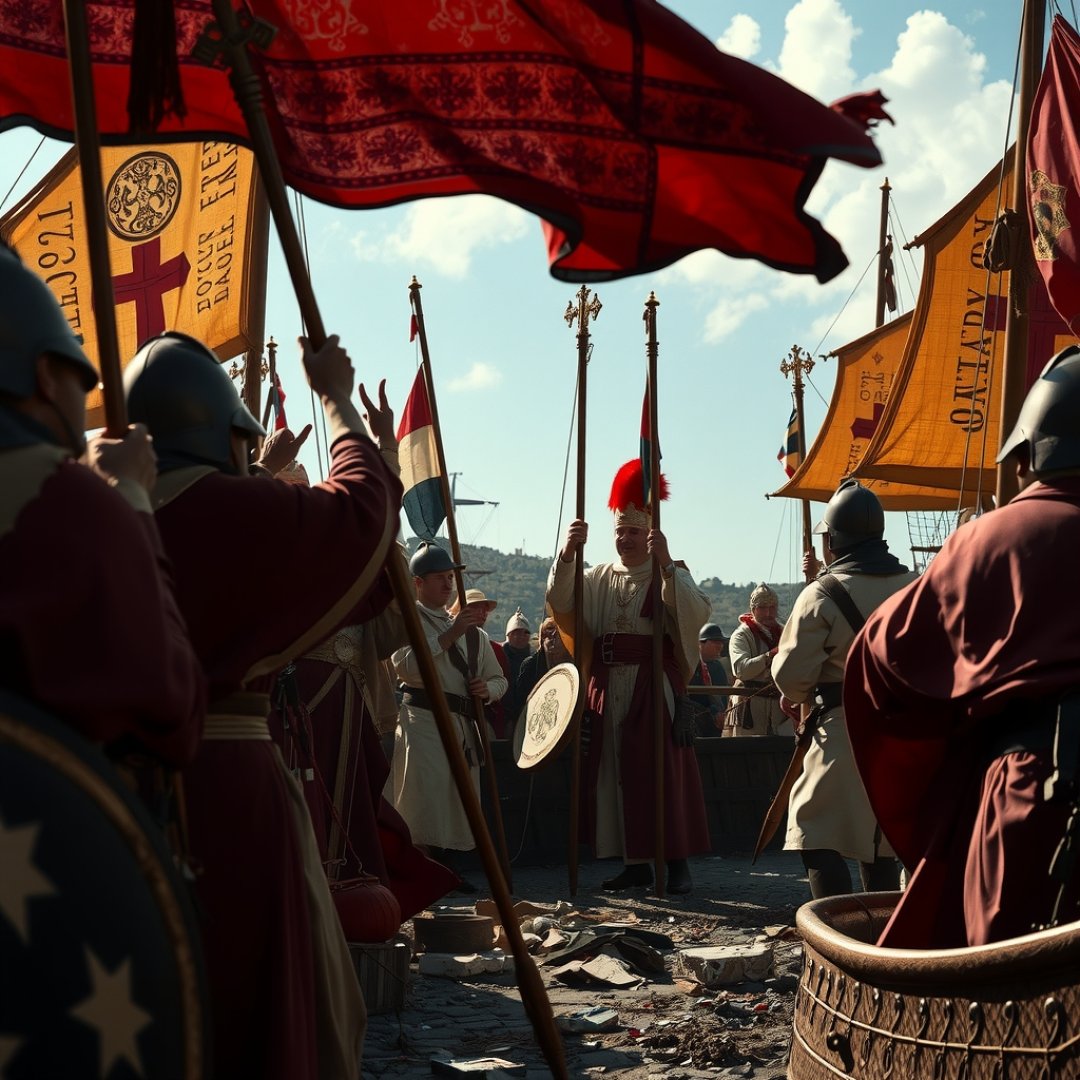
In AD 877, Pope John VIII demonstrated the effectiveness of his newly assembled papal fleet in a decisive encounter off the coast of Circeo, a prominent promontory south of Rome. Sources indicate that John VIII, perhaps even personally present and observing from a galley, directed the papal forces against a Saracen fleet that was likely engaged in or preparing for a raid on the Latium coast. The papal ships, though perhaps not numerous, were clearly effective, engaging the Saracens in a naval skirmish that resulted in a significant victory for the Christian forces. The specifics of the battle itself are somewhat scant in the historical record, but its outcome was clear: a Saracen fleet was repelled, some of their ships were captured, and a considerable number of captives were freed. This Pope John VIII’s Naval Victory served as a morale booster for the beleaguered population and offered a rare instance of successful resistance against the constant threat, demonstrating that the Papacy was not merely a spiritual power but a temporal force willing to defend its territories with arms.
The Legacy of John VIII’s Active Resistance
While the Battle of Circeo did not end the Saracen threat—raids continued throughout John VIII’s pontificate and beyond—it symbolized a significant shift in papal policy. John VIII’s willingness to engage militarily, and even to personally oversee such efforts, distinguished him among his predecessors and successors. His actions laid a precedent for future popes who would also organize defenses and seek alliances against external threats. More broadly, his vigorous response highlighted the critical role the Papacy had to play in the absence of strong imperial authority in Italy. He was a figure who truly understood the need for temporal power to protect spiritual independence, and his naval victory at Circeo stands as a testament to his practical and martial leadership in a chaotic age. The challenges he faced were immense, and his solutions, though not always perfectly successful, were innovative and remarkably resilient, shaping the future trajectory of papal engagement in Italian politics and defense.
Frequently Asked Questions
Who was Pope John VIII?
Pope John VIII served as pope from AD 872 to 882. He was a highly energetic and politically astute pontiff known for his diplomatic efforts, ecclesiastical reforms, and, uniquely for a pope, his active military leadership in defending the Papal States against Saracen incursions.
What was the ‘Saracen threat’ in 9th-century Italy?
The ‘Saracen threat’ refers to the frequent raids and invasions by Arab-Muslim forces, primarily from North Africa and Sicily, on the coasts and territories of Italy during the 9th and 10th centuries. These incursions led to widespread plunder, destruction, and instability, even reaching Rome itself.
Why was the Battle of Circeo (AD 877) significant?
The Battle of Circeo was significant because it represented a rare instance of a direct and successful papal military action, specifically a naval victory, against Saracen invaders. It boosted Christian morale and demonstrated Pope John VIII’s proactive and determined approach to defending the Papal States at a time of significant vulnerability.
Did Pope John VIII personally lead battles?
While it’s debated whether he physically commanded a ship in the thick of battle, Pope John VIII certainly organized, funded, and oversaw papal military campaigns, including the naval operations that led to the victory at Circeo. He was actively involved in strategic decisions and was known for his martial spirit.
What was the broader impact of papal military efforts against the Saracens?
Pope John VIII’s military efforts, including the victory at Circeo, highlighted the Papacy’s increasing temporal role in defending Christian lands in Italy. These actions established a precedent for future papal engagement in military and political affairs, demonstrating the Church’s necessity as a temporal power in the absence of effective imperial protection during a tumultuous era.