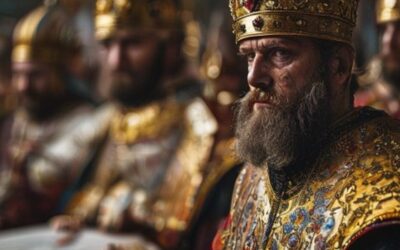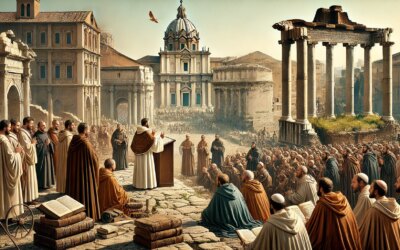
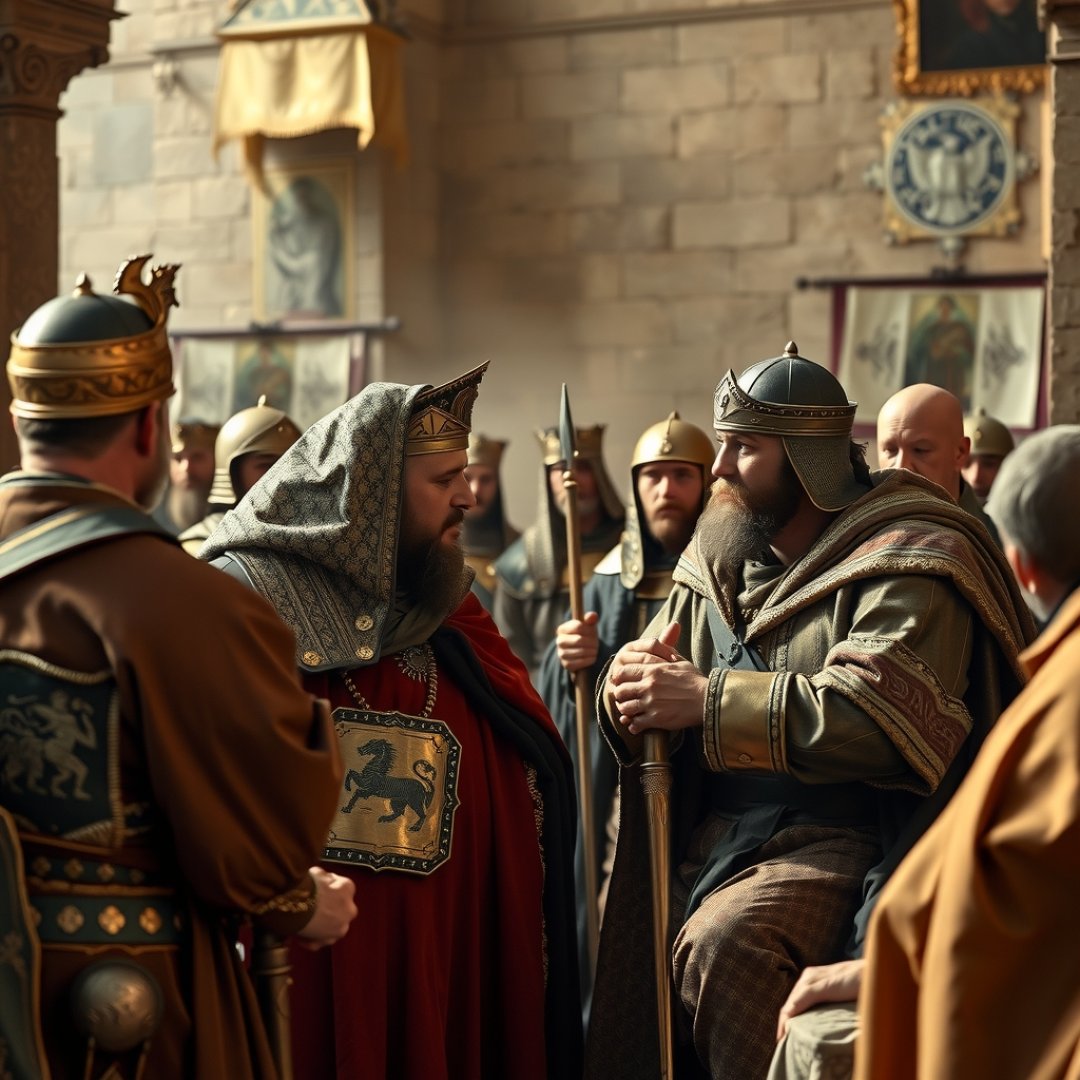
The year 747 AD marked a pivotal, yet often overlooked, moment in the trajectory of early medieval Europe: the surprising decision of Carloman, the elder son of Charles Martel and co-mayor of the palace, to renounce his secular power and enter monastic life. This act, known as Carloman’s abdication 747 AD, fundamentally altered the balance of power within the burgeoning Carolingian realm, clearing the path for his brother Pepin the Short to consolidate sole authority over the Frankish territories. Beyond its immediate impact on the Frankish royal succession, Carloman’s retreat had profound and lasting implications for the relationship between the powerful Franks and the Papacy in Rome, indirectly laying groundwork for alliances that would shape the future of Western Europe, redefine the role of the Pope, and contribute significantly to the evolving concept of a “Roman” empire in the west. This singular event, steeped in personal piety and political consequence, stands as a testament to the complex interplay of spiritual devotion and temporal ambition during a crucial era.
The Carolingian Ascent to Power
From Mayors to De Facto Rulers
By the early 8th century, the traditional Merovingian kings of Francia had become mere figureheads, their power usurped by the ambitious Mayors of the Palace, a hereditary position held by the Carolingian family. Charles Martel, Carloman’s father, famously halted the Arab invasion at the Battle of Tours in 732 AD, solidifying his family’s control and prestige. Upon his death in 741 AD, Charles divided his vast Frankish territories between his two legitimate sons: Carloman received Austrasia, Alemannia, and Thuringia, while Pepin the Short inherited Neustria, Burgundy, and Provence. This co-rule, while initially stable, held inherent tensions and the potential for fraternal conflict. Both brothers were formidable leaders, actively suppressing rebellions and asserting Carolingian authority throughout their respective domains, yet their temperaments and ultimate ambitions would prove to be quite different.
The Unforeseen Abdication of Carloman
A Shift from Sword to Scripture
In 747 AD, after years of active military and political leadership, Carloman made the astonishing decision to relinquish all his worldly power. His motivations, while rooted in genuine piety, were likely complex. He had a strong relationship with prominent monastic figures, notably Saint Boniface, the Anglo-Saxon missionary who was instrumental in reforming the Frankish church. Carloman convened a synod in 742 AD and supported Boniface’s efforts to regularize church practice, showing a deep engagement with spiritual matters. His abdication was not a spontaneous act but a deliberate and public renunciation. He traveled to Rome, where he met with Pope Zachary, and then, after obtaining papal blessing, he founded a monastery on Monte Soratte, north of Rome. Later, he moved to the famous Benedictine monastery of Monte Cassino, where he lived out his days as a simple monk, even performing menial tasks and reportedly keeping his true identity a secret for a time.
Pepin’s Consolidation and the Papal Alliance
The Path to Kingship and a New Roman Protector
Carloman’s abdication 747 AD immediately removed a powerful rival from the political stage, allowing Pepin the Short to become the sole Mayor of the Palace, uniting all Frankish lands under his authority. This consolidation of power was crucial for Pepin’s ambition to transition from de facto ruler to de jure king. Three years later, in 751 AD, with the explicit approval of Pope Zachary, Pepin deposed the last Merovingian king, Childeric III, and had himself crowned King of the Franks. This act marked the formal beginning of the Carolingian dynasty. The alliance between Pepin and the Papacy, cemented by Carloman’s prior interactions and Pepin’s need for legitimacy, proved mutually beneficial. The Pope gained a powerful protector against the encroaching Lombards in Italy, while Pepin secured divine sanction for his new royal lineage. This new political and religious dynamic would irrevocably link the fate of Rome and the Papacy with the Frankish monarchs.
The Legacy: Foundations of a New Empire
Shaping the Future of Western Europe
The long-term impact of Carloman’s decision cannot be overstated. By removing himself from secular politics, he inadvertently facilitated the rise of his brother Pepin, who, in turn, established a direct alliance with the Roman Papacy. This alliance led to Pepin’s Donation of 756 AD, which formally established the Papal States, granting the Pope significant temporal power. More significantly, it paved the way for Pepin’s son, Charlemagne, to be crowned Emperor by Pope Leo III on Christmas Day, 800 AD, effectively reviving the concept of a Western Roman Empire under a Frankish ruler. Carloman’s personal spiritual journey thus had profound secular consequences, contributing to the shift from a crumbling late Roman world to the vibrant, yet turbulent, landscape of early medieval Europe, deeply integrating the Church’s authority with a powerful new political order. The echoes of this fateful year, 747 AD, resonated through centuries of European history.
Frequently Asked Questions
Who was Carloman?
Carloman was the elder son of Charles Martel, the powerful Mayor of the Palace of the Frankish Kingdom. After his father’s death, he co-ruled the Frankish lands as Mayor of the Palace alongside his younger brother, Pepin the Short.
Why did Carloman abdicate his power in 747 AD?
Carloman’s abdication was primarily motivated by deep personal piety and a desire to dedicate his life to God through monasticism. He was influenced by monastic reformers like Saint Boniface and eventually became a Benedictine monk, first on Monte Soratte and later at Monte Cassino.
What was the immediate impact of Carloman’s abdication on the Frankish Kingdom?
Carloman’s abdication allowed his brother, Pepin the Short, to consolidate sole power over the entire Frankish realm. This cleared the way for Pepin to eventually depose the last Merovingian king and become the first Carolingian king of the Franks in 751 AD.
How did Carloman’s retreat affect the relationship between the Franks and the Papacy?
Carloman’s abdication removed a potential rival to Pepin, who then formed a strong alliance with the Papacy. This alliance led to the creation of the Papal States and laid the groundwork for the coronation of Charlemagne as Emperor in 800 AD, profoundly shaping future papal-imperial relations.
Did Carloman ever return to secular life after becoming a monk?
No, Carloman remained a monk until his death in 754 AD. He did briefly return to Francia once, summoned by his brother Pepin to mediate with the Lombard king Aistulf, but he then returned to Monte Cassino and did not resume any political power.