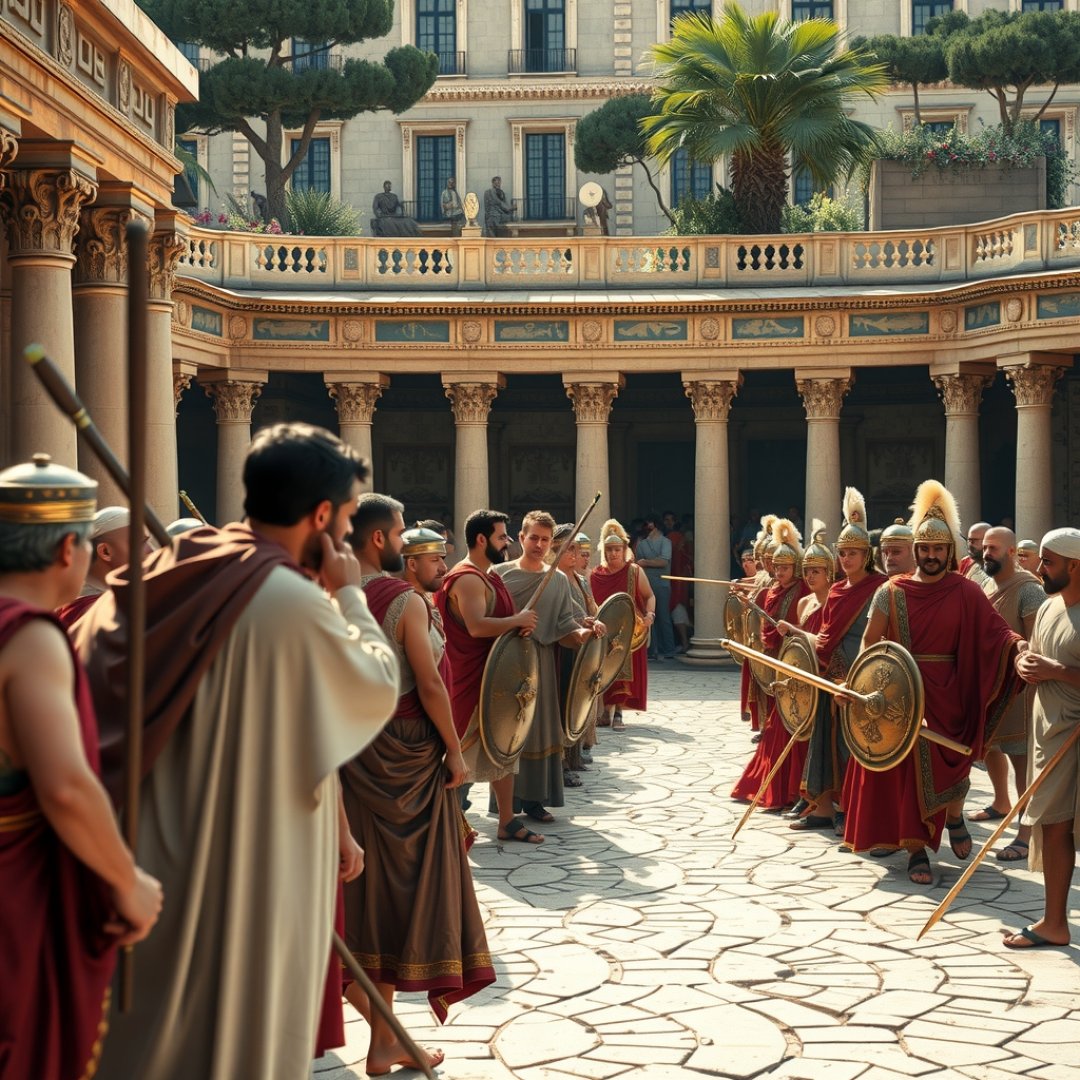
In the tumultuous mid-third century AD, as the Roman Empire grappled with internal strife and external threats, a beacon of traditional piety and imperial grandeur shone brightly in the year 248 AD. This was the year Rome celebrated its monumental thousandth anniversary, an event commemorated with the magnificent Ludi Saeculares, orchestrated by Emperor Philip the Arab. These elaborate “Secular Games,” meant to mark the turning of an epoch, were far more than mere entertainment; they were a profound expression of Roman identity, tradition, and a desperate plea for divine favor in uncertain times. The spectacle, involving elaborate sacrifices, theatrical performances, and athletic contests, aimed to rejuvenate the spirit of the Roman people and legitimize Philip’s reign, showcasing the enduring power and cultural richness of an empire that had, against all odds, reached its tenth century of existence. Philip the Arab’s Secular Games represented a grand, if ultimately fleeting, moment of unity and optimism amidst the gathering storms of the Crisis of the Third Century, a last hurrah for an empire increasingly under pressure.
The Tradition of the Ludi Saeculares
The Ludi Saeculares, or Secular Games, were among the most ancient and solemn religious ceremonies in Rome. Their purpose was to mark the turning of a saeculum, a period generally understood as a human lifespan, typically 100 or 110 years. These games were not held regularly but at intervals believed to cleanse the city and inaugurate a new era of prosperity. The first recorded celebration occurred in 509 BC, though their exact historical frequency and traditions evolved over time. Augustus famously revived them in 17 BC, using the occasion to celebrate the dawn of his new Golden Age. Each celebration was meticulously planned, involving sacrifices to specific deities like the Fates, Ilithyia, Terra Mater, and Apollo and Diana, and concluding with a Carmen Saeculare, a hymn specifically composed for the occasion. These rites sought divine blessing for the continuation and welfare of the Roman state, ensuring the empire’s longevity and stability in the eyes of gods and men alike.
Philip’s Grand Spectacle in AD 248
The Ludi Saeculares of AD 248, organized by Emperor Marcus Julius Philippus, better known as Philip the Arab, were intended to be the most magnificent of all. They commemorated the 1000th anniversary of Rome’s legendary founding, an unparalleled milestone in its history. Philip spared no expense, staging a lavish spectacle that captivated the entire city. The celebrations lasted for days, encompassing a diverse array of events:
- Grand Sacrifices: Solemn rituals were performed to various gods and goddesses, with priests leading processions and offering hundreds of animals, including cattle, sheep, and pigs, to secure divine favor for the next millennium.
- Theatrical Performances: Elaborate plays, mimes, and pantomimes were staged in Rome’s magnificent theaters, often re-enacting mythical stories and historical triumphs that underscored Rome’s enduring power.
- Athletic Contests: Sports and races were held, echoing the Greek tradition of games, but adapted to Roman tastes.
- Gladiatorial Games and Wild Beast Hunts: The Circus Maximus and amphitheatres hosted breathtaking spectacles, including gladiatorial duels and venationes (hunts), where exotic animals like elephants, lions, and hippopotamuses were brought from across the empire to be hunted or displayed. Contemporary accounts suggest an astonishing number of animals, reportedly including thirty-two elephants, ten elk, ten tigers, sixty lions, thirty leopards, ten hyenas, one hippopotamus, and one rhinoceros.
The sheer scale and opulence of these events were designed to impress upon both citizens and visitors the enduring strength and prosperity of the Roman Empire, despite the turbulent realities of the era.
Political Significance Amidst Crisis
Philip the Arab’s decision to host such extravagant games was deeply rooted in political strategy. Ascending to the throne after the assassination of Gordian III, Philip, a man of Syrian origin, sought to solidify his legitimacy among the Roman elite and populace. Celebrating Rome’s 1000th birthday offered a unique opportunity to connect himself with the city’s ancient traditions and project an image of stability and imperial strength. By emphasizing Rome’s resilience and longevity, Philip aimed to deflect attention from the growing internal unrest, economic woes, and constant external pressures that characterized the Crisis of the Third Century. The games were a massive undertaking, requiring immense resources and logistical planning, but the political dividends were deemed crucial. They served as a powerful propaganda tool, a public declaration that Rome, under Philip’s guidance, was destined for another thousand years of glory. Ironically, just a year after these magnificent celebrations, Philip himself would be overthrown and killed, highlighting the profound instability that even the grandest imperial spectacles could not ultimately mask.
Frequently Asked Questions
What were the Ludi Saeculares?
The Ludi Saeculares, or Secular Games, were ancient Roman religious festivals held to mark the turning of a ‘saeculum’ (a human generation, typically 100 or 110 years), intended to purify the city and usher in a new era of prosperity.
Who was Philip the Arab?
Philip the Arab was a Roman Emperor who reigned from 244 to 249 AD. Born in Arabia, he rose through the ranks to become praetorian prefect before becoming emperor. He is most famous for organizing the grand Ludi Saeculares in 248 AD.
How often were the Secular Games celebrated?
The Secular Games were not held on a fixed schedule but typically once every ‘saeculum’ (100 or 110 years). However, the timing could vary based on imperial will and interpretation of traditions. Philip the Arab’s celebration marked Rome’s 1000th anniversary.
What was the significance of the 1000th anniversary for Rome?
The 1000th anniversary (millennium) of Rome’s legendary founding was an unparalleled milestone, symbolizing the city’s incredible endurance and divine favor. It was a moment of immense national pride and a potent symbol of its imperial destiny.
Did the games help stabilize Philip the Arab’s reign?
While the games temporarily boosted public morale and enhanced Philip’s image as a legitimate emperor, they ultimately failed to stabilize his reign. The underlying political and military crises of the Third Century persisted, and Philip was overthrown and killed just a year later in 249 AD.