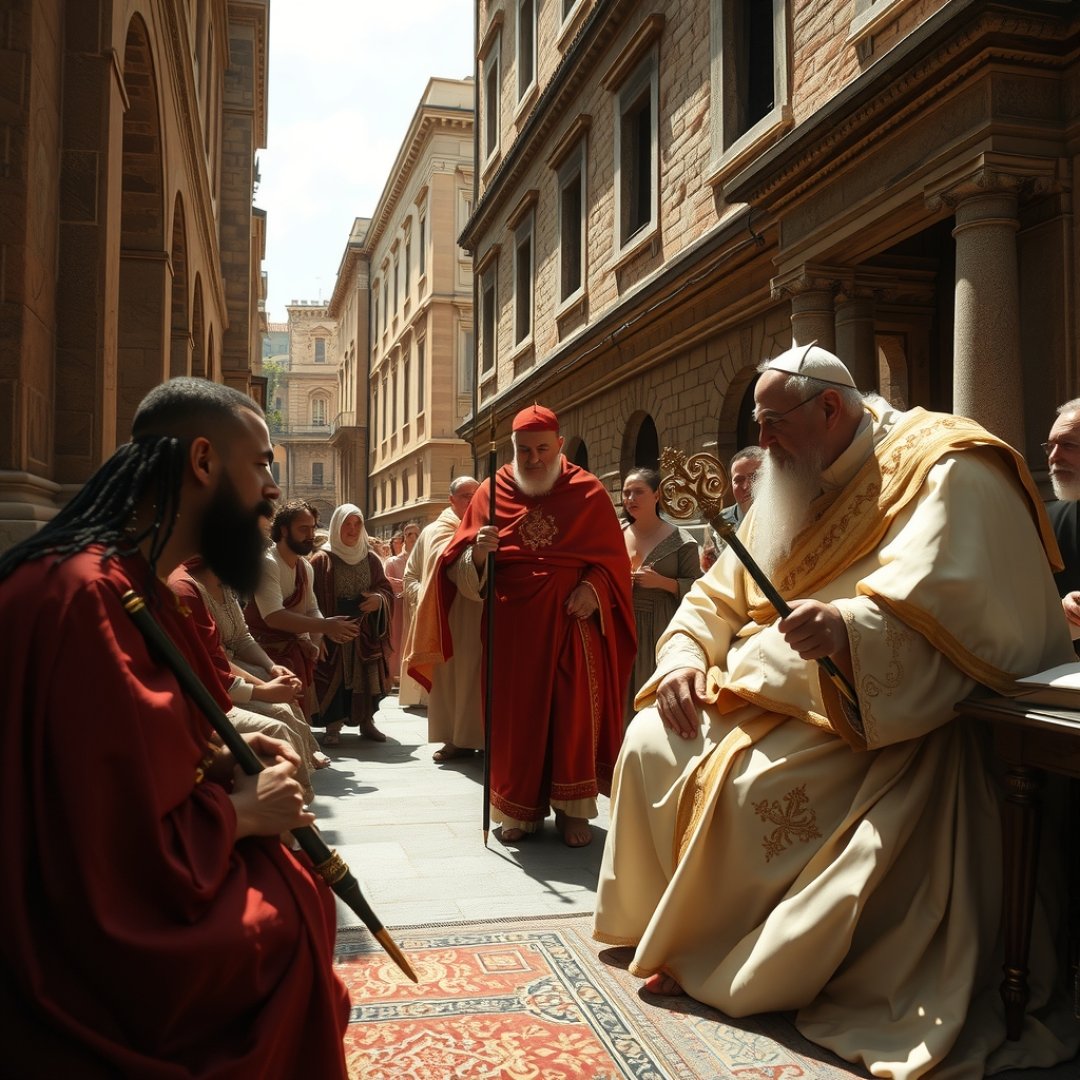
The twilight of the 5th century AD was a period of profound transition for Rome, a city grappling with the aftermath of the Western Empire’s collapse and the rise of new powers. Amidst this flux, the spiritual leadership of the nascent Christian world found itself embroiled in its own deep internal strife. In 498 AD, the city witnessed the tumultuous beginning of what would become known as the Laurentian Schism, a complex and often violent struggle for the very soul of the papacy. This contentious period, marked by rival claimants to St. Peter’s chair, Symmachus and Laurentius, reflected not only theological disagreements but also the intricate interplay of Roman senatorial factions, local urban politics, and the looming influence of Theodoric the Great, the Ostrogothic king who now ruled Italy. Understanding the Laurentian Schism 498 is crucial to comprehending the evolution of papal authority and the church’s role in a rapidly changing world.
The Contested Election of 498 AD
The death of Pope Anastasius II in late 498 AD plunged Rome into a fierce ecclesiastical and political struggle. The city’s influential factions, deeply divided along theological and political lines, swiftly moved to elect his successor. One group, largely comprising the majority of the clergy and many Roman aristocrats, gathered at the Lateran Basilica to elect Symmachus. Almost simultaneously, a rival faction, primarily supported by a powerful senatorial contingent with pro-Byzantine leanings, convened at the Basilica of Santa Maria Maggiore and elected Laurentius. This double election immediately created an unprecedented crisis, splitting the Roman Church and the city itself. Both men were consecrated on the same day, intensifying the confusion and laying the groundwork for a protracted and bitter struggle for legitimacy.
Theodoric’s Role: Arbitrator and Kingmaker
With Rome embroiled in strife, both parties appealed to Theodoric the Great, the Ostrogothic king who had recently established his dominion over Italy. Though an Arian Christian, Theodoric held significant secular authority in Rome and was eager to maintain peace and order. He decided to intervene, issuing his initial judgment based on what he perceived as established custom. Theodoric decreed that the legitimate pope was the one who had been elected first and by the majority of the clergy. By these criteria, Symmachus was recognized as the rightful pontiff, having been consecrated earlier by the larger faction. Laurentius was initially offered the bishopric of Nuceria. However, this initial resolution proved fragile, as Laurentius’s powerful senatorial backers refused to accept defeat, paving the way for further agitation and discord.
The Synod of Rome and Accusations Against Symmachus
Despite Theodoric’s initial arbitration, the Laurentian Schism continued to fester. Laurentius’s supporters, unwilling to concede, leveraged their influence within the Roman Senate and the Byzantine court. They began to level serious accusations against Pope Symmachus, including charges of misconduct, mismanagement of church property, and even celebrating Easter on the wrong date according to the Roman calendar. These accusations forced Theodoric to convene a series of synods in Rome. The most significant was the Synod of Palmaris, held in 501 AD. The proceedings were highly contentious and politically charged, with Laurentian partisans seeking to depose Symmachus. However, after much debate and maneuvering, the synod ultimately declared that no earthly court could sit in judgment of the Pope, effectively exonerating Symmachus, albeit controversially. This assertion of papal immunity from secular judgment was a significant development, even if its immediate application was marred by political pressure.
The Resolution and Lasting Impact of the Schism
The Laurentian Schism slowly drew to a close over several years, primarily due to King Theodoric’s eventual firm withdrawal of support for Laurentius, who was sent away from Rome around 506 AD. This left Symmachus as the undisputed Pope, though the years of conflict had taken a toll on the Roman Church’s unity and reputation. The schism highlighted several crucial aspects of early medieval papal authority:
- Secular Intervention: It underscored the increasing role of secular rulers, like Theodoric, in ecclesiastical affairs, particularly papal elections.
- Papal Immunity: The Synod of Palmaris, however controversial, established a precedent for the concept that a pope could not be judged by his subordinates, strengthening papal claims to ultimate spiritual authority.
- Factionalism: The deep divisions within the Roman clergy and aristocracy demonstrated the pervasive political and personal rivalries that could influence even the highest ecclesiastical office.
The Laurentian Schism served as a stark lesson, contributing to future reforms aimed at regularizing papal elections and limiting external interference, although such efforts would continue to be tested for centuries.
Frequently Asked Questions
What caused the Laurentian Schism of 498 AD?
The schism was primarily caused by a double election following the death of Pope Anastasius II, with two factions of Roman clergy and aristocracy electing rival popes, Symmachus and Laurentius, simultaneously.
Who were the main figures involved in the Laurentian Schism?
The primary figures were the two rival claimants to the papacy: Symmachus (elected by the larger faction) and Laurentius (supported by a significant senatorial group). King Theodoric the Great also played a crucial role as an arbiter.
How was the Laurentian Schism resolved?
The schism was eventually resolved around 506 AD after King Theodoric withdrew his support for Laurentius, consolidating Symmachus’s position. This was preceded by various synods and political maneuvering.
What was the significance of King Theodoric’s involvement?
Theodoric’s involvement set a precedent for secular rulers to intervene in papal elections, demonstrating the complex power dynamics between the Ostrogothic monarchy and the Roman church in early medieval Italy.
Related posts:
 The Death of Pope Gregory I (604 AD): A Turning Point for the Early Medieval Papacy
 The Lombard Power Consolidation Under King Desiderius (c. 763 AD)
 Henry II’s Roman Coronation of 1014: The Resurgence of Imperial Power in Medieval Rome
 Pope John XIII’s Papacy (965-972 AD): Navigating Imperial Influence in Rome