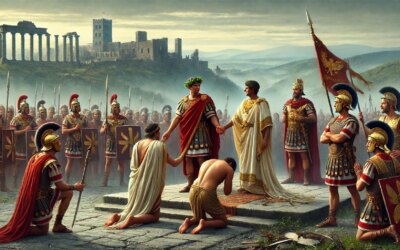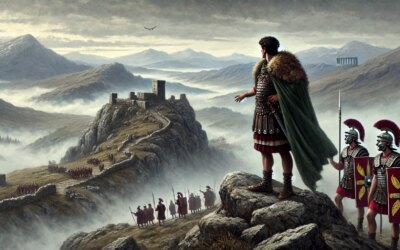
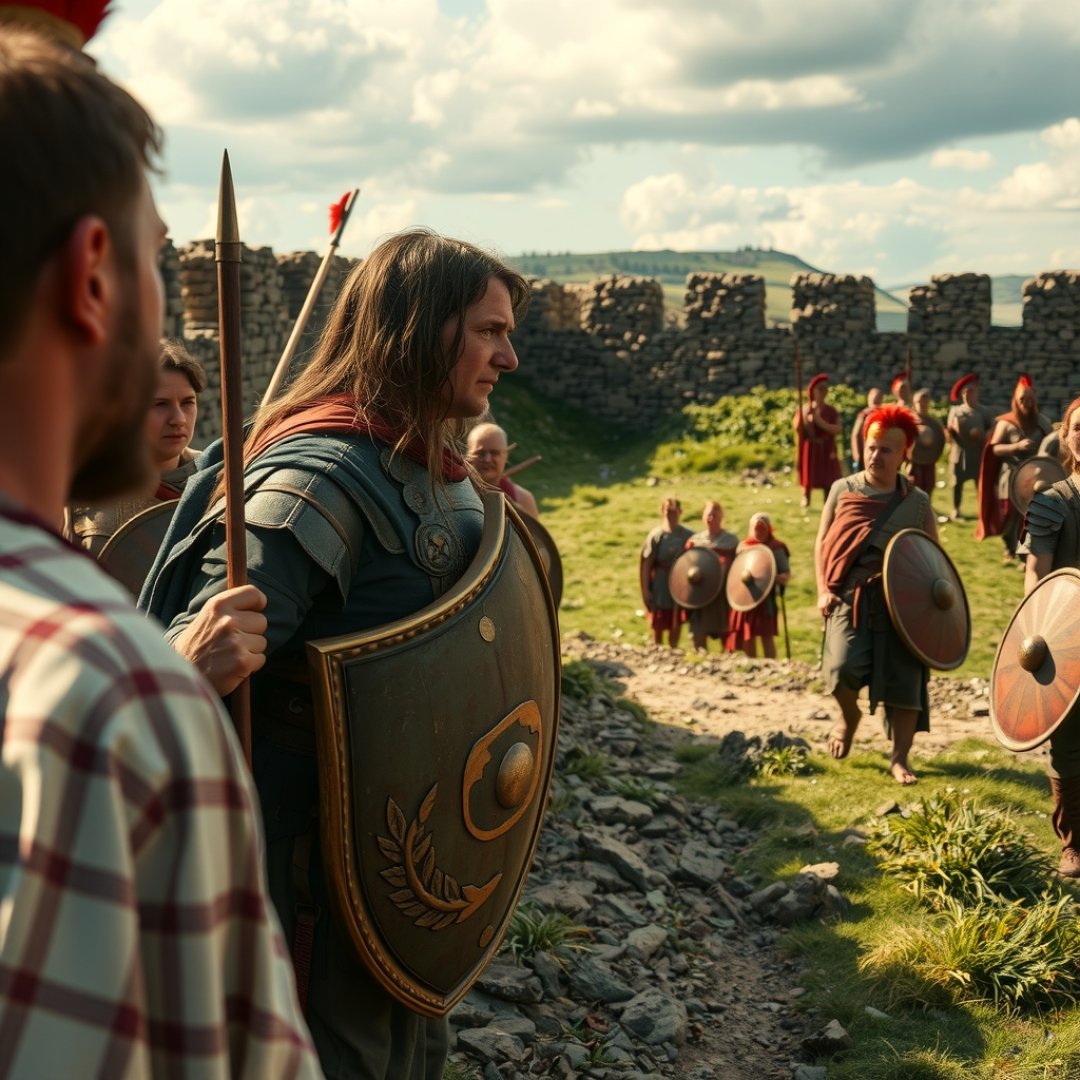
In the mid-2nd century AD, the Roman Empire under Emperor Antoninus Pius was largely characterized by peace and stability, a stark contrast to the unrest that often defined its vast frontiers. However, even during this tranquil period, challenges arose, particularly in the northern reaches of Britannia. The remote, wild territories beyond Hadrian’s Wall, and even those nominally under Roman control, were always a hotbed of resistance. One such significant eruption of defiance was the Brigantian Revolt, a series of uprisings that severely tested Roman resolve and manpower in the years between AD 154 and 158. This rebellion by the indigenous Brigantes tribe, the most powerful native group in what is now northern England, forced Rome to divert substantial military resources and rethink its strategy for controlling its farthest flung province, threatening the integrity of the recently constructed Antonine Wall and challenging the Pax Romana itself.
The Brigantes: A Formidable Presence in Roman Britain
Indigenous Power and Roman Ambition
The Brigantes were a confederation of tribes inhabiting a vast area of northern Britain, stretching from the Humber to the Tyne. Prior to the Brigantian Revolt, their relationship with Rome had been complex, oscillating between client kingdom status and open rebellion. Under emperors like Trajan and Hadrian, punitive campaigns had been launched against them, yet their spirit of independence remained strong. When Antoninus Pius ascended to the throne, his policy of forward defense led to the construction of the Antonine Wall further north in modern-day Scotland, effectively annexing a portion of Brigantian territory. This expansionist move, intended to secure the frontier, inadvertently sowed the seeds of renewed discontent among the already restive tribes, who viewed the Roman advance as an existential threat to their traditional lands and autonomy.
Roman administration in Brigantian territory was centered around garrisons and forts, but control was often tenuous. The cultural clash between the sophisticated urbanism of Rome and the tribal, agricultural lifestyle of the Brigantes was immense. While some Brigantian elites may have adopted Roman customs, the majority harbored deep resentment towards the occupiers. The constant pressure of Roman taxation, conscription, and the disruption of traditional power structures fueled a simmering anger that would eventually boil over into open warfare.
Flames of Rebellion: The Initial Uprising
Rebellion Ignites in the North
The precise spark for the Brigantian Revolt around AD 154 is not definitively recorded, but it likely involved a coordinated uprising aimed at expelling Roman forces from their lands. Archaeological evidence, particularly the destruction layers found at Roman forts and settlements throughout Brigantian territory, corroborates literary accounts of significant unrest. Forts like Bremenium and Coria were likely attacked, and segments of the Antonine Wall frontier may have been overrun or severely threatened. The initial success of the Brigantes would have been a massive blow to Roman prestige and demonstrated the vulnerability of their northern defenses.
The Roman response was swift, though initially perhaps underestimated the scale of the threat. The governor of Britannia, Gnaeus Julius Verus, found himself facing a widespread insurgency rather than isolated skirmishes. Inscriptions indicate that reinforcements were urgently dispatched, possibly including vexillations from other legions stationed in Britain or even from the Rhine frontier. The fighting would have been brutal, characterized by guerrilla tactics employed by the Brigantes against the highly organized but less adaptable Roman legions. The unforgiving terrain of northern Britain, with its dense forests and rugged hills, favored the local resistance, making conventional Roman military operations challenging.
Crushing the Uprising and Reasserting Control
The Pax Romana Restored, Briefly
By AD 157, the full might of Roman military power was brought to bear on the Brigantian Revolt. Gnaeus Julius Verus, with considerable reinforcements, launched a decisive counter-offensive. While details of specific battles are scarce, it is evident that Roman discipline and superior logistics eventually prevailed. The Brigantian resistance, though fierce, lacked the centralized command and resources to withstand a sustained Roman campaign. Forts were recaptured, rebel strongholds were dismantled, and significant losses were inflicted upon the native population.
The immediate aftermath saw a brutal reassertion of Roman authority. Garrisons were strengthened, and some evidence suggests punitive measures were enacted against the Brigantian leadership. The long-term consequence for the Antonine Wall was significant; it became increasingly difficult to maintain. While Rome technically “won” the revolt, the resources expended and the ongoing instability highlighted the strategic difficulties of holding such a distant and hostile frontier. Within a few decades, the Antonine Wall would be abandoned, and Roman forces would largely retreat to the more defensible line of Hadrian’s Wall, a tacit admission of the challenges posed by determined indigenous resistance, exemplified by this significant Brigantian uprising.
Frequently Asked Questions
What was the main cause of the Brigantian Revolt?
The primary cause was the Brigantes’ deep-seated resentment of Roman occupation and expansion, exacerbated by the construction of the Antonine Wall, which encroached on their traditional lands and sovereignty.
Who were the Brigantes?
The Brigantes were a powerful confederation of Celtic tribes inhabiting a large area of what is now northern England during the Roman period. They were known for their fierce independence.
Which Roman emperor was ruling during the Brigantian Revolt?
The Brigantian Revolt occurred during the reign of Emperor Antoninus Pius, who ruled the Roman Empire from AD 138 to 161.
What was the Roman response to the revolt?
The Roman response was a large-scale military campaign led by Governor Gnaeus Julius Verus, involving significant troop reinforcements and a sustained effort to suppress the uprising and reassert Roman control over the rebellious territories.
What were the long-term consequences of the Brigantian Revolt for Roman Britain?
The revolt highlighted the difficulties of maintaining the Antonine Wall and contributed to the eventual Roman decision to withdraw forces back to the more defensible Hadrian’s Wall, marking a strategic retreat in northern Britannia.