
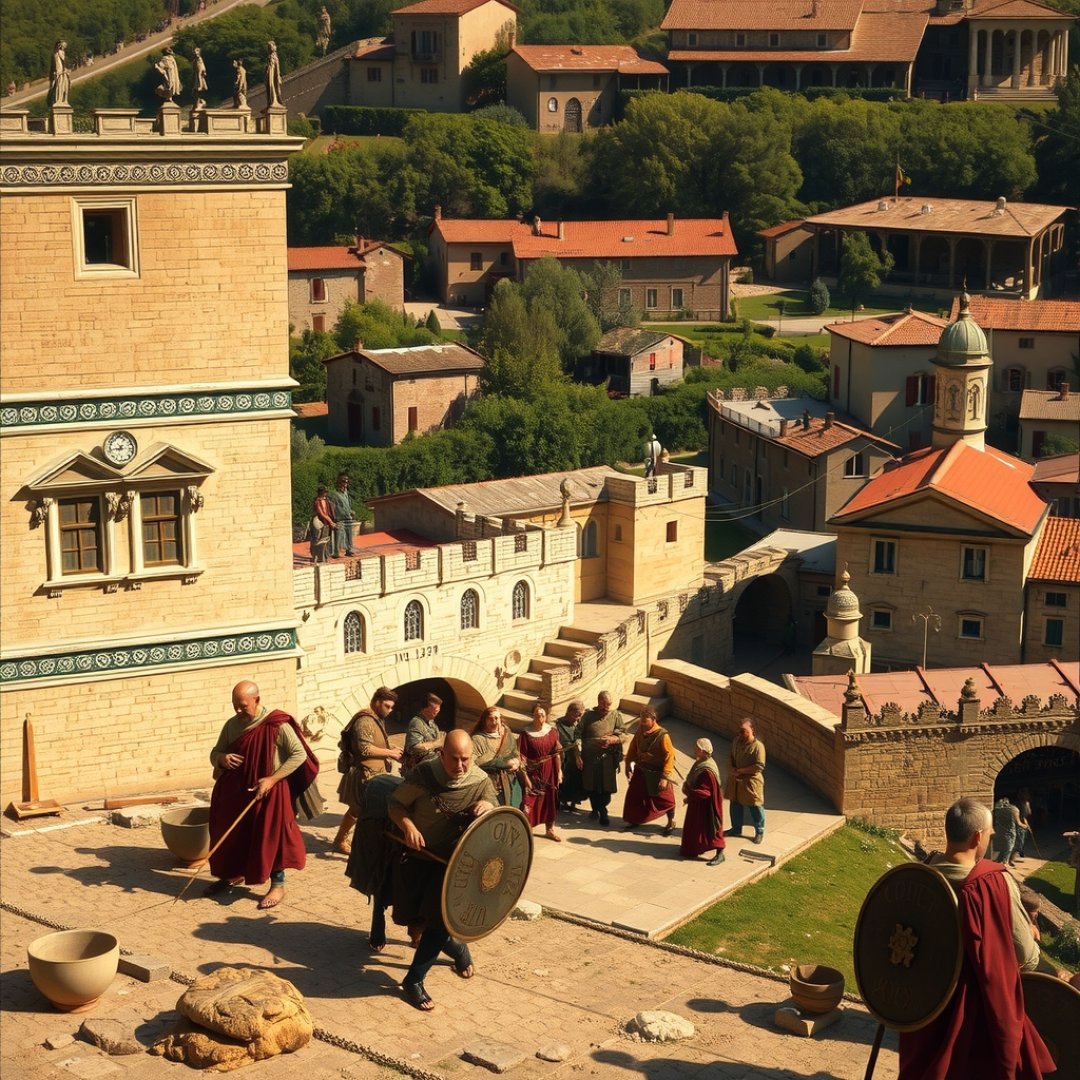
In the mid-6th century, after years of grueling conflict that devastated the Italian peninsula, the Eastern Roman Empire, under Emperor Justinian I, was finally poised to reclaim its ancient heartland. Though the main Gothic War concluded with the defeat of King Totila in 552 AD and the subsequent campaigns against Frankish and Alamannic invaders in 554 AD, pockets of resistance continued to plague Byzantine authority. The brilliant general Narses, Justinian’s trusted eunuch and commander, found himself tasked not only with military victory but with the arduous process of rebuilding and stabilizing a shattered land. Among the last strongholds of defiance was the strategic city of Verona, a key point for controlling northern Italy. The eventual Capture of Verona in 562 AD by Narses marked a crucial step in cementing Byzantine control and bringing a definitive end to nearly three decades of war, signaling a moment of true, if fleeting, consolidation for the imperial presence in Italy before new threats emerged.
The Persistent Aftermath of the Gothic War
The Gothic War (535–554 AD) had inflicted immense suffering on Italy. While Narses’ decisive victories at Taginae and Mons Lactarius effectively ended Ostrogothic military power, and the subsequent Battle of the Volturnus expelled the Frankish and Alamannic incursions, complete pacification of the peninsula remained elusive. Several strongholds, particularly in the northern regions, either harbored residual Gothic elements or were occupied by local resistance movements that resented Byzantine taxation and administration. These pockets of defiance, often fortified and well-defended, posed a continuous challenge to imperial authority, requiring Narses to maintain an active military presence and prevent any resurgence of widespread rebellion. The mountainous terrain and the support from certain local populations made these final clearances particularly difficult, extending the conflict long after its nominal end.
Narses’ Strategic Clearance of Northern Italy
Narses, a commander renowned for his meticulous planning and logistical acumen, systematically set about neutralizing these remaining threats. His strategy involved a combination of siege warfare, diplomatic overtures, and swift, decisive military action. The cities of Verona and Brixia (modern Brescia) were identified as critical targets. Verona, with its formidable Roman walls and strategic position on the Adige River, controlled vital routes into the Po Valley and beyond. Narses understood that true control over Italy hinged on securing these northern bastions. By 561 AD, Narses had successfully cleared many smaller pockets of resistance. His attention then turned fully to Verona and Brixia, preparing his forces for a coordinated assault to finally extinguish the last embers of opposition. His methodical approach minimized casualties where possible but left no doubt about Byzantine resolve.
The Fall of Verona and Its Implications
The Capture of Verona in 562 AD was not a single, grand battle, but rather the culmination of Narses’ careful operations in northern Italy. While detailed accounts are scarce, chroniclers like Agathias confirm its fall to Byzantine forces. The capture of Verona, likely achieved through a combination of siege and direct assault, signaled the definitive end of organized Gothic or localized resistance. With Verona and Brixia secured, the Byzantine Empire could claim to have fully regained Italy. This triumph allowed Narses to shift his focus almost entirely from military campaigning to the more complex task of civil administration, as mandated by Justinian’s Pragmatic Sanction of 554 AD. It marked a temporary but significant restoration of Roman imperial power in the west, ushering in a brief period of peace and reconstruction under Byzantine rule.
A Brief Period of Stability Before New Storms
The consolidation achieved by the Capture of Verona in 562 AD provided a crucial, albeit short-lived, period of stability for Byzantine Italy. Narses, now serving as the Exarch, dedicated himself to restoring infrastructure, administering justice, and re-establishing imperial governance. This era saw a revival of certain aspects of Roman life, particularly in the south and central regions. However, the immense costs of the Gothic War, coupled with ongoing Byzantine commitments in the east, left Italy vulnerable. The peace secured by Narses would prove fragile, as a new and formidable Germanic power, the Lombards, were already gathering on the northern frontiers. Their invasion in 568 AD, just six years after Verona’s capture, would plunge Italy back into chaos and ultimately lead to the permanent division of the peninsula, rendering Narses’ hard-won unification a fleeting triumph.
Frequently Asked Questions
Who was Narses?
Narses was a prominent eunuch in the court of Byzantine Emperor Justinian I, who rose to become one of the most successful generals in Roman history. He commanded the Byzantine forces that ultimately defeated the Ostrogoths in Italy, culminating in the complete restoration of imperial rule over the peninsula.
What was the state of Italy before Verona’s capture in 562 AD?
Before 562 AD, Italy had been ravaged by nearly three decades of the Gothic War. While the main Ostrogothic and Frankish-Alamannic forces had been defeated by 554 AD, isolated pockets of resistance, particularly in northern cities like Verona and Brixia, continued to challenge Byzantine authority and administrative efforts.
Why was Verona important to Narses’ campaign?
Verona was a strategically vital city in northern Italy, possessing strong Roman fortifications and controlling crucial access routes into the fertile Po Valley. Its capture by Narses in 562 AD was essential for fully consolidating Byzantine control over the peninsula and eliminating the last significant centers of resistance.
Did the capture of Verona permanently secure Byzantine rule in Italy?
While the capture of Verona in 562 AD marked a moment of complete Byzantine consolidation and ushered in a brief period of peace, this security was not permanent. Just six years later, in 568 AD, the Lombard invasion began, leading to a long and complex struggle that ultimately fragmented Byzantine Italy and ended any hope of a full, lasting imperial restoration.
Related posts:
 Narses’ Italian Administration (c. 555 AD): Rebuilding Byzantine Italy After the Gothic War
 The Gothic War and the Devastation of Rome (535–554 CE)
 The Pragmatic Sanction of 554 AD: Justinian’s Blueprint for Italy’s Byzantine Future
 The Battle of Faventia of 542 AD: Totila’s Resurgence in the Gothic War