
Introduction: A World Unraveled
In 476 AD, a moment of profound historical symbolism unfolded when Romulus Augustulus, the last emperor of the Western Roman Empire, was deposed by the Germanic general Odoacer. This event is traditionally marked as the fall of the Western Roman Empire, an end to the political structures that had dominated Europe for nearly a millennium. Yet, the story is more complex than a simple collapse—it is one of gradual transformation, resilience, and new beginnings.
The Fragile State of the Western Empire
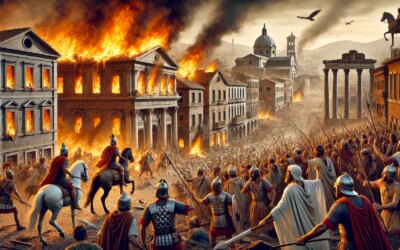
By the mid-5th century, the Western Roman Empire was a shadow of its former glory. Beset by internal corruption, economic decline, military defeats, and relentless pressure from migrating and invading tribes, Rome struggled to maintain its authority. Key provinces like Britain, Gaul, and Hispania had slipped from central control, and the empire’s once-formidable legions were often staffed by mercenaries with shifting loyalties.
The Rise of Odoacer
Odoacer, a leader of Germanic foederati (federated tribes settled within the empire’s borders), emerged as a dominant military figure. When the Roman general Orestes, father of Romulus Augustulus, refused to grant land to Odoacer’s followers, conflict ensued. Odoacer’s forces defeated and killed Orestes, and soon after, Romulus Augustulus—only a teenager and a puppet emperor—was forced to abdicate.
The Symbolism of 476 AD
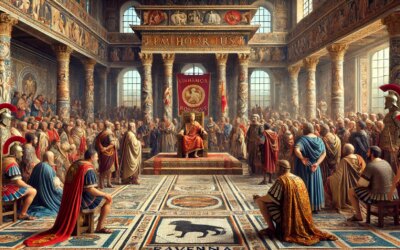
Romulus Augustulus’s deposition was significant not because it marked a violent overthrow, but because it represented a formal acknowledgment that the Western Empire no longer had the power or legitimacy to sustain itself. Odoacer sent the imperial regalia to the Eastern Roman Emperor, Zeno, effectively stating that there was no longer a need for a separate western emperor. Odoacer ruled Italy as “King,” nominally under the authority of Constantinople but effectively independent.
The Aftermath: Continuity Amid Collapse
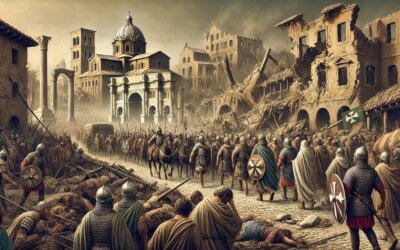
Despite the symbolic end of Roman rule, many Roman traditions, laws, and institutions persisted under barbarian kingdoms. The administrative structures remained largely intact, and Latin continued as the language of law and governance. In this sense, 476 AD was less a cataclysm and more a transition into a new medieval order, where Roman heritage would merge with Germanic customs to shape Europe’s future.
The Legacy of the Fall
The fall of the Western Roman Empire set the stage for the Middle Ages. It fragmented Western Europe into a mosaic of kingdoms, paving the way for the rise of new powers such as the Franks, Visigoths, and Lombards. The Catholic Church, inheriting much of Rome’s cultural and organizational legacy, became a unifying force across the fragmented West.
Conclusion: An End, But Also a Beginning
The deposition of Romulus Augustulus in 476 AD marks a convenient historical endpoint to Roman dominion in the West. Yet, the true legacy of Rome endured—not in imperial crowns, but in ideas, institutions, and identities that would define Europe for centuries to come. In the ruins of the old empire, a new world was quietly taking shape.