Introduction: Victory in the East, Celebration in Rome
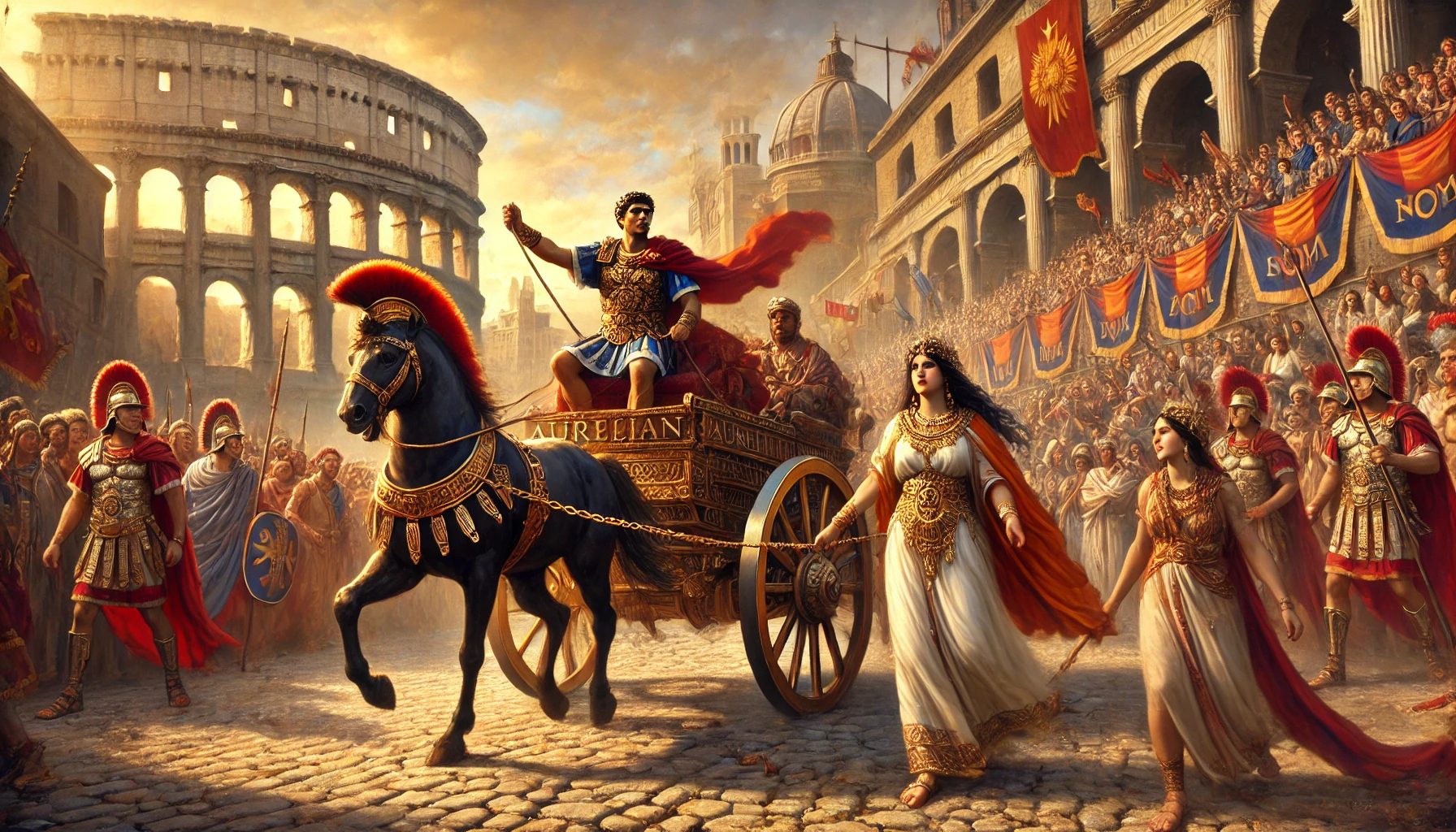
In 274 AD, Emperor Aurelian staged one of the most celebrated triumphs in Roman history. Parading through Rome in his chariot, he was accompanied not only by the spoils of his military conquests but by a living symbol of victory: Queen Zenobia of Palmyra, captured and shackled. This moment signified the end of the Palmyrene Empire and the reassertion of Roman authority across the fractured eastern provinces. Aurelian’s triumph marked the zenith of his brief but transformative reign, celebrated as the “Restitutor Orbis”—the Restorer of the World.
The Rise of Zenobia and the Palmyrene Challenge
Zenobia, the formidable queen of Palmyra, had capitalized on the instability of the Roman Empire during the Crisis of the Third Century. Following her husband Odaenathus’s assassination, she ruled as regent for her young son Vaballathus. Zenobia soon proved to be a shrewd and ambitious leader, expanding her influence over much of the Eastern Roman territories, including Egypt, Syria, and parts of Asia Minor. By 271 AD, Palmyra operated as a de facto independent empire, and Zenobia had assumed the imperial title.
Aurelian’s Campaign to Reunify the Empire
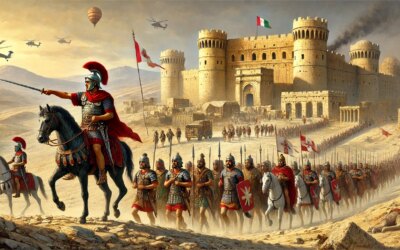
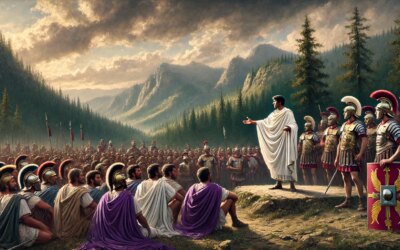
Aurelian, ascending to the throne in 270 AD, inherited a fragmented empire beset by barbarian invasions, economic instability, and multiple breakaway states. After securing victories in the West, he turned eastward in 272 AD, launching a swift and decisive campaign against Zenobia. His legions moved with remarkable speed, recapturing Egypt and Syria and defeating Palmyrene forces at battles such as Immae and Emesa. Zenobia attempted to flee eastward to seek Persian aid but was captured while crossing the Euphrates.
The Triumph in Rome
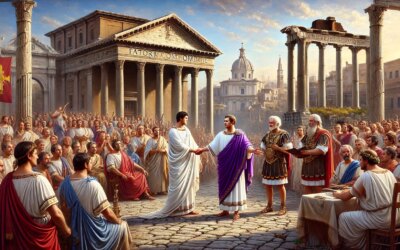
Upon his return to Rome in 274 AD, Aurelian staged a spectacular triumph to mark the restoration of imperial unity. The procession wound through the streets of the Eternal City, displaying exotic animals, vast spoils of war, and defeated enemies. At the center of the spectacle walked Zenobia, dressed in her regal Eastern attire and bound in golden chains. Though humiliated, she retained her dignity, becoming a legendary figure of resistance and tragic fate.
The Pageantry and Symbolism
Roman triumphs were as much political theater as celebration. Aurelian’s procession reminded the Roman populace of their emperor’s power and divine favor. The inclusion of Zenobia emphasized Rome’s supremacy over even the most audacious challengers. Temples were adorned, crowds shouted praises, and sacrifices were offered in thanksgiving to the gods. Aurelian’s title “Restitutor Orbis” was echoed throughout the city, reinforcing his image as savior of the Roman world.
Zenobia’s Fate
Unlike many captured rulers, Zenobia was spared execution. Historical accounts suggest that she was granted a villa in Tibur (modern Tivoli), where she lived out her days in comfort. Her intelligence, cultural refinement, and noble bearing earned her the enduring fascination of later writers and historians, who often portrayed her as a tragic heroine rather than a mere rebel.
The Legacy of Aurelian’s Victory
Aurelian’s triumph over Palmyra was a key turning point in the Third Century Crisis. By eliminating the Palmyrene Empire and later the Gallic Empire in the West, Aurelian restored the political unity of the Roman Empire. Though his reign was cut short by assassination in 275 AD, his legacy endured, setting the stage for future emperors like Diocletian to implement lasting reforms.
Conclusion: A Moment of Glory Amid Crisis
The triumph of Aurelian was not just a celebration of military conquest—it was a statement of imperial resilience. In an age of fragmentation and uncertainty, Aurelian’s parade through Rome symbolized the rebirth of Roman strength and the triumph of central authority. Zenobia, even in defeat, added dramatic flair to the occasion, her story immortalized as one of ambition, defiance, and grace under adversity. Together, they shaped a moment that echoed through the annals of history.