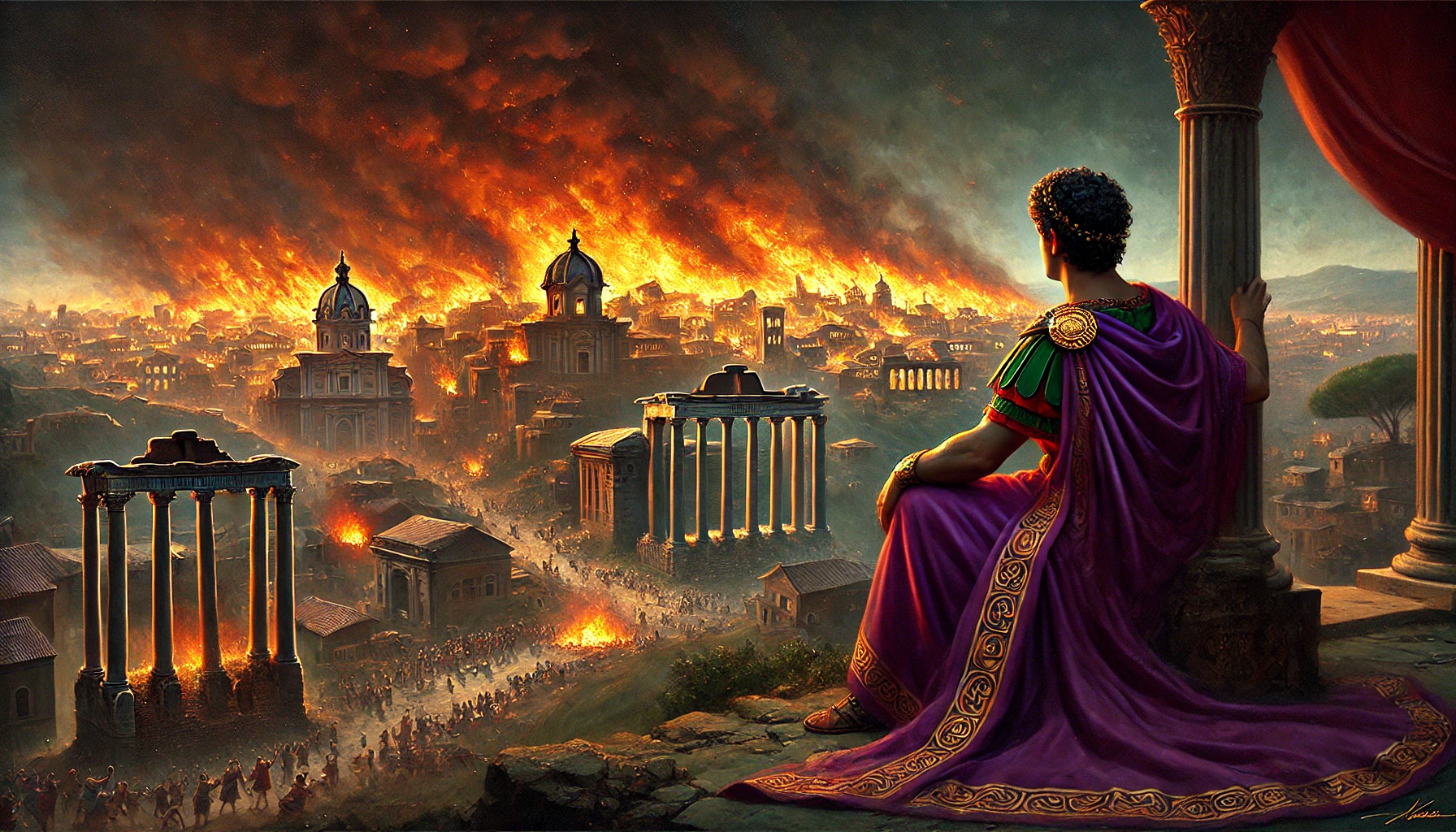
Introduction: A City in Flames
In July of 64 AD, a catastrophic fire swept through Rome, destroying vast swathes of the imperial capital and altering the course of its history. The Great Fire, which raged for nine days, remains one of antiquity’s most infamous disasters—not only for its scale, but for the enduring controversy surrounding Emperor Nero. Was he truly a tyrant who “fiddled while Rome burned,” or a ruler scapegoated by history and legend?
The Outbreak and Spread of the Fire
The fire began during the night of July 18, near the Circus Maximus. Fueled by dry summer winds and Rome’s densely packed wooden tenements, it quickly spiraled out of control. Ancient sources describe an inferno that consumed entire districts. Of Rome’s 14 regions, three were utterly destroyed and seven severely damaged. Public buildings, temples, and countless homes were reduced to ash.
Nero’s Whereabouts and Response
According to the historian Tacitus, Nero was at his villa in Antium when the fire began. Upon hearing the news, he returned to Rome and opened the imperial gardens to refugees, arranged emergency food supplies, and provided shelter. Yet rumors spread rapidly. Some claimed he watched the fire from a tower, dressed in stage costume, playing his lyre as he sang of Troy’s destruction.
Fact or Propaganda?
The tale of Nero “fiddling while Rome burned” is almost certainly apocryphal—fiddles did not exist in ancient Rome, and Tacitus, writing decades later, presents the story with skepticism. However, Nero’s theatrical nature, coupled with his unpopularity among elites, made such rumors potent. Ancient historians like Suetonius and Cassius Dio expanded on these themes, casting Nero as both arsonist and madman.
Rebuilding Rome and the Domus Aurea
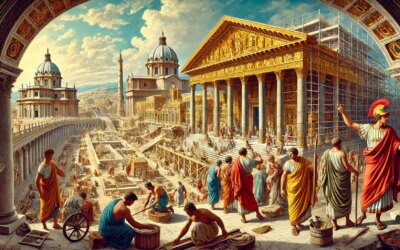
In the aftermath, Nero launched an ambitious rebuilding program. He introduced new building codes mandating fireproof materials and wider streets. Yet public outrage grew when he appropriated vast tracts of cleared land for his own palace—the Domus Aurea, or Golden House—a sprawling complex of gardens, pavilions, and artificial lakes. To many, this seemed less like renewal and more like imperial indulgence atop the ruins of the city.
The Persecution of Christians
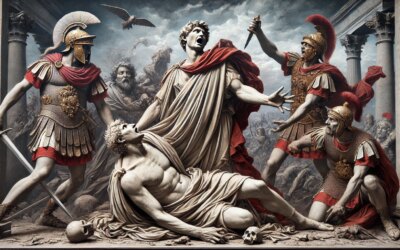
To deflect blame, Nero accused a small, unpopular sect: the Christians. Tacitus records that they were scapegoated and subjected to horrific punishments—crucifixions, maulings by wild beasts, and being burned alive as human torches. This marks one of the first recorded imperial persecutions of Christians and cemented Nero’s reputation as a brutal persecutor in Christian memory.
Historical Debate and Modern Reinterpretation
Modern historians take a more nuanced view of Nero’s role. While the fire’s origins remain uncertain, it likely began accidentally. Nero’s public relief efforts, though sincere, were overshadowed by his vanity projects. His vilification was largely the work of senatorial authors hostile to his populism and flamboyant style. Today, some scholars even argue that Nero’s architectural reforms laid groundwork for a safer, more structured Rome.
Conclusion: Fire, Fame, and the Fall of a Reputation
The Great Fire of Rome was a defining event not only for the city, but for Nero’s legacy. Whether he was a negligent egotist, a reformer misunderstood by aristocratic critics, or both, his name remains inseparable from the flames. In the ashes of the crisis, Nero saw an opportunity to reshape Rome—and perhaps himself—but history remembered instead a man who played as his city burned. Truth and legend fused in smoke, leaving a shadow that endures to this day.