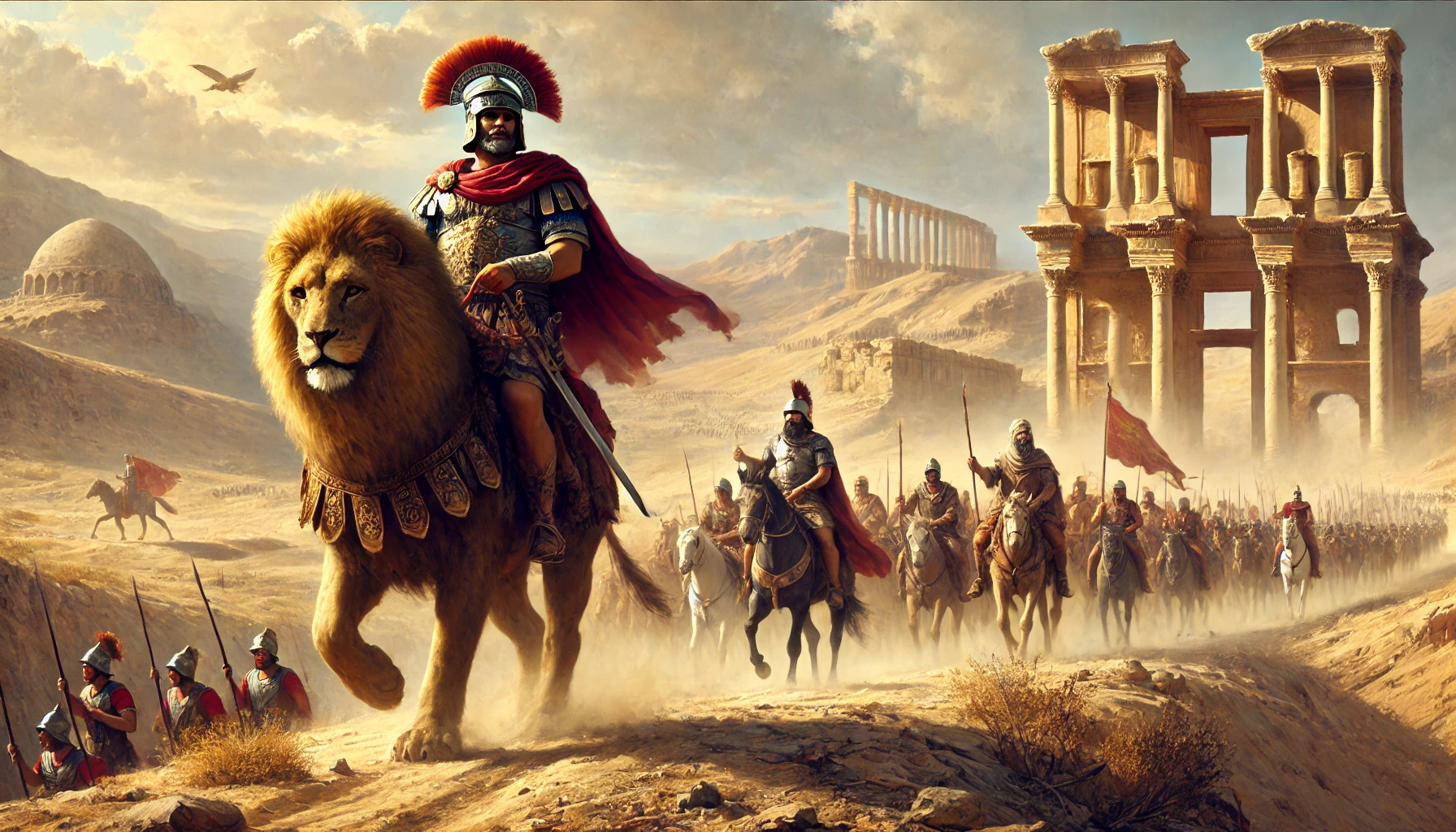
Introduction: The Emperor’s Desert War
In 216 AD, Marcus Aurelius Antoninus—better known to history as Caracalla—embarked on a bold and violent campaign deep into Mesopotamia, the heartland of the Parthian Empire. The campaign was framed as a show of Roman strength and vengeance. In reality, it was a bloody expression of one man’s imperial obsession. What unfolded in the scorching deserts of the East was a drama of conquest, cruelty, and political ambition.
Caracalla: The Warrior Autocrat
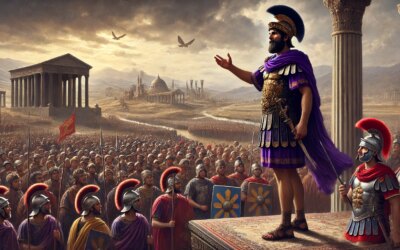
Caracalla, who ruled from 198 to 217 AD, is often remembered for his tyrannical behavior and the infamous murder of his brother Geta. Yet he also positioned himself as a soldier-emperor, keen to associate with Alexander the Great. His desire to emulate Alexander’s eastern exploits played a key role in his decision to campaign against Rome’s longtime eastern rivals—the Parthians.
Prelude to Invasion
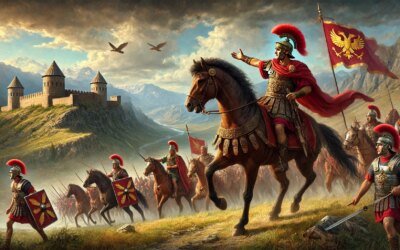
The official reason for the campaign was a diplomatic dispute. Caracalla proposed a marriage alliance with the daughter of the Parthian king Artabanus IV—a proposal likely meant to humiliate rather than unite. When it was rejected, Caracalla used it as a pretext for war. He mobilized a vast army and set out for Mesopotamia in 216, determined to punish the Parthians and elevate his reputation through blood and conquest.
The March Through the East
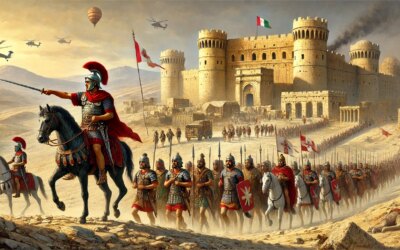
The campaign began with methodical brutality. Caracalla’s legions sacked Parthian towns, desecrated temples, and massacred civilians. One of the most infamous atrocities was the slaughter at Arbela (modern Erbil), where Roman troops reportedly lured Parthians into a mock celebration before ambushing them. Caracalla styled himself as a second Alexander, but his legacy was built not on strategy, but slaughter.
Politics and Propaganda
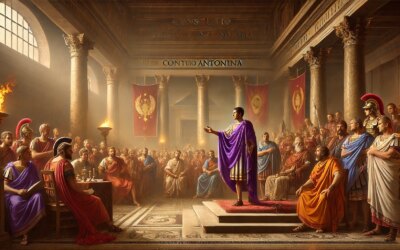
Inscriptions and coinage during this period depicted Caracalla as a divine avenger and conqueror. He claimed victory over the Parthians despite the absence of major pitched battles. His strategy relied more on shock and awe than military brilliance. He hoped to destabilize Parthian rule, win personal glory, and suppress dissent within Rome by portraying himself as a victorious emperor.
Assassination and the End of the Campaign
Caracalla’s reign came to a swift and ignominious end in April 217. While traveling to Carrhae (ironically the site of Rome’s greatest eastern defeat under Crassus), he was assassinated by a soldier acting under the orders of his praetorian prefect Macrinus. His death brought an abrupt halt to the campaign. Macrinus, now emperor, quickly sought peace with the Parthians to stabilize his own rule.
Historical Judgment
Ancient historians such as Cassius Dio and Herodian condemned Caracalla’s eastern war as reckless and cruel. Though he brought temporary fear to Rome’s enemies, he achieved little of strategic value. The Parthian Empire survived the assault, and within a few decades, it would fall not to Rome, but to the emerging Sassanid dynasty. Caracalla’s legacy was one of violence without vision.
Conclusion: Desert Dust and Imperial Delusions
The Mesopotamian campaign of 216 AD revealed the Roman Empire under Caracalla as a realm driven by personal vendettas and imperial theatrics. Though his legions marched through ancient lands and left devastation in their wake, no lasting triumph was won. In the burning sands of the East, Caracalla’s ambition found only blood and betrayal. His campaign stands as a stark reminder that conquest without purpose leads not to glory, but to ruin.