Introduction: The Fate of the West in the Balance
In 451 AD, the Western Roman Empire—beleaguered, fragmented, and on the brink—confronted its most formidable threat in generations. Attila the Hun, called the “Scourge of God,” had invaded Gaul. As cities fell and fear spread, it was Roman general Flavius Aetius who rallied an unlikely alliance of Romans and Germanic tribes to face the invader. The result was the Battle of the Catalaunian Plains, a clash of titanic consequence and Rome’s last great martial stand in the West.
Flavius Aetius: The Last Roman General
Flavius Aetius had spent much of his youth as a hostage in both Gothic and Hunnic courts. He understood the strategies and cultures of Rome’s enemies better than most. By the mid-5th century, he had risen to become magister militum, the de facto military ruler of the Western Empire. Charismatic and pragmatic, Aetius was both a defender of Rome and a master of realpolitik, skilled in using alliances to secure what Rome could no longer command alone.
Attila’s Invasion of Gaul
In 451, Attila launched a devastating campaign into Gaul, pillaging cities and pressing toward the strategic hub of Aurelianum (Orléans). His horde was vast—composed of Huns and a mix of subjugated peoples including Ostrogoths, Gepids, and Alans. The West trembled. Yet rather than collapse, Roman resistance coalesced. Aetius gathered a coalition that included Visigoths under King Theodoric I, Franks, Burgundians, and remnants of Roman legions.
The Battle Begins
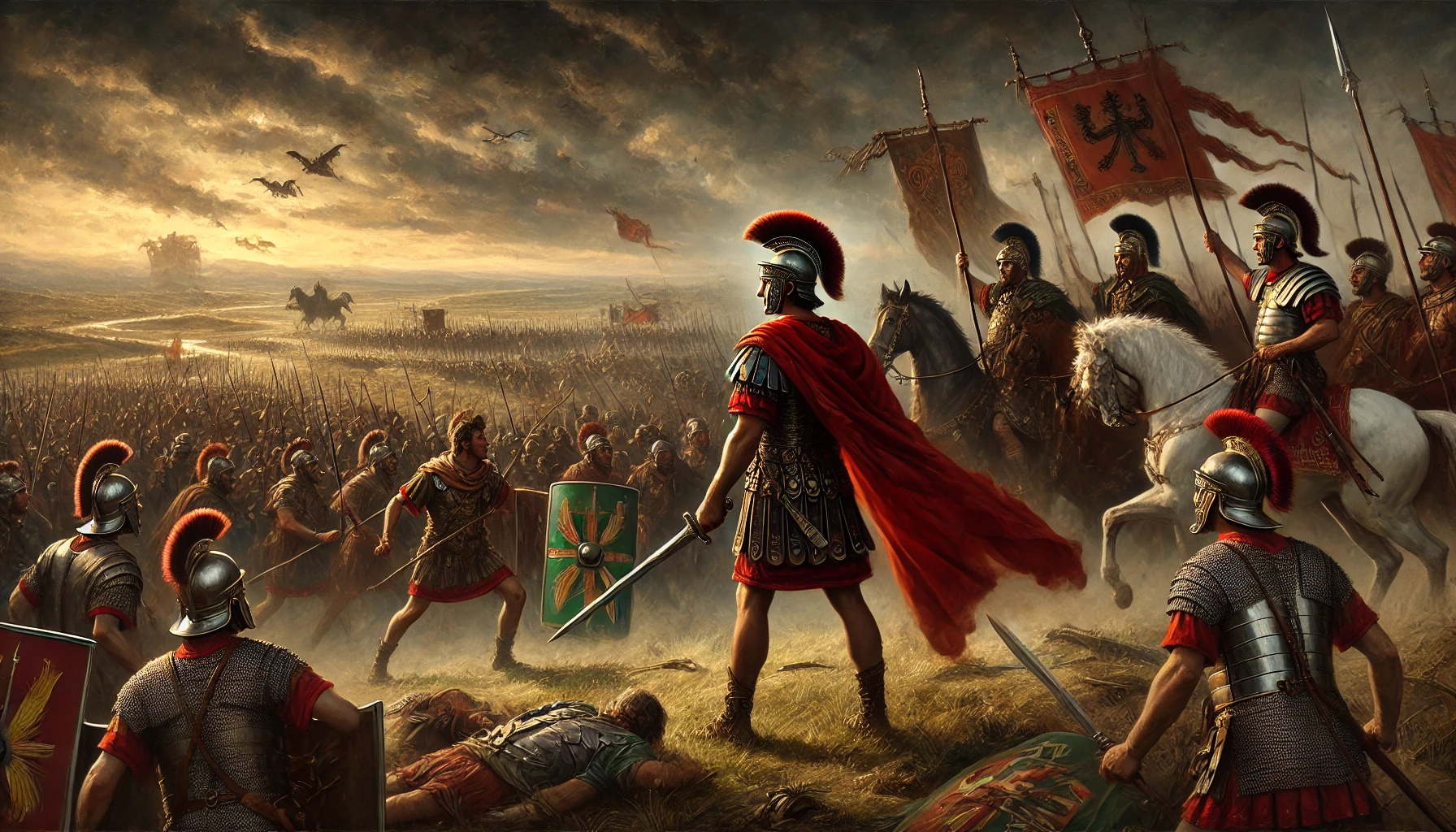
The decisive battle took place in the Catalaunian Plains (modern-day Champagne, France), possibly near Châlons. Aetius took a central position with his Roman troops, flanked by the Visigoths and other allies. Attila placed himself and his elite Hunnic cavalry in the center, with Ostrogoths and others on the wings. The fighting erupted into a brutal, day-long melee, with cavalry charges, infantry clashes, and immense slaughter on both sides.
Theodoric’s Death and Roman Resilience
King Theodoric I fell in battle, either trampled by his own horsemen or slain by enemy forces. Yet his death galvanized the Visigoths, who renewed their assault with vengeance. Aetius held the center, masterfully coordinating movements despite the chaos. By nightfall, Attila’s forces were pushed back, their advance halted. Though the Huns were not annihilated, their aura of invincibility was shattered.
Strategic Victory, Political Complexity
Aetius allowed Attila to retreat, possibly to preserve the balance of power between Rome and the Goths. Some saw this as a missed opportunity, but Aetius understood the fragility of the Western Empire. The battle bought time—valuable time that Rome desperately needed. Attila would invade Italy the following year but, facing famine and disease, turned back. He died shortly after, and his empire disintegrated rapidly.
Legacy of the Battle
The Battle of the Catalaunian Plains is one of the most significant military engagements of late antiquity. It was perhaps the last time Roman forces fought as equals alongside their allies against an existential threat. Aetius, often dubbed the “last of the Romans,” was praised for his leadership. Yet he was assassinated in 454 by Emperor Valentinian III, a tragic irony that underscored Rome’s political decay.
Conclusion: Glory Amid Decline
In the waning light of the Western Roman Empire, Aetius stood as a rare beacon of courage and competence. At the Catalaunian Plains in 451 AD, he led a desperate but determined coalition to defend a civilization in decline. Though the empire he served would not endure, his victory delayed its fall—and proved that even in its twilight, Rome could still rise to greatness. His name, like the battle he won, echoes across the fading pages of imperial history.