In the tumultuous landscape of the 8th-century Frankish kingdom, a decision of profound consequence was made in 747 AD by Carloman, the elder son of the formidable Charles Martel. This pivotal moment, marked by Carloman’s monastic retreat, saw him willingly relinquish his share of political power as Mayor of the Palace to pursue a life of spiritual devotion. His abdication not only cleared the path for his ambitious younger brother, Pepin the Short, to assume sole control over the nascent Carolingian realm but also signaled a significant shift in the balance of power that would profoundly impact the future trajectory of Western Europe. This singular act of religious conviction, or perhaps political pragmatism, set in motion a chain of events that culminated in the establishment of a new royal dynasty and the deepening entanglement of Frankish secular power with the Roman Papacy.
The Frankish Realm Under Shared Rule: Carloman and Pepin
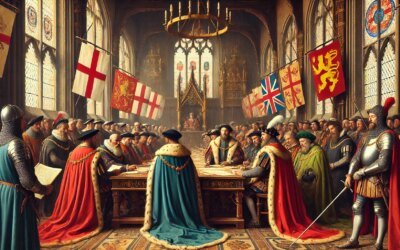
Following the death of their powerful father, Charles Martel, in 741 AD, the Frankish kingdom was divided between his two legitimate sons, Carloman and Pepin the Short. Each assumed the title of Mayor of the Palace, effectively ruling the kingdom on behalf of the largely ceremonial Merovingian kings. Carloman took responsibility for Austrasia, Alemannia, and Thuringia, while Pepin governed Neustria, Burgundy, and Provence. Their initial years of co-rule were characterized by a concerted effort to consolidate Carolingian authority, suppressing various revolts from regions like Bavaria and Aquitaine, and continuing their father’s military successes against external threats. Despite their shared objectives, Carloman reportedly exhibited a deeper inclination towards piety and ecclesiastical reform compared to his politically astute brother. He actively supported missionary efforts, most notably those of Boniface, and presided over important church councils like the Synod of Leptines in 743 AD, demonstrating a strong interest in the spiritual well-being of the Frankish Church.
The Unexpected Decision: Carloman’s Abdication
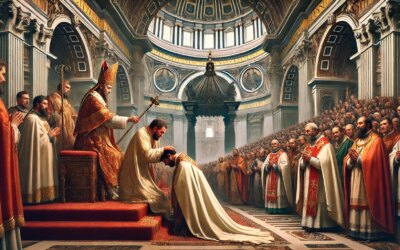
The precise motivations behind Carloman’s decision to abdicate his powerful position and enter monastic life in 747 AD remain a subject of historical debate. While contemporary sources emphasize his genuine piety and desire for spiritual contemplation, it is plausible that political considerations also played a role. Some historians suggest that the pressures of co-governance with his increasingly influential brother, Pepin, may have contributed to his choice. Carloman had already demonstrated a predisposition for religious life, having engaged deeply with church reform. His solemn journey to Rome, where he consulted with Pope Zachary, underscores the gravity of his decision. Subsequently, he received the tonsure and took monastic vows, initially at the monastery of Monte Soratte near Rome, before eventually settling at the more prominent Benedictine monastery of Monte Cassino.
Life at Monte Cassino and its Echoes
Upon entering Monte Cassino, Carloman embraced the Benedictine rule wholeheartedly, devoting himself to prayer, study, and manual labor. He reportedly lived a life of humility, even serving as a simple gardener, and was widely respected for his devotion. His retirement, however, was not entirely devoid of political significance. Years later, in 754 AD, Carloman emerged from his monastic seclusion briefly at the behest of his brother Pepin. Pepin, now King of the Franks, had entered into an alliance with Pope Stephen II. The Pope sought to crown Pepin and solidify the Frankish-Papal relationship against the Lombards in Italy. Carloman was dispatched to intercede with the Lombard King Aistulf, likely to dissuade him from attacking Rome. This unusual reappearance of a former ruler from his monastic retreat highlights the lingering influence of his person and the high stakes of the political maneuvering of the era. He ultimately failed in his diplomatic mission and died shortly thereafter in Vienne, France, on his return journey to Monte Cassino.
Pepin’s Ascent: The Path to Kingship
Carloman’s monastic retreat was a watershed moment for the Frankish kingdom. With his brother no longer a co-ruler, Pepin the Short gained uncontested authority as the sole Mayor of the Palace. This consolidation of power was crucial for his subsequent ambition to formally replace the Merovingian puppet kings. In 751 AD, with the support of the Frankish nobility and, crucially, the sanction of Pope Zachary, Pepin deposed the last Merovingian king, Childeric III, and had himself anointed King of the Franks. This act marked the official beginning of the Carolingian dynasty, a line that would produce Charlemagne and shape the course of European history for centuries. Carloman’s decision, whether driven purely by faith or a complex interplay of personal and political factors, inadvertently laid the foundational stone for this momentous dynastic transition, making Carloman’s monastic retreat a silent yet powerful catalyst in the making of a new European order.
Frequently Asked Questions
Who was Carloman and what was his role before his abdication?
Carloman was the elder son of Charles Martel and, alongside his brother Pepin the Short, served as Mayor of the Palace, effectively ruling a significant portion of the Frankish kingdom following their father’s death in 741 AD. He governed Austrasia, Alemannia, and Thuringia.
What prompted Carloman’s decision for a monastic retreat in 747 AD?
While deeply pious and committed to church reform, Carloman’s exact motivations are debated. It is believed his genuine spiritual devotion played a major role, but some historians suggest the pressures of co-governance with his ambitious brother Pepin, or a desire to avoid further political strife, may also have influenced his decision.
Where did Carloman undertake his monastic life?
After abdicating his power, Carloman initially entered a monastery on Monte Soratte near Rome. He later moved to the more prominent and influential Benedictine monastery of Monte Cassino, where he lived out most of his monastic vows.
What was the political impact of Carloman’s abdication?
Carloman’s monastic retreat had a profound political impact by consolidating sole power in the hands of his younger brother, Pepin the Short. This cleared the way for Pepin to depose the last Merovingian king and establish the Carolingian dynasty in 751 AD, fundamentally reshaping the political landscape of Western Europe.
Did Carloman ever return to political life after his retreat?
Briefly. In 754 AD, Carloman left his monastic seclusion at the request of King Pepin to act as an envoy to the Lombard King Aistulf, attempting to persuade him not to attack Rome. However, this diplomatic mission was unsuccessful, and Carloman died shortly after while returning to Monte Cassino.