
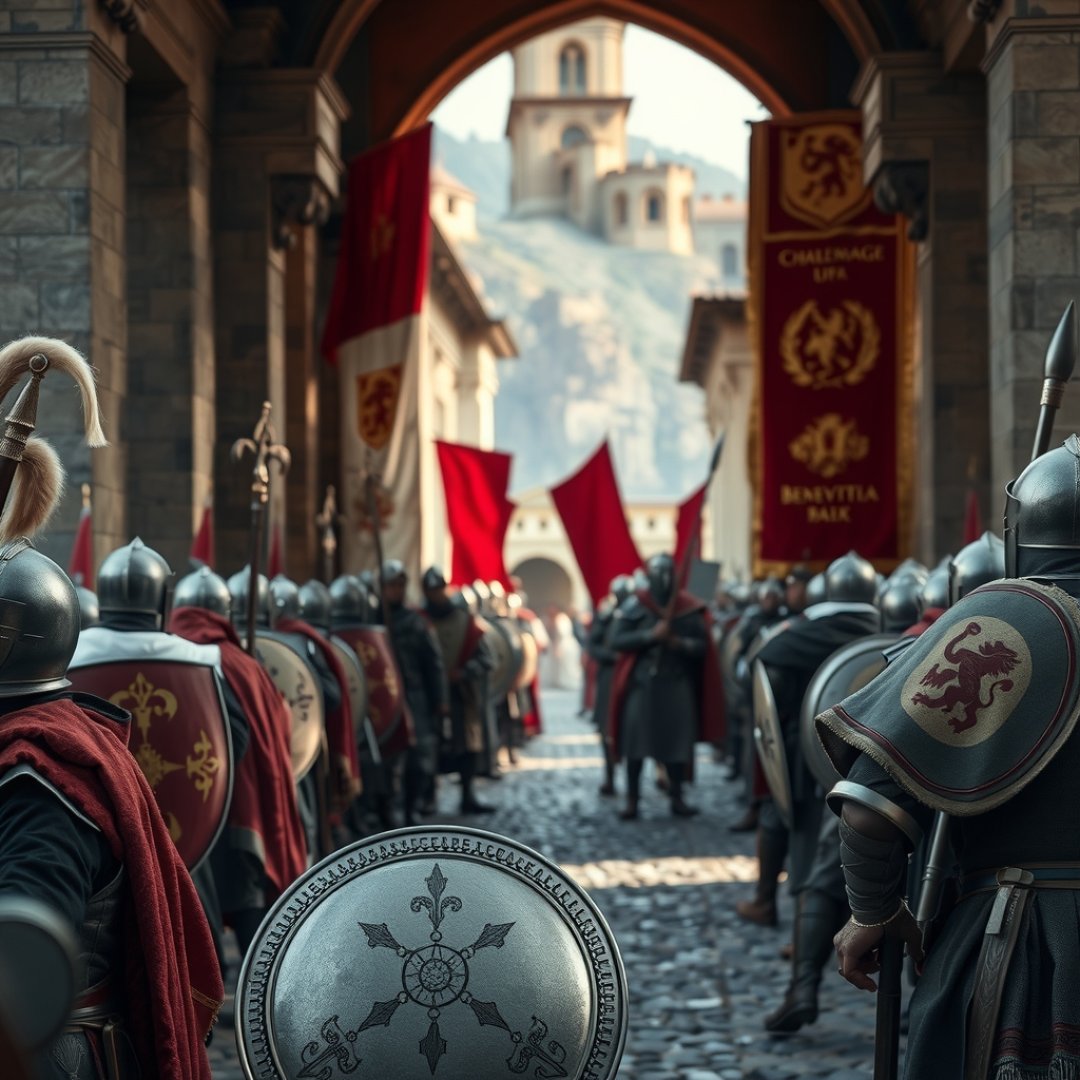
In the late 8th century, Charlemagne, King of the Franks, was actively engaged in consolidating his burgeoning empire across Western Europe. Following his decisive conquest of the Lombard Kingdom in northern Italy in 774 AD, a significant challenge to his complete hegemony remained in the south: the powerful, semi-independent Duchy of Benevento. It was against this backdrop that Charlemagne’s Beneventan Campaign of 786-787 AD unfolded, a crucial chapter in the unification of Italy under Frankish influence and a testament to Charlemagne’s strategic genius. This period not only underscored the Frankish king’s military might but also highlighted his astute diplomatic approach, which ultimately paved the way for a more unified, if not entirely homogeneous, Italian peninsula. The campaign’s success was instrumental in solidifying the foundations of what would eventually become the Holy Roman Empire, marking a pivotal moment in the complex political landscape of early medieval Rome and its surrounding territories.
Italy After the Lombard Conquest: A Fragmented Landscape
Following Charlemagne’s initial conquest of the Lombard Kingdom in 774 AD, which saw him assume the title of King of the Lombards, Italy was far from unified. While the northern and central parts came under direct Frankish control or were assigned to the Papacy (the Donation of Pepin having laid the groundwork for the Papal States), the southern Duchy of Benevento remained a significant, stubbornly independent entity. Ruled by Duke Arichis II, Benevento maintained its Lombard identity and a degree of autonomy that made it a potential focal point for anti-Frankish sentiment. Its strategic location, bordering the Byzantine territories in southern Italy and controlling key trade routes, made its subjugation imperative for Charlemagne’s vision of a stable, unified Frankish realm extending across the Alps and into the Italian peninsula. The Papacy, under Adrian I, also viewed Benevento with suspicion, often appealing to Charlemagne for intervention to secure its own territories and influence.
The Beneventan Campaign of 786-787 AD: Diplomacy and Force
Charlemagne’s Direct Intervention
In 786 AD, Charlemagne launched Charlemagne’s Beneventan Campaign, personally leading a large Frankish army into Benevento. Duke Arichis II, facing the overwhelming military superiority of the Franks, understood the futility of direct confrontation. Rather than engaging in a pitched battle, Arichis chose a path of tactical submission. He retreated to his fortified strongholds, primarily Salerno, while dispatching his son, Romuald, to Charlemagne’s camp as a hostage, a gesture intended to signal his willingness to negotiate.
Terms of Submission and Frankish Oversight
The campaign culminated not in a bloody siege, but in a carefully orchestrated diplomatic settlement. Arichis swore an oath of fealty to Charlemagne, recognized Frankish suzerainty, and agreed to pay an annual tribute. Crucially, Charlemagne imposed restrictions on Benevento’s foreign policy, particularly its relations with the Byzantine Empire, and ordered the Beneventan Lombards to adopt Frankish customs, including hairstyles and beards, a symbolic assertion of Frankish cultural dominance. Charlemagne’s direct presence and the show of force ensured compliance, at least temporarily. However, the subsequent death of Romuald while a hostage and then Arichis II himself in 787 AD led to further complexities regarding succession and continued Frankish pressure on the duchy.
Lasting Impact: Benevento’s Integration and Frankish Hegemony
Although the Duchy of Benevento would continue to exert a degree of independence for several decades, Charlemagne’s Beneventan Campaign of 786-787 AD significantly curtailed its sovereign power and integrated it more firmly into the broader Frankish sphere of influence. This campaign:
- Solidified Frankish Authority: It demonstrated Charlemagne’s resolve and ability to project power across the Italian peninsula, removing the last major independent Lombard principality that could threaten his rule or ally with his enemies.
- Strengthened Papal-Frankish Alliance: By containing Benevento’s ambitions and weakening its ties with Byzantium, Charlemagne inadvertently strengthened the position of the Papacy, which relied on Frankish protection.
- Paved the Way for Imperial Ambitions: The successful subjugation of Benevento, alongside other conquests, further enhanced Charlemagne’s prestige and territorial control, laying more groundwork for his eventual coronation as Emperor in 800 AD. The campaign was a vital step in transforming the Frankish kingdom into an empire with a strong claim over vast swathes of the former Western Roman Empire.
The campaign, while not an outright conquest, was a masterclass in political maneuvering and a crucial moment in the consolidation of Charlemagne’s dominion in Italy, fundamentally reshaping the political geography of the Early Middle Ages.
Frequently Asked Questions
What was the Duchy of Benevento?
The Duchy of Benevento was the last significant independent Lombard principality in Southern Italy following Charlemagne’s conquest of the Lombard Kingdom in 774 AD. It maintained its Lombard identity and a degree of autonomy.
Why was Benevento significant to Charlemagne?
Benevento’s independence threatened Charlemagne’s authority in Italy and offered a potential rallying point for anti-Frankish factions, possibly even aligning with the Byzantine Empire. Its strategic location also made its control important for regional stability.
Who was Duke Arichis II?
Arichis II was the Duke of Benevento during Charlemagne’s campaign in 786-787 AD. He initially resisted but ultimately chose a diplomatic submission to Charlemagne’s superior military force to preserve his duchy’s existence.
What was the immediate outcome of Charlemagne’s Beneventan Campaign?
The campaign resulted in Duke Arichis II swearing fealty to Charlemagne, agreeing to pay tribute, and accepting Frankish suzerainty. Benevento’s foreign policy was restricted, particularly concerning Byzantium, though it retained some internal autonomy.
How did Charlemagne’s Beneventan Campaign contribute to his later imperial coronation?
By subjugating Benevento, Charlemagne further solidified his control over the Italian peninsula, demonstrating his extensive power and authority. This expanded territorial and political influence was a critical factor in his eventual coronation as Emperor of the Romans in 800 AD.