
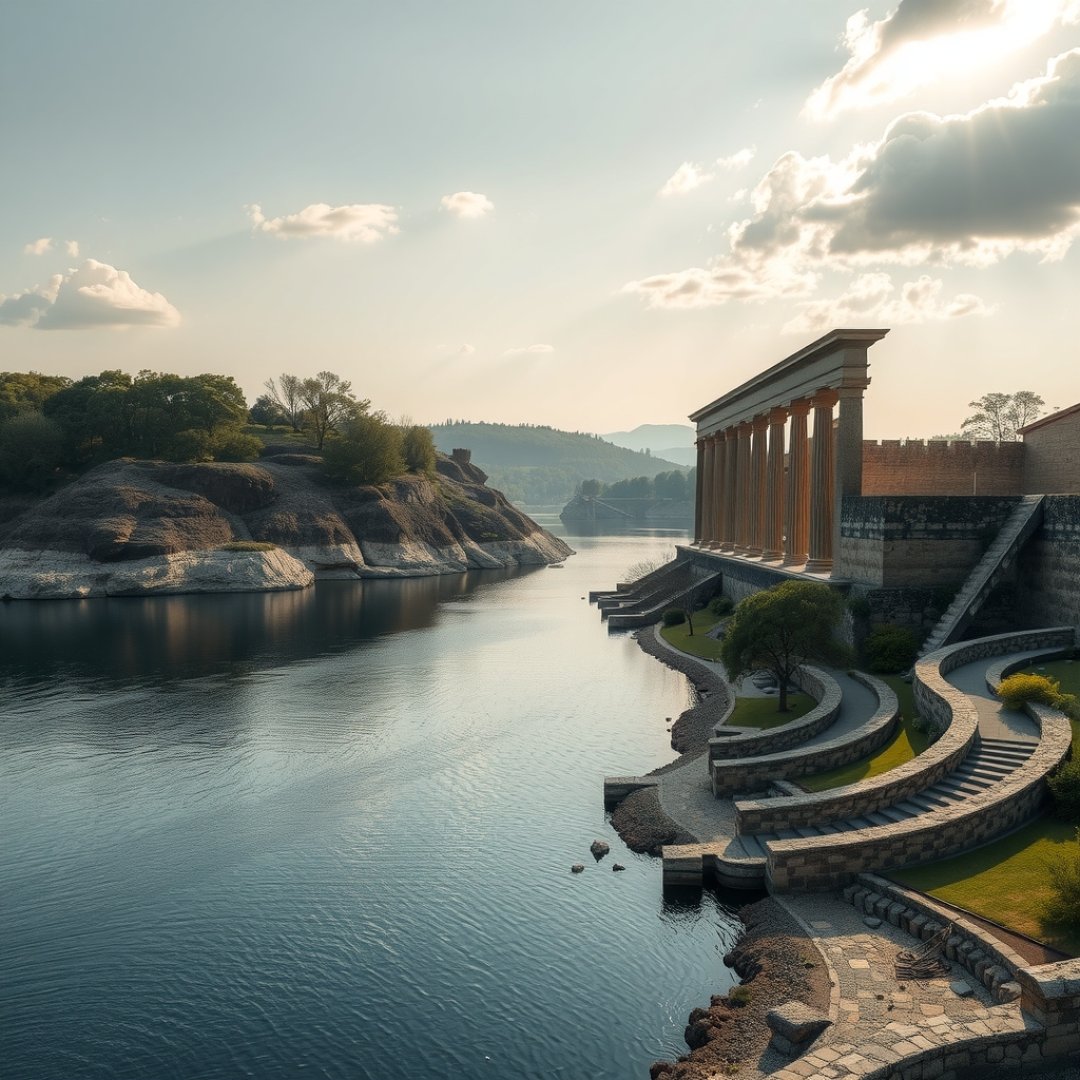
In the mid-first century AD, Roman Emperor Claudius embarked on one of the most audacious engineering feats of his reign: the Claudius Fucine Lake project. This monumental undertaking, spanning over a decade from AD 41 to 52, aimed to drain the vast Fucine Lake in central Italy, a body of water notorious for its erratic flooding and marshy shores. More than just a practical solution to agricultural challenges and malarial outbreaks, the project was a colossal demonstration of imperial power and Roman engineering prowess. Thousands of laborers toiled for years, carving a massive tunnel through solid rock to create an artificial outlet, a testament to the Romans’ unparalleled ability to reshape landscapes to their will. The sheer scale of the operation, its technological innovations, and the subsequent efforts to maintain and operate it offer a fascinating glimpse into the ambition and logistical capabilities of the early Roman Empire.
The Persistent Challenge of the Fucine Lake
The Fucine Lake, located in the Abruzzo region of central Italy, was a vast, shallow, and landlocked body of water with no natural outlet. Its water levels fluctuated dramatically, posing a constant threat to the surrounding arable land and settlements. During periods of heavy rainfall, the lake would swell, inundating fertile plains and displacing local communities. Conversely, during droughts, the receding waters left behind malarial swamps, a significant health hazard for the region’s inhabitants. For centuries, various Roman leaders had contemplated solutions to this natural dilemma, recognizing the immense agricultural potential of the land that lay beneath the lake’s shifting surface. However, the engineering challenge of draining such a large lake through mountainous terrain was formidable, deterring any serious attempts until the ambitious reign of Claudius.
Previous Attempts and the Scale of the Problem
Before Claudius, there were likely smaller, localized efforts to manage the lake’s overflow, but none addressed the fundamental issue of its landlocked nature. The sheer volume of water and the geological complexities of the surrounding Marsican Mountains presented an unprecedented obstacle. Draining the lake required not just digging a channel, but excavating a substantial tunnel through bedrock, an undertaking that pushed the boundaries of Roman technology and labor organization. The motivation was clear: unlock new agricultural land, reduce disease, and solidify imperial control over a prosperous but troubled region.
Engineering an Imperial Masterpiece: The Drainage Tunnel
Emperor Claudius, known for his interest in public works and engineering, saw the Fucine Lake as an opportunity to leave a lasting mark and provide tangible benefits to the Empire. He ordered the construction of an enormous drainage tunnel (emissarium) over 5.6 kilometers (approximately 3.5 miles) long, designed to channel water from the lake into the Liri River. The project commenced in AD 41 and involved a workforce estimated to be as high as 30,000 laborers, including slaves, prisoners, and free workers.
Techniques and Challenges Faced by Roman Engineers
- Tunneling through rock: The tunnel had to be driven through solid limestone and clay, a process that required immense manual labor. Miners worked from numerous vertical shafts (putei) sunk along the tunnel’s proposed route, allowing multiple workfronts and facilitating the removal of excavated material and the circulation of fresh air.
- Precision Surveying: Roman surveyors utilized advanced techniques, including groma and dioptra, to maintain accurate alignment and gradient over miles of underground excavation. This was critical to ensure the tunnel would effectively drain the lake.
- Water Management: The constant presence of groundwater was a significant challenge, requiring sophisticated pumping systems and temporary diversion channels to keep the work areas dry.
- Ventilation and Lighting: The deep shafts also served to provide ventilation and light for the underground workers, crucial for their safety and efficiency.
The project was not without its difficulties, experiencing collapses and delays, yet the Roman engineers persisted, showcasing their extraordinary resilience and problem-solving capabilities.
Imperial Spectacle and Lasting Legacy
After eleven years of arduous labor, the Claudius Fucine Lake project culminated in a grand celebration in AD 52, attended by Claudius himself. The event was marked by a spectacular mock naval battle on the partially drained lake, involving thousands of gladiators and condemned criminals, a lavish display of imperial power and a fitting finale to such a massive public work. However, the initial opening was not entirely successful; a miscalculation or engineering flaw meant that the sluice gates failed to operate effectively, causing a surge of water that nearly overwhelmed the imperial party. Despite this embarrassing incident, repairs were made, and the tunnel eventually began to function as intended.
Successes and Subsequent Efforts
While the tunnel succeeded in significantly reducing the lake’s size and reclaiming vast tracts of fertile land, its long-term maintenance proved to be an ongoing challenge. Sedimentation and structural issues required continuous attention. Later emperors, including Trajan and Hadrian, undertook further repairs and improvements to the drainage system. Despite these efforts, the tunnel eventually fell into disrepair after the collapse of the Western Roman Empire. Nevertheless, the Fucine Lake drainage project stands as a prime example of Roman determination and engineering genius, demonstrating their capacity to alter natural landscapes on an unprecedented scale for economic and social benefit.
Frequently Asked Questions
Why was the Fucine Lake drainage project undertaken?
The project aimed to address persistent issues with the Fucine Lake, including erratic flooding that destroyed arable land and the formation of malarial swamps during low water levels. Draining the lake would reclaim fertile land and improve public health.
How long did the construction of Claudius’s Fucine Lake tunnel take?
The construction of the main drainage tunnel under Emperor Claudius took approximately eleven years, from AD 41 to AD 52.
What Roman engineering techniques were crucial for the Fucine Lake project?
Roman engineers utilized multiple vertical shafts to allow for simultaneous excavation from various points, precise surveying tools like the groma for alignment, and methods to manage groundwater, ventilation, and lighting deep underground.
What happened during the grand opening ceremony of the Fucine Lake drainage tunnel?
The opening ceremony in AD 52 featured a spectacular mock naval battle on the lake. However, a technical mishap with the sluice gates caused a sudden surge of water, almost endangering Emperor Claudius and his guests.
Did the Fucine Lake drainage tunnel remain functional after Claudius’s reign?
The tunnel required continuous maintenance and repairs, with later emperors like Trajan and Hadrian investing in its upkeep. While successful for a time, it eventually fell into disrepair after the decline of the Western Roman Empire.