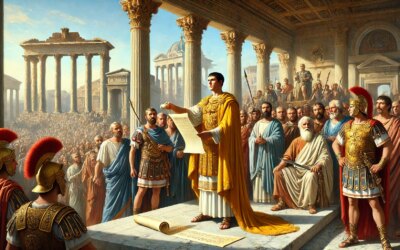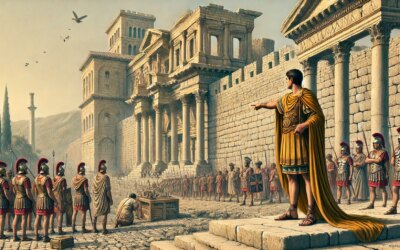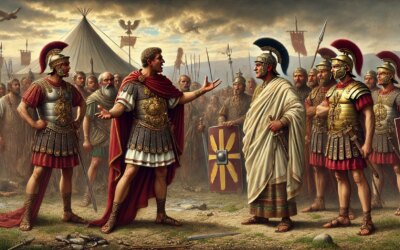
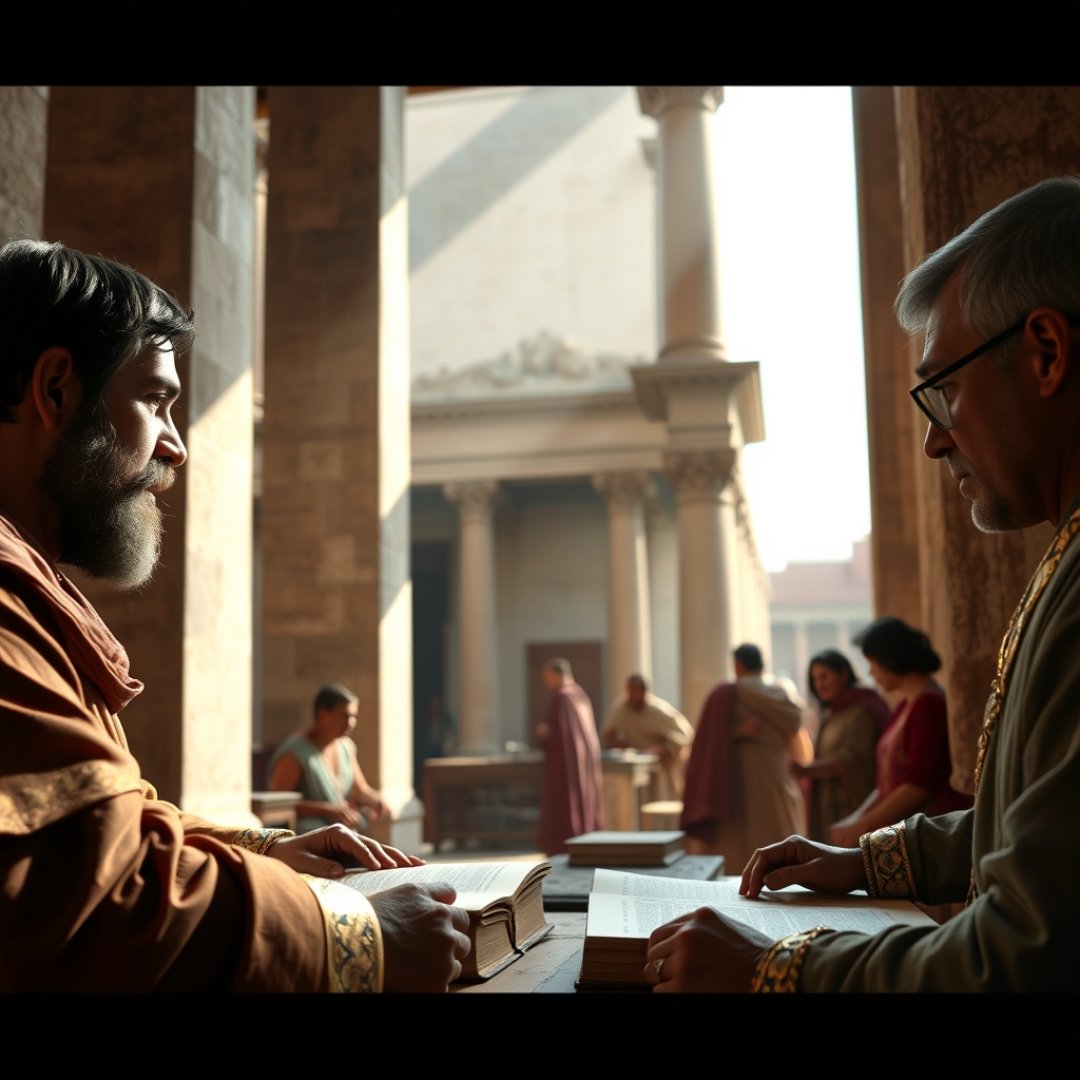
The Roman Empire of the late 3rd century AD was a sprawling, complex entity, reeling from decades of political instability, economic turmoil, and persistent frontier pressures known as the Crisis of the Third Century. Emperors rose and fell with alarming frequency, and the sheer scale of the empire made effective governance from a single central point increasingly difficult. It was against this backdrop that Emperor Diocletian, a shrewd and pragmatic leader, embarked on a series of radical administrative overhauls. Among his most enduring contributions were the profound changes to the empire’s internal organization, particularly the implementation of the new administrative units known as dioceses. These Diocletian’s Diocesan Reforms, largely solidified around AD 291, fundamentally reshaped Roman imperial administration, creating a more manageable and resilient governmental structure designed to better respond to the challenges of a vast and often turbulent realm, laying the groundwork for centuries of future Roman governance.
The Empire in Crisis: A Precedent for Change
By the time Diocletian ascended to the purple in AD 284, the Roman Empire was fractured, exhausted, and desperately in need of systemic reform. For nearly fifty years prior, the empire had endured the so-called ‘Crisis of the Third Century,’ a period marked by constant civil wars, economic collapse, and barbarian incursions. Imperial authority was constantly challenged, with over twenty legitimate emperors and numerous usurpers vying for power. The vastness of the empire, coupled with inadequate infrastructure and slow communication, meant that a single emperor struggled to address multiple simultaneous threats on distant frontiers. Provinces had become too numerous and often too large for efficient administration, making them vulnerable to corruption and rebellion. It became evident that a fundamental restructuring was required, not merely a temporary fix, to restore stability and empower imperial control across the immense territories.
The Structure of the Dioceses: New Layers of Governance
Diocletian’s solution to this administrative chaos was to introduce an intermediate layer of governance between the central imperial authority and the individual provinces: the diocese. He initially consolidated existing provinces and then subdivided larger ones, increasing their total number to over 100. These smaller provinces, more manageable in size, were then grouped into approximately 12 to 14 larger administrative units known as dioceses. Each diocese was overseen by a new official, the vicarius (vicar), who answered directly to the praetorian prefects and, ultimately, the emperors themselves. This innovation created a more efficient chain of command and decentralized administrative tasks, allowing for quicker responses to local issues while maintaining overarching imperial control. For instance, the diocese of Britanniae encompassed several provinces in Britain, while Galliae grouped provinces across Gaul.
A Foundation for Stability: Long-Term Impact
The establishment of the diocesan system proved to be one of Diocletian’s most enduring and significant reforms. It provided a framework that greatly enhanced the administrative efficiency of the Roman Empire, improving tax collection, military recruitment, and judicial oversight. This more streamlined structure was instrumental in the relative stability achieved during the Tetrarchy and continued to function effectively long after Diocletian’s reign. Even as the empire eventually split into East and West, the diocesan divisions largely persisted, adapting to new political realities. Furthermore, these administrative boundaries had a profound and lasting impact on the organization of the early Christian Church. As the Church grew, its own ecclesiastical structures often mirrored the existing imperial dioceses, with bishops’ sees frequently corresponding to provincial capitals and archbishops or metropolitans overseeing regions that aligned with the secular dioceses. Thus, Diocletian’s Diocesan Reforms not only stabilized a crumbling empire but also laid the groundwork for the future administrative geography of both state and church for centuries to come.
Frequently Asked Questions
What were the primary reasons for Diocletian to implement the Diocesan Reforms?
Diocletian introduced the Diocesan Reforms primarily to address the severe administrative fragmentation and inefficiency that plagued the Roman Empire during the Crisis of the Third Century. The empire was too vast for effective central control, and provinces were often unwieldy, leading to poor governance, corruption, and slow responses to military and economic challenges. The reforms aimed to create a more streamlined and responsive governmental structure.
How did the new diocesan units differ from the traditional Roman provinces?
Prior to Diocletian, the empire was divided directly into provinces. His reforms subdivided these provinces into smaller, more manageable units, and then grouped several of these smaller provinces into a larger administrative entity called a ‘diocese.’ This created an additional layer of governance, with a ‘vicarius’ (vicar) overseeing a diocese, reporting to the praetorian prefects, rather than individual provincial governors reporting directly to the emperor.
Who was responsible for administering a diocese?
Each diocese was administered by a high-ranking official known as a vicarius (vicar). The vicarius was typically a knight (eques) and held significant authority, overseeing the governors of the provinces within their diocese, coordinating administrative efforts, and serving as a key intermediary between the provincial level and the imperial court.
What was the lasting legacy of Diocletian’s Diocesan Reforms?
The diocesan system provided a robust administrative framework that contributed significantly to the stabilization of the Roman Empire during the late 3rd and 4th centuries. These divisions largely endured through the Byzantine era in the East and influenced the organization of the Western Empire. Furthermore, the administrative boundaries of the dioceses were widely adopted by the early Christian Church, forming the basis for many ecclesiastical jurisdictions that still exist today.