
Introduction: The Man Who Changed the Legion
In 107 BC, amid growing threats from foreign enemies and internal unrest, the Roman Republic faced a crisis that demanded innovation. Gaius Marius, a talented general and politician, introduced sweeping reforms to the Roman military. These changes not only revitalized Rome’s fighting forces but also profoundly altered the Republic’s political landscape, laying foundations that would ultimately support the rise of empire.
The Roman Army Before Marius
Traditionally, the Roman army was composed of property-owning citizens who could afford their own armor and weapons. Soldiers served temporarily during campaigns and returned to civilian life afterward. This model limited the size and flexibility of the army, making it difficult to respond to prolonged conflicts and frontier pressures.
Why Reform Was Needed
By the late 2nd century BC, Rome faced external threats from the migrating Germanic tribes (the Cimbri and Teutones) and internal strains from socio-economic inequality. Fewer citizens met the property requirements to enlist, and repeated military defeats revealed deep structural weaknesses. Marius recognized that Rome needed a professional, full-time army to survive and expand.
The Marian Reforms: A New Model Army
Marius implemented several radical changes:
- Recruitment of the Capite Censi: He opened enlistment to the poorest citizens, those without property, providing state-issued equipment and armor.
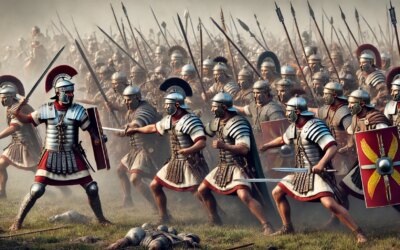
- Professional Standing Army: Soldiers now served long terms (up to 16 years) and became career warriors instead of temporary militia members.
- Standardized Training and Equipment: Marius organized intensive training regimens and introduced standardized gear, ensuring greater unity and effectiveness.
- The Cohort System: Replacing the older manipular structure, cohorts became the basic tactical unit—larger, more flexible, and easier to manage.
- Retirement and Land Grants: Veterans were promised land upon discharge, incentivizing loyalty and creating a personal bond between soldiers and their generals.
Impact on Roman Military Power
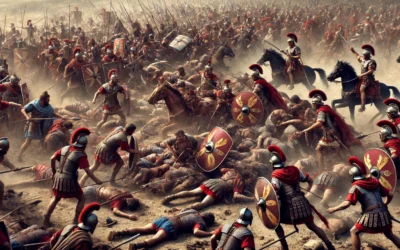
Thanks to Marius’ reforms, Rome gained a standing army capable of projecting power across vast territories. His legions defeated the Cimbri and Teutones in decisive battles like Aquae Sextiae (102 BC) and Vercellae (101 BC), restoring Rome’s military supremacy. The new professional legions would soon become the backbone of Roman expansion across Europe, Africa, and Asia.
Political Consequences: Loyalty to Generals
While militarily successful, Marius’ reforms had unintended political ramifications. Soldiers’ loyalty shifted from the Senate to their commanders, who controlled their pay and future land grants. This shift eroded Republican institutions and paved the way for ambitious generals like Sulla, Pompey, and Julius Caesar to leverage military power for political dominance, ultimately leading to the fall of the Republic.
Legacy of the Marian Reforms
The professional Roman army forged by Marius endured for centuries, influencing military organization in later states. His system created armies capable of conquering and holding vast territories, allowing Rome to build and maintain an empire that would shape the ancient and medieval worlds.
Conclusion: Marius, Architect of Rome’s Future
Gaius Marius’ military reforms were a masterstroke of necessity and innovation. They revitalized Rome’s military might at a critical juncture and equipped the Republic for future greatness. Yet, by altering the balance of loyalty and power, Marius inadvertently sowed the seeds of the Republic’s demise. His legacy is a powerful reminder that even the most brilliant reforms can have unpredictable—and monumental—consequences.