
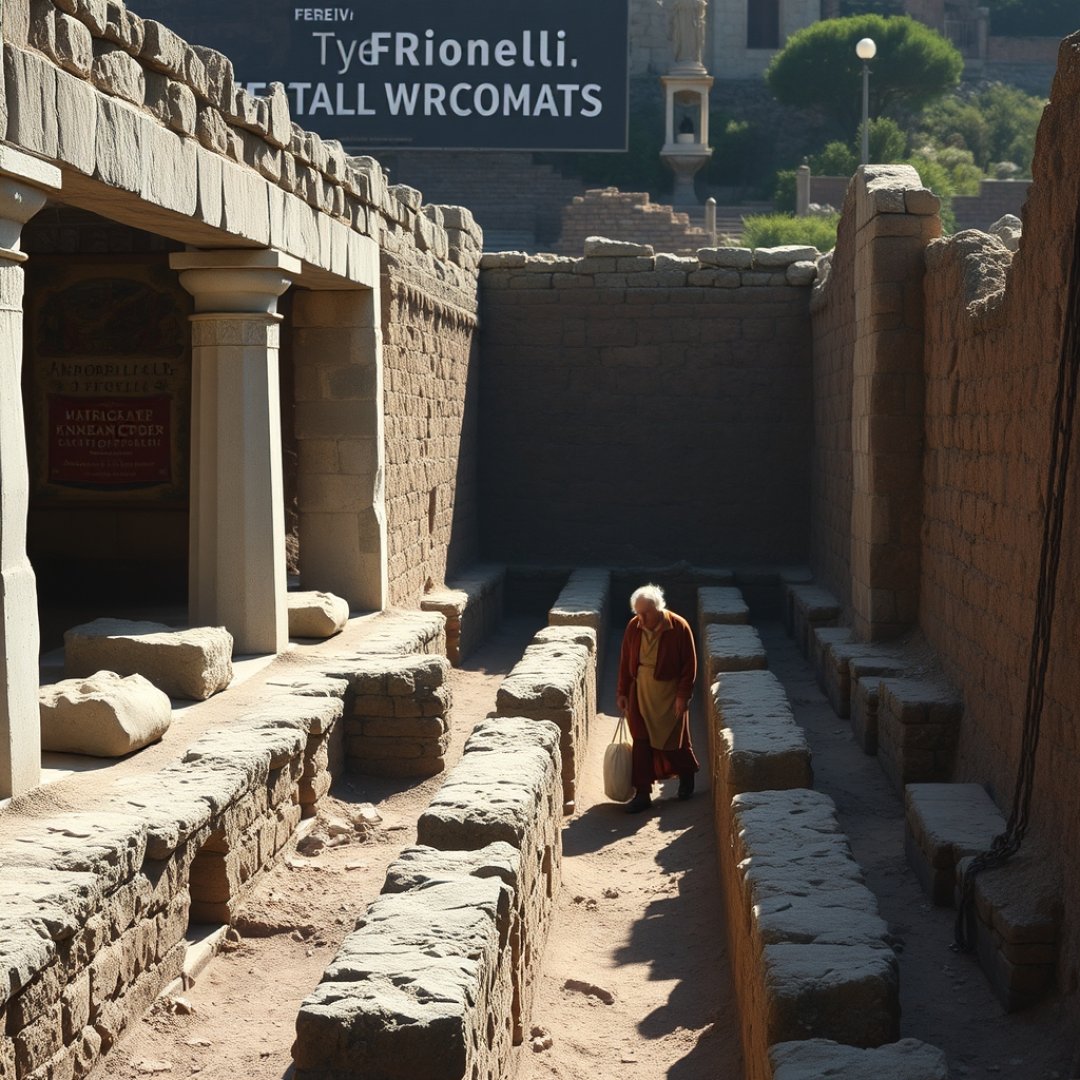
Before the mid-19th century, archaeological excavations were often little more than treasure hunts, driven by a desire for spectacular finds rather than systematic understanding. This approach frequently caused more damage than discovery, leaving fragmented narratives and lost contexts. However, a seismic shift in archaeological practice occurred in Italy, specifically at the buried city of Pompeii, under the visionary leadership of Giuseppe Fiorelli. His tenure as Director of the Pompeii excavations from 1860 to 1875 marked a pivotal moment, fundamentally altering how ancient sites were approached. Fiorelli’s Pompeii excavations introduced rigorous scientific methodologies, moving away from haphazard digging towards meticulous documentation and preservation. It was Fiorelli who conceived and perfected the revolutionary technique of creating plaster casts of the voids left by decomposed bodies, capturing the final moments of Pompeii’s inhabitants with haunting realism. This innovation, among others, transformed Pompeii from a mere quarry of artifacts into an invaluable open-air museum, offering an unparalleled window into Roman daily life, politics, and culture.
Early Excavations: A History of Plunder and Disregard
The rediscovery of Pompeii in the mid-18th century, followed by Herculaneum, ignited European fascination with the classical world. However, initial excavation efforts were less about scholarly inquiry and more about acquiring artifacts for royal collections. Under the Bourbon monarchy, diggers often tunneled indiscriminately, removing valuable statues, frescoes, and mosaics with little regard for their original context or the structural integrity of the buildings. Whole sections of walls were cut out, and fragile remains were left exposed to the elements without proper preservation. This ‘treasure hunting’ mentality meant that much crucial information about the ancient city’s layout, social structures, and daily functions was either overlooked or actively destroyed in the pursuit of display-worthy pieces. The focus was on the ‘what,’ not the ‘how’ or ‘why,’ leaving significant gaps in historical understanding and making comprehensive reconstruction nearly impossible for future generations of scholars.
Introducing Scientific Rigor to the Ruins
Giuseppe Fiorelli, an archaeologist and numismatist, brought a sorely needed scientific discipline to the Pompeii site when he became its director in 1860. His primary contribution was the systematic division of the city into regiones (regions), insulae (blocks), and domus (houses), providing a logical framework for excavation and documentation that is still used today. He introduced the practice of digging from the top down, meticulously clearing volcanic debris layer by layer, which allowed for the accurate recording of stratigraphic sequences and the reconstruction of fallen structures. Perhaps his most iconic innovation was the method of creating plaster casts. Recognizing that the decomposed bodies of victims had left hollow cavities within the hardened ash, Fiorelli developed a technique to pour liquid plaster into these voids. Once hardened, the plaster casts revealed the exact forms of the deceased, including their clothing, facial expressions, and even the objects they carried, offering an incredibly poignant and detailed glimpse into their final moments. This method not only preserved the human element of the tragedy but also transformed the understanding of Pompeii’s demise.
Unveiling Daily Life: Impact of the New Approach
Fiorelli’s systematic approach had a profound impact on the interpretation and presentation of Pompeii. By meticulously documenting every find in its original context and preserving the structures in situ whenever possible, he allowed future visitors and scholars to experience the city as a living, albeit frozen, snapshot of Roman life. Instead of scattered artifacts, Pompeii became a narrative, where individual homes, workshops, and public buildings told stories of their inhabitants. The plaster casts, in particular, humanized the tragedy, connecting visitors emotionally to the people who perished. This shift from artifact extraction to contextual preservation was revolutionary, establishing new standards for archaeological practice worldwide. It transformed Pompeii from a mere source of curiosities into an unparalleled laboratory for understanding the minutiae of Roman provincial society, influencing how archaeology would be conducted for generations to come and solidifying Pompeii’s role as perhaps the most famous archaeological site globally.
Frequently Asked Questions
Who was Giuseppe Fiorelli?
Giuseppe Fiorelli (1823–1896) was an Italian archaeologist who served as the Director of the Pompeii excavations from 1860 to 1875. He is widely credited with revolutionizing archaeological methods at the site.
What were Fiorelli’s most significant innovations at Pompeii?
Fiorelli’s key innovations included the systematic division of the city into regions, blocks, and houses for organized excavation, digging from the top down, and most famously, the technique of creating plaster casts of the voids left by human and animal remains.
How did Fiorelli’s methods change the study of Pompeii?
His systematic approach moved beyond treasure hunting, allowing for meticulous documentation of context and preservation. This transformed Pompeii into an invaluable snapshot of Roman daily life, providing a much deeper understanding of its society and culture.
Are Fiorelli’s plaster cast techniques still used today?
Yes, the fundamental concept of creating casts of voids is still employed, though modern techniques now use resin instead of plaster, offering greater durability and detail. His systematic mapping and excavation methods also remain foundational.