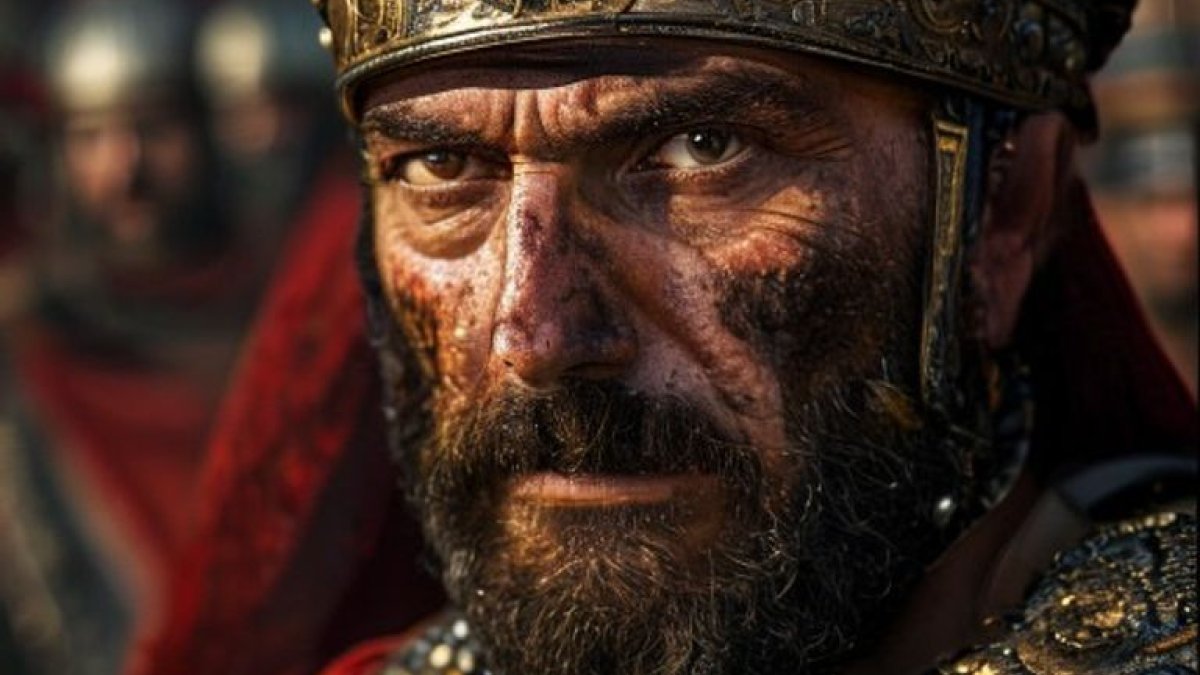
In the early 7th century, the Eastern Roman Empire, commonly known as Byzantium, faced its gravest existential threat from the mighty Sasanian Persian Empire. By 621 AD, Persian armies had ravaged much of the Byzantine East, capturing Jerusalem and even reaching the gates of Constantinople. It was against this backdrop of impending collapse that Emperor Heraclius embarked on a desperate yet brilliantly conceived counter-offensive, known as the Heraclius Persian Campaign. Starting in 622 AD, this audacious military venture saw Heraclius personally leading his forces deep into enemy territory, forsaking traditional defensive strategies for a direct assault on the Sasanian heartland. This pivotal campaign would not only reclaim lost territories and reverse the fortunes of war but also forever etch Heraclius’s name into the annals of Roman military leadership, showcasing a remarkable blend of tactical genius and unwavering resolve in the face of overwhelming odds, a true turning point for the beleaguered empire.
The Empire on the Brink: Sasanian Expansion and Crisis
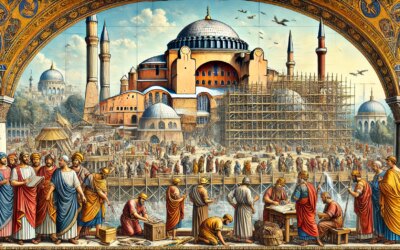
By the turn of the 7th century, the Byzantine Empire was in a state of profound crisis. The Sasanian Persians, under Khosrow II, had launched a series of devastating campaigns that saw them conquer Syria, Palestine, Egypt, and much of Anatolia. Constantinople itself was under direct threat, with Persian armies encamped at Chalcedon across the Bosphorus. The empire’s resources were depleted, its provinces ravaged, and its morale shattered. Moreover, simultaneous invasions from Avars and Slavs in the Balkans further stretched Byzantium’s meager defenses. Many believed the end of the Roman Empire was nigh, as the Sasanians even captured the True Cross from Jerusalem in 614 AD, a severe blow to Christian prestige.
Heraclius’s Ascension to a Decaying Throne
Emperor Heraclius, who had deposed the tyrannical Phocas in 610 AD, inherited an empire on the verge of collapse. For years, he struggled to consolidate power and address the overwhelming external threats. His initial attempts to negotiate peace with Khosrow II failed, as the Sasanian king, confident in his victories, demanded nothing less than the complete submission of the Byzantine Empire. This left Heraclius with an impossible choice: surrender or mount a desperate, unprecedented counter-attack that defied all conventional military wisdom.
Heraclius’s Daring Gamble: A New Kind of Warfare
Rather than attempt to defend every inch of his beleaguered empire, Heraclius conceived a radical strategy: bypass the heavily fortified Persian frontline and strike directly at the Sasanian heartland. This audacious plan required immense faith, resources, and personal courage. To fund this expedition, Heraclius resorted to desperate measures, including melting down Church plate, effectively turning ecclesiastical treasures into military pay. He personally took command, a rare feat for a Byzantine emperor, especially one in such a perilous situation.
Training and Departure: The Anatolian Crucible
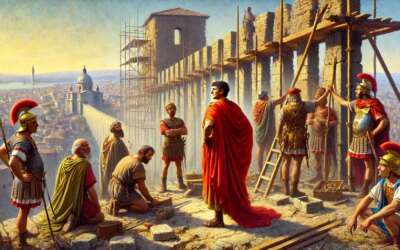
In 622 AD, Heraclius began his Heraclius Persian Campaign by moving his army to Anatolia, where he spent months rigorously training his demoralized troops. He revitalized their discipline and instilled a new sense of purpose, often invoking religious fervor, portraying the war as a holy crusade. After securing Constantinople against the Avars with vast tribute payments, he launched his main offensive. Instead of marching east along the traditional Roman roads, he embarked by sea for the Pontus region, landing near Trapezus (modern Trabzon). This unexpected move allowed him to outflank the Persian garrisons and begin a deep penetration into Armenia and Azerbaijan, disrupting Persian supply lines and forcing Khosrow II to react.
Decisive Campaigns: The Road to Nineveh and Triumph
Over the next several years, Heraclius led his armies in a series of brilliant campaigns that showcased his tactical genius. He moved swiftly, utilizing mountainous terrain to his advantage, repeatedly outmaneuvering larger Persian forces. He fought multiple engagements, often feigning retreat to draw enemy forces into disadvantageous positions. His campaigns devastated critical Sasanian territories, burning the birthplace of Zoroaster, and forcing Khosrow II to recall troops from Byzantine lands to defend his own realm.
The Battle of Nineveh (627 AD)
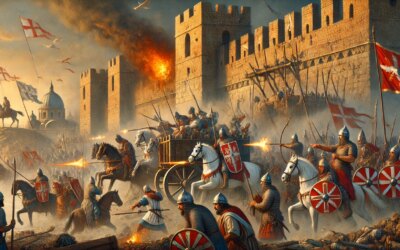
The climax of the Heraclius Persian Campaign came on December 12, 627 AD, at the Battle of Nineveh. Heraclius, with a smaller but highly motivated force, decisively defeated the main Sasanian army under General Rhahzadh. The battle was fought in the ruins of ancient Nineveh, near the Tigris River. Heraclius reportedly engaged Rhahzadh in single combat, killing him. The victory was total, opening the way for the Byzantines to plunder the royal palaces of Dastagird, near the Sasanian capital of Ctesiphon. The humiliation of this defeat, coupled with the loss of vast territories and the destruction of imperial cities, led to a coup against Khosrow II. He was overthrown and executed by his own son, Kavadh II, who immediately sued for peace.
A Pyrrhic Triumph and the Rise of a New Threat
The Heraclius Persian Campaign was an undeniable, spectacular triumph for Byzantium. Kavadh II agreed to return all captured Byzantine territories, release all prisoners, and, most significantly, restore the True Cross to Jerusalem. Heraclius returned to Constantinople in a magnificent triumph in 629 AD, heralded as a savior. The True Cross was solemnly returned to its shrine in Jerusalem in 630 AD, marking the restoration of Byzantine dominion and Christian prestige in the East. The Byzantine Empire, seemingly resurrected from the brink of annihilation, had regained its ancient borders and asserted its supremacy over its long-standing Persian rival.
The Dawn of a New Era of Conflict
However, this monumental victory came at an immense cost. Both the Byzantine and Sasanian Empires were left utterly exhausted by decades of brutal warfare. Their treasuries were empty, their populations decimated, and their military strength severely depleted. Unbeknownst to them, a new, formidable power was rapidly emerging in the Arabian Peninsula: the nascent Islamic Caliphate. Within a few years of Heraclius’s triumph, the Muslim armies would launch their own conquests, finding both great empires too weak to resist effectively, leading to the permanent loss of many of the very territories Heraclius had fought so valiantly to reclaim.
Frequently Asked Questions
What was the primary goal of Heraclius’s Persian Campaign?
The primary goal of Heraclius’s Persian Campaign was to reverse the vast territorial losses inflicted by the Sasanian Persians, particularly the valuable provinces of Syria, Palestine, and Egypt, and to recover the True Cross captured from Jerusalem.
Which major battle was a turning point in the Heraclius Persian Campaign?
The Battle of Nineveh, fought on December 12, 627 AD, was the decisive turning point. Heraclius’s forces achieved a crushing victory over the main Sasanian army, leading directly to the overthrow and execution of Khosrow II and the subsequent peace negotiations.
How did Heraclius fund his ambitious military endeavors?
Facing a depleted treasury, Heraclius resorted to extreme measures, including borrowing heavily from the Church and even melting down precious ecclesiastical objects like gold and silver plates to finance his army and pay for the campaign.
What were the long-term consequences of this war for the Byzantine Empire?
While the campaign secured a glorious victory and restored Byzantine territories, both the Byzantine and Sasanian Empires were left utterly exhausted. This exhaustion made them highly vulnerable to the sudden emergence and expansion of the Rashidun Caliphate from Arabia, leading to the permanent loss of many eastern provinces just a few years later.