
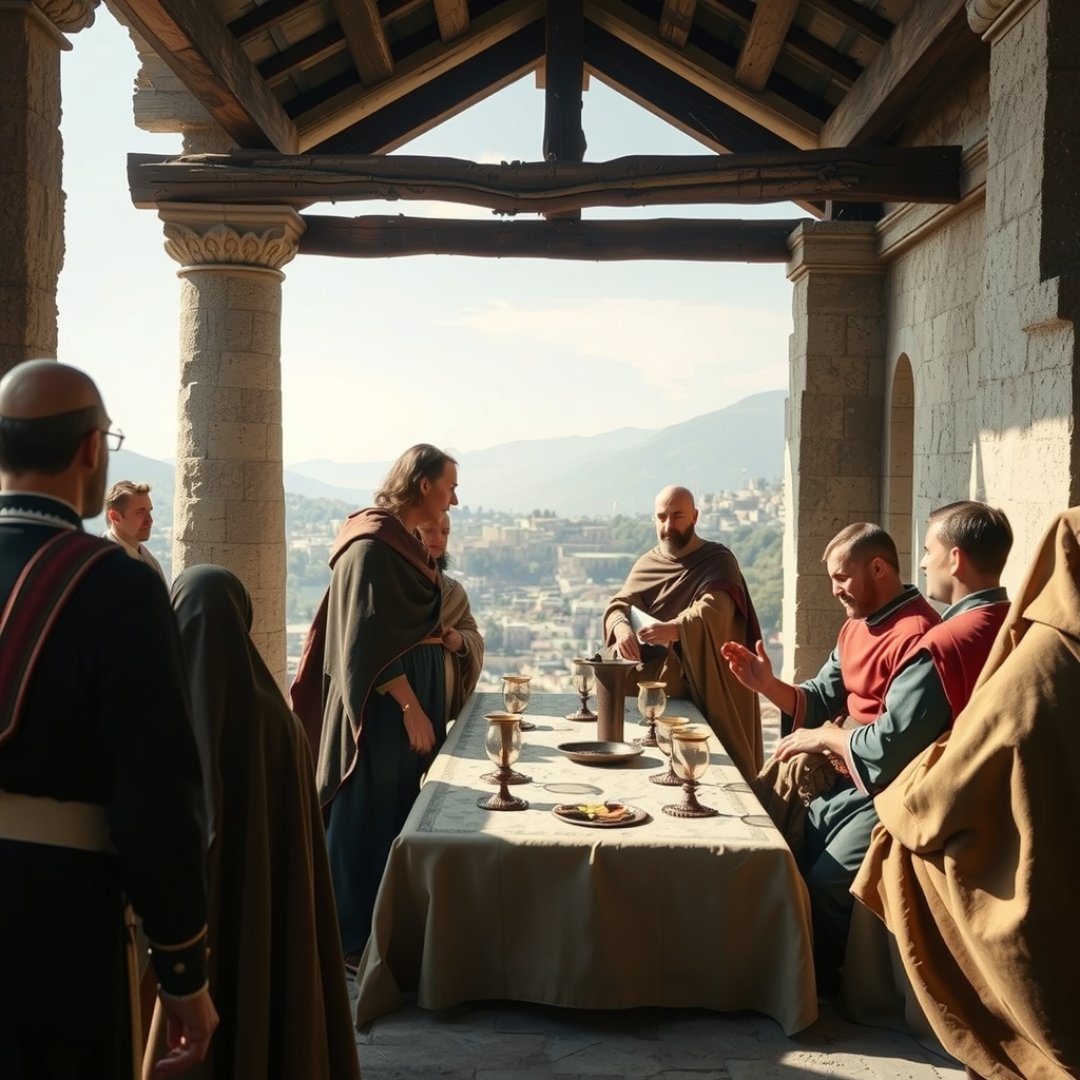
In the tumultuous landscape of early 8th-century Italy, where Byzantine imperial authority waned and the power of the Lombard Kingdom grew, a singular event would lay a cornerstone for the future temporal power of the papacy: the Donation of Sutri in 728 AD. This often-overlooked agreement, brokered between the ambitious Lombard King Liutprand and Pope Gregory II, saw the symbolic return of the captured town of Sutri and other territories not to the Byzantine Exarchate of Ravenna, but directly to the Roman Pontiff. Far from a mere territorial concession, this act profoundly impacted the political and ecclesiastical trajectory of the Italian peninsula, establishing a tangible precedent for papal temporal sovereignty and foreshadowing the eventual rise of the Papal States, defining the complex interplay between secular and religious authority for centuries to come.
Italy in the Early 8th Century: A Shifting Power Dynamic
By the early 8th century, the geopolitical map of Italy was a mosaic of contested power. The Byzantine Empire, distant and often preoccupied with threats from the East (particularly the rising Islamic Caliphate), struggled to maintain its grip on its Italian possessions, administered through the Exarchate of Ravenna. Meanwhile, the Lombard Kingdom, having established itself in the peninsula since 568 AD, steadily expanded its control, pushing against Byzantine frontiers. This created a vacuum of authority, which the papacy in Rome increasingly began to fill, not only as a spiritual leader but also as a de facto political and administrative force for the Roman populace.
Lombard Expansion and Byzantine Weakness
King Liutprand, who ascended to the Lombard throne in 712 AD, was a shrewd and capable ruler. His reign was marked by a series of military successes against Byzantine strongholds, aiming to unite all of Italy under Lombard rule. The Byzantine administration, facing its own internal struggles and external pressures, could offer little effective resistance, leading local populations, including Rome, to look towards the Pope for protection and leadership.
The Seizure of Sutri and Papal Intervention
In 728 AD, Liutprand launched a campaign into the Byzantine Duchy of Rome, seizing several towns, including Sutri. Strategically located north of Rome, Sutri represented a direct threat to the city. Pope Gregory II, recognizing the dire situation and the incapacity of the Byzantine Exarch to defend Roman interests, took it upon himself to negotiate directly with Liutprand. This act of diplomatic engagement marked a significant departure from previous papal reliance on imperial protection.
Pope Gregory II’s Diplomatic Acumen
Gregory II was a strong and assertive pontiff. Instead of appealing to the Byzantine Emperor Leo III, who was increasingly unpopular in Italy due to his iconoclastic policies, the Pope appealed to Liutprand on religious grounds. He convinced the deeply pious Lombard king not to keep Sutri as a conquest, but to restore it and other towns to St. Peter, meaning to the See of Rome. This was a crucial moment, as it shifted the legal basis of possession from imperial grant to direct papal ownership, a concept revolutionary for the time.
The Significance and Lasting Legacy of the Donation
The Donation of Sutri, while initially a relatively small territorial gain, held immense symbolic and historical weight. It was not a donation from the Emperor but from a powerful Germanic king, recognizing the Pope’s legitimate temporal authority over certain territories independent of Byzantine overlordship. This act solidified the growing autonomy of the papacy in central Italy and provided a concrete foundation for the future Papal States, which would eventually encompass a much larger territory across central Italy.
- Precedent for Papal Sovereignty: The donation established a critical precedent for the papacy’s right to govern territory directly, independent of any secular emperor.
- Weakening Byzantine Influence: It further eroded Byzantine authority in Italy, highlighting their inability to protect their own possessions and allowing the Pope to step into the role of a territorial ruler.
- Foundation of the Papal States: Historians often view the Donation of Sutri as the earliest legal and territorial foundation of the Papal States, even predating Charlemagne’s larger donations.
- Shaping Medieval European Politics: This event initiated a long and complex history of papal temporal power, which would shape the political landscape of Italy and Europe for over a millennium.
Frequently Asked Questions
What exactly was the Donation of Sutri?
The Donation of Sutri was an agreement in 728 AD where the Lombard King Liutprand returned the town of Sutri and other territories he had captured to Pope Gregory II, not to the Byzantine Empire, but ‘to St. Peter,’ meaning to the Bishop of Rome and his successors.
Why is the Donation of Sutri considered important?
It’s important because it marks the first time a secular ruler formally recognized the Pope’s right to govern territory independent of imperial authority. It laid a crucial foundation for the future establishment and expansion of the Papal States.
Who was King Liutprand?
Liutprand was a powerful and ambitious king of the Lombards, ruling from 712 to 744 AD. He sought to unite Italy under Lombard rule and was known for his piety and military prowess.
How did Pope Gregory II influence the donation?
Pope Gregory II used his diplomatic skills and moral authority to appeal to King Liutprand’s religious devotion. He convinced Liutprand to cede the captured territories to the papacy rather than retain them as Lombard conquests or return them to the distant and often unresponsive Byzantine Empire.
What was the broader context of Italy at the time of the Donation of Sutri?
Italy in 728 AD was a fragmented land, with the Byzantine Empire’s power in decline and the Lombard Kingdom expanding. The papacy was increasingly stepping into a leadership role for the Roman populace, both spiritually and politically, in the face of Byzantine weakness and Lombard aggression.
Related posts:
 The Lombard Power Consolidation Under King Desiderius (c. 763 AD)
 Carloman’s Abdication and Monastic Retreat (747 AD): Reshaping Frankish and Papal Power
 The Saracen Raids on Rome: The 9th-Century Threat to the Eternal City
 The Laurentian Schism of 498 AD: A Struggle for the Papacy in Early Medieval Rome