
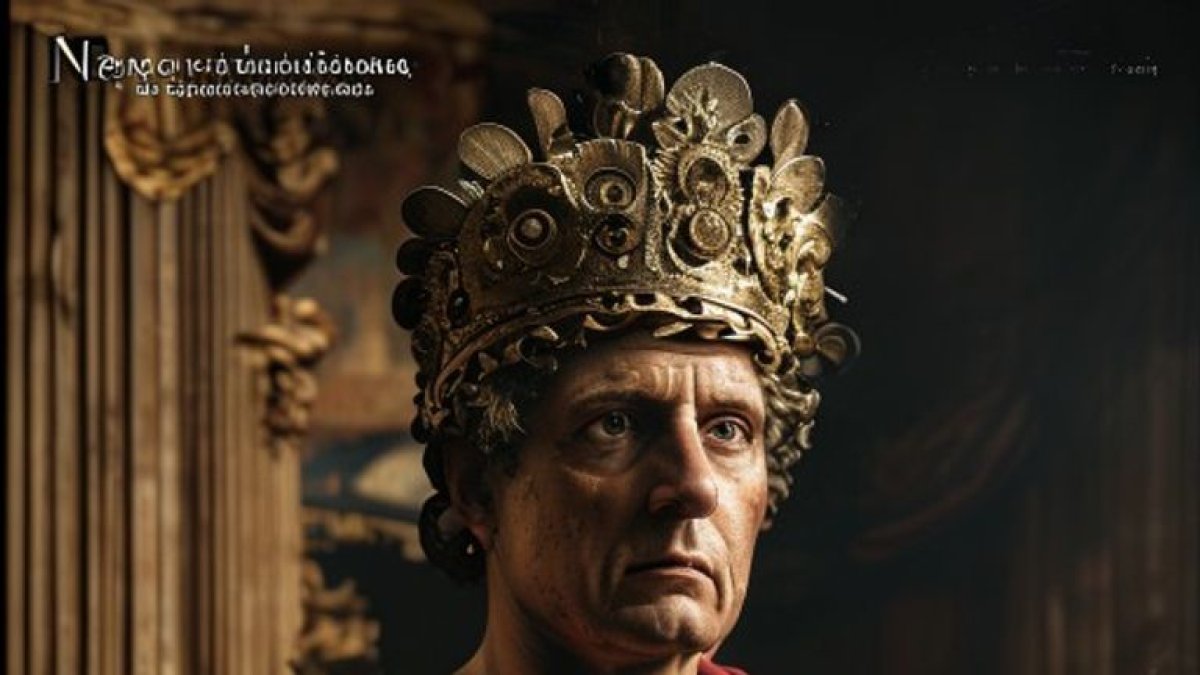
The early years of Emperor Nero’s reign, often romanticized as the “quinquennium Neronis,” were a delicate balance of competing influences, largely dominated by his ambitious mother, Agrippina the Younger, and his astute tutors, Seneca the Younger and Burrus. However, as Nero matured, his desire for independent rule intensified, leading to significant shifts in the imperial court’s power dynamics. AD 56 stands out as a pivotal year in this transformation, marking a period of Nero’s Imperial Assertions AD 56. It was during this time that the young emperor, barely nineteen years old, began to demonstrably push back against his mother’s overbearing control, systematically diminishing her public and private authority, and solidifying the roles of his preferred advisors. This crucial phase not only defined Nero’s personal style of leadership but also laid the groundwork for the more tyrannical aspects of his later reign, as he increasingly sought to govern according to his own will, often with dramatic and far-reaching consequences for the Roman Empire.
The Quinquennium Neronis: A Fragile Balance
Nero ascended to the throne in AD 54, a mere seventeen years old, following the suspicious death of Emperor Claudius. His initial rule was heavily influenced by the powerful triumvirate of his mother, Agrippina the Younger, the philosopher Seneca, and the Praetorian Prefect Sextus Afranius Burrus. Agrippina, a woman of formidable ambition and political acumen, had meticulously maneuvered her son into power, expecting to rule through him. This arrangement, however, quickly became a source of tension. The murder of Britannicus, Claudius’s natural son and a potential rival, in AD 55, further solidified Nero’s position but also signaled his capacity for ruthlessness. By AD 56, the stage was set for a direct confrontation between Nero and his overbearing mother, as the young emperor sought to truly claim his imperial prerogatives.
Diminishing the Empress Mother’s Power
In AD 56, Nero took decisive steps to systematically dismantle Agrippina’s authority and remove her from the center of power. Her attempts to assert herself in state affairs were increasingly met with cold defiance. Nero famously began to exclude her from senatorial meetings and official receptions, a stark contrast to her previous prominent role. Historical accounts suggest that Agrippina was also moved from her rooms in the imperial palace to a separate residence, physically distancing her from the daily workings of the government and Nero himself. These actions were not subtle; they were deliberate public statements designed to strip her of her status as an informal co-ruler and clearly demonstrate that supreme power rested solely with the emperor.
The Psychological Warfare
The struggle was not merely political but deeply personal. Agrippina, accustomed to wielding immense influence, found her access to her son restricted and her counsel ignored. Nero, tutored by Seneca in rhetoric and philosophy, was becoming adept at presenting his own image and decisions, undermining his mother’s attempts to control the narrative. This period saw a significant shift in the balance of psychological power within the imperial family, with Nero emerging as the dominant figure, determined to break free from his mother’s shadow, even if it meant alienating her entirely.
The Ascendancy of Seneca and Burrus
As Agrippina’s influence waned, the power of Seneca and Burrus concurrently reached its zenith. These two men, operating as a pragmatic and moral counterweight to Agrippina’s ambition, effectively steered the early years of Nero’s reign. Seneca, with his philosophical guidance, and Burrus, with his control over the Praetorian Guard, formed a formidable partnership that sought to govern Rome with moderation and justice. In AD 56, their counsel became paramount, shaping imperial edicts and administrative policies. They encouraged Nero to embrace a more clement and less autocratic style of rule, distinguishing his reign from the perceived excesses of his predecessor, Claudius.
Policies of Moderation and Reform
During this period, under their guidance, several noteworthy policies were pursued. There was an emphasis on efficient provincial administration and judicial reforms. Seneca’s influence can be seen in the rhetoric of Nero’s early speeches, which promised a more enlightened and just principate. This era of cooperation between the young emperor and his two chief advisors represented a brief window of stability and arguably the most positive period of Nero’s turbulent reign, as he was still largely receptive to their experienced guidance.
Nero’s Emerging Autonomy and Public Persona
By AD 56, Nero was not merely reacting to Agrippina; he was actively cultivating his own image and asserting his personal tastes, which often diverged from traditional Roman expectations. He began to explore his passion for the arts, poetry, and music more openly. While initially kept somewhat private, these inclinations signaled his desire for a distinctive public persona, one separate from his mother’s political ambitions. This emerging autonomy, though seemingly innocuous at first, would later become a defining, and often controversial, characteristic of his rule. The year marked a clear declaration of his intent to govern not just as an emperor, but as a personality unto himself, with his own desires and vision for the empire.
Frequently Asked Questions
What defines the “quinquennium Neronis” in Roman history?
The “quinquennium Neronis” refers to the first five years of Nero’s reign (AD 54-59), often considered a period of relatively good governance and stability, largely attributed to the influence of his advisors Seneca and Burrus, before his rule turned more tyrannical.
How did Nero’s relationship with Agrippina the Younger change around AD 56?
Around AD 56, Nero actively worked to diminish Agrippina’s influence. He excluded her from state affairs, reduced her public visibility, and moved her residence further from the imperial palace, systematically stripping away her power and authority.
Who were Seneca and Burrus, and what was their role during Nero’s early reign?
Seneca the Younger was a Stoic philosopher and Nero’s tutor, while Sextus Afranius Burrus was the Praetorian Prefect. Together, they acted as Nero’s chief advisors, promoting moderate policies and attempting to guide the young emperor towards responsible governance, effectively countering Agrippina’s influence.
What specific actions did Nero take in AD 56 to assert his imperial authority?
In AD 56, Nero continued his efforts to remove Agrippina from positions of power, notably by reducing her access to him, excluding her from senatorial proceedings, and generally asserting his own will in decision-making, signaling his move towards independent rule.
How did Nero’s assertion of power in AD 56 foreshadow later events in his reign?
Nero’s early assertions of independence from Agrippina in AD 56 set a precedent for his later, more ruthless decisions. His growing confidence in his own judgment, often against the advice of others, eventually led to increasingly autocratic and volatile rule, culminating in the murder of Agrippina herself.