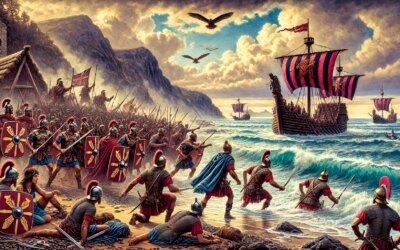

The Roman Empire in the late 3rd century AD was a vast, sprawling entity, constantly beset by threats along its immense borders and often plagued by internal strife. Amidst this tumultuous era, the dynamic Emperor Probus (reigned 276-282 AD) emerged as a formidable leader, dedicated to restoring stability and integrity to the beleaguered state. While his campaigns against Germanic tribes in Gaul and along the Rhine are frequently highlighted, a crucial, yet often overlooked, undertaking was the Probus Blemmyes Campaign of 279 AD. This decisive military action in Egypt was vital for protecting one of Rome’s most essential breadbaskets and securing its lucrative trade routes, demonstrating Probus’s strategic acumen and his commitment to maintaining imperial authority across all corners of his dominion, from the desert frontiers to the European heartlands.
The Persistent Threat of the Blemmyes
For centuries, the southern borders of Roman Egypt had been a theater of intermittent conflict with various nomadic and semi-nomadic tribes inhabiting the Eastern Desert, collectively often referred to as the Blemmyes. These groups, primarily based in the region south of Syene (modern-day Aswan) and extending into what is now Sudan, were known for their fierce independence and their tendency to launch raids into the fertile Nile Valley. Their incursions disrupted trade, plundered settlements, and posed a significant security risk to the crucial artery of the Roman grain supply. By the late 3rd century, during the tumultuous period known as the Crisis of the Third Century, Blemmyes activity intensified, reflecting a broader weakening of imperial frontier defenses across the empire. Roman garrisons struggled to contain them, making the security of Upper Egypt a pressing concern for any emperor seeking to stabilize the empire.
Emperor Probus’s Decisive Intervention
Emperor Probus, a seasoned military commander from Illyria, understood implicitly that a stable empire relied on secure borders and unbroken supply lines. Having successfully campaigned against various Germanic tribes along the Rhine and Danube, his attention turned to the perennial problem in Egypt. In 279 AD, he either personally led a significant expedition or dispatched a powerful force under trusted generals to address the Blemmyes threat head-on. Probus recognized that Egypt was not merely a distant province but the breadbasket of Rome, essential for feeding its massive urban population and legions. Moreover, the Red Sea trade routes, vital for luxury goods from the East, also originated in Egyptian ports and were vulnerable to disruption. His intervention was a clear signal that Roman authority, though stretched, remained firm and capable of projecting power even into its remote desert frontiers.
The Campaign’s Success and Lasting Impact
The Probus Blemmyes Campaign proved to be a decisive success. Roman legions and auxiliary forces engaged the Blemmyes, repelling their incursions and pushing them back beyond the traditional Roman frontier. Historical accounts suggest that Probus’s forces were not only victorious in battle but also took punitive measures, ensuring the immediate pacification of the region. This swift and effective military action brought a much-needed period of stability to Upper Egypt, allowing trade to flourish and agricultural production to continue uninterrupted. While the Blemmyes would continue to be a presence and occasionally a threat in later centuries, Probus’s campaign had a significant short-term impact, safeguarding Rome’s vital interests in the region and reinforcing the message that the empire, under his leadership, was once again asserting its strength and control over its vast territories.
Frequently Asked Questions
Who were the Blemmyes?
The Blemmyes were a collection of nomadic and semi-nomadic tribes inhabiting the Eastern Desert, south of Roman Egypt. They were known for their raiding activities into the Nile Valley and were a persistent threat to Roman control and trade in the region.
Why was Egypt so important to the Roman Empire?
Egypt was critically important to the Roman Empire primarily as its ‘breadbasket.’ Its fertile Nile Delta produced vast quantities of grain, essential for feeding Rome’s populace and its legions. It also facilitated lucrative trade routes with the East via the Red Sea.
What was the significance of this campaign for Emperor Probus?
The Probus Blemmyes Campaign demonstrated Probus’s commitment to securing all of Rome’s borders and vital provinces. It underscored his reputation as a capable ‘soldier emperor’ who was actively working to restore stability to the empire following the tumultuous Crisis of the Third Century, even in distant territories like Egypt.
Did the Blemmyes continue to trouble Roman Egypt after 279 AD?
Yes, while Probus’s campaign brought a period of peace, the Blemmyes remained a presence and continued to pose challenges to Roman (and later Byzantine) authority in Egypt for several centuries. Frontier defense against them was an ongoing concern.