
The year AD 493 marked a watershed moment in the tumultuous landscape of post-Roman Italy, a brutal pivot point that saw the demise of one powerful barbarian king and the ascent of another, ultimately ushering in the era of the Theodoric the Great Ostrogothic Kingdom. For seventeen years, Odoacer had ruled Italy, having famously deposed the last Western Roman Emperor, Romulus Augustulus, in 476 AD. His reign, while not always peaceful, brought a semblance of stability after decades of imperial decline and Germanic incursions. However, this fragile peace was shattered by the ambitions of Theodoric, king of the Ostrogoths, who arrived in Italy with the blessing, or at least the tacit approval, of the Eastern Roman Emperor Zeno. The confrontation between these two formidable figures was destined to redefine the peninsula, culminating in a dramatic and bloody betrayal at Ravenna that cemented Theodoric’s sole dominion and fundamentally reshaped the political and cultural destiny of Italy for decades to come, moving from a period of transition to a more formalized barbarian rule.
Odoacer’s Unstable Reign in Italy
Following the deposition of Romulus Augustulus in AD 476, Odoacer, a Scirian general in the Roman army, assumed control of Italy. Rather than declaring himself emperor, he famously sent the imperial regalia to Constantinople, acknowledging the Eastern Roman Emperor Zeno as his sovereign while establishing himself as the rex Italiae, or ‘King of Italy.’ This position, though technically subservient, granted him considerable autonomy over the peninsula. Odoacer’s rule was characterized by a delicate balance: he aimed to maintain Roman administrative structures and cooperate with the Roman aristocracy and the Senate, even while his Germanic foederati constituted the military backbone of his regime. His policies included granting land to his soldiers, largely from existing imperial estates, and minting coinage in the name of the Eastern emperor, a testament to his ambition to integrate rather than conquer outright. Despite efforts at stability, Odoacer’s authority was often challenged by internal dissent and external threats, particularly from other Germanic tribes on Italy’s borders, setting the stage for future conflict.
The Ostrogothic Invasion and the Gothic War
The relative peace established by Odoacer was shattered by the arrival of Theodoric the Great and his Ostrogoths. Encouraged by Emperor Zeno, who sought to rid his own borders of the powerful and sometimes unruly Goths, Theodoric led his entire people – estimated to be around 200,000 individuals – into Italy in AD 488. Zeno likely hoped that Theodoric would either conquer Italy and rule as his subordinate, or at least keep Odoacer preoccupied. The ensuing conflict, known as the Gothic War, was a brutal and protracted struggle for control of the peninsula.
Early Victories and Stalemate
Theodoric achieved early victories at the battles of Isonzo and Verona in AD 489, demonstrating the military prowess of his Gothic warriors. Odoacer, a seasoned commander himself, was driven back to Ravenna, his heavily fortified capital. The war devolved into a grinding siege, with Ravenna proving a formidable obstacle. For nearly four years, from AD 490 to 493, the city withstood Theodoric’s siege, a testament to Odoacer’s strategic resilience and the strength of his defenses. Both sides suffered immense casualties and widespread devastation plagued Italy, highlighting the high stakes of this struggle for dominion.
The Betrayal at Ravenna and Theodoric’s Ascendancy
With the siege of Ravenna dragging on and neither side able to secure a decisive victory, negotiations for a peaceful resolution began. In February AD 493, a treaty was brokered, stipulating that Odoacer and Theodoric would rule Italy jointly. This seemed like a pragmatic solution to a bloody stalemate, promising an end to the protracted suffering of the Italian populace. However, this agreement proved to be a facade for Theodoric’s true intentions.
The Fateful Banquet
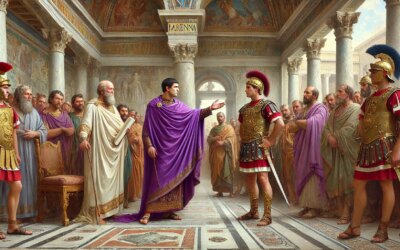
Just weeks after the treaty was signed, on March 15, AD 493, Theodoric invited Odoacer to a celebratory banquet at the imperial palace in Ravenna, ostensibly to confirm their joint rule. During the feast, Theodoric personally drew his sword and struck down Odoacer. According to contemporary accounts, Theodoric boasted that his sword had no bone, as he cleaved Odoacer in two. This brutal act of treachery was followed by a systematic purge of Odoacer’s loyalists and his family. Theodoric quickly eliminated Odoacer’s remaining soldiers and supporters, securing his position as the sole ruler of Italy and effectively ending the Scirian general’s seventeen-year reign. This ruthless consolidation of power marked the definitive establishment of the Theodoric the Great Ostrogothic Kingdom in Italy, an entity that would leave an indelible mark on the political and cultural landscape of the post-Roman West.
Frequently Asked Questions
Who was Odoacer before Theodoric’s arrival?
Odoacer was a Scirian general in the Roman army who, in AD 476, deposed the last Western Roman Emperor, Romulus Augustulus. He then ruled Italy as ‘King of Italy’ (rex Italiae), largely maintaining Roman administration while acknowledging the authority of the Eastern Roman Emperor Zeno.
Why did Theodoric the Great invade Italy?
Theodoric invaded Italy with his Ostrogothic people primarily at the encouragement of the Eastern Roman Emperor Zeno. Zeno aimed to redirect the powerful Ostrogoths, who were a threat to his own empire, towards Italy to challenge Odoacer, hoping that either Theodoric would establish a new, subordinate kingdom or at least neutralize Odoacer.
How did Theodoric consolidate his power after assassinating Odoacer?
After the assassination of Odoacer at the banquet in Ravenna, Theodoric launched a swift and brutal purge of Odoacer’s remaining loyalists, including his family and key supporters. This decisive action eliminated any potential rivals and secured his uncontested dominion over Italy, solidifying the foundation of the Ostrogothic Kingdom.