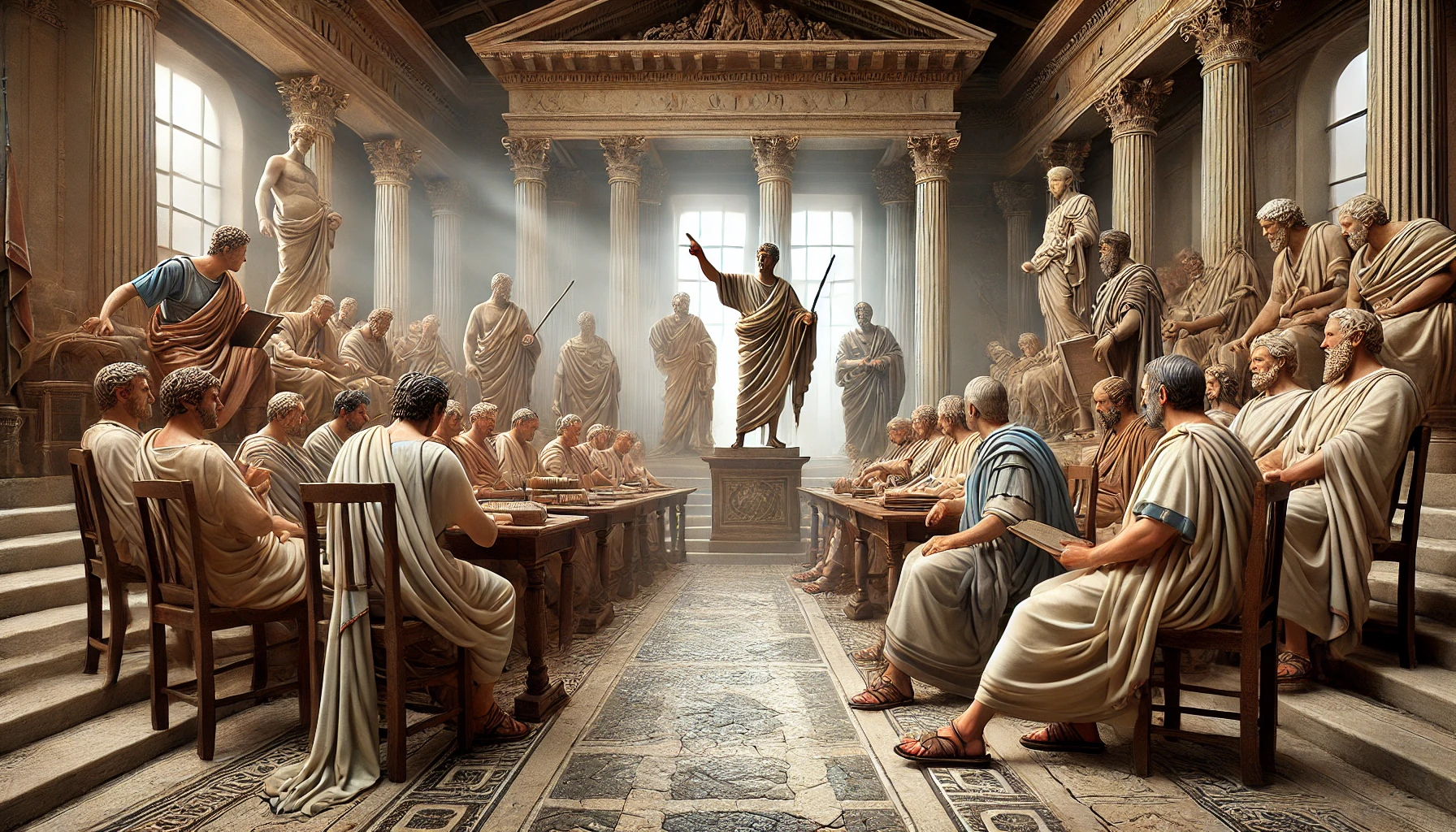
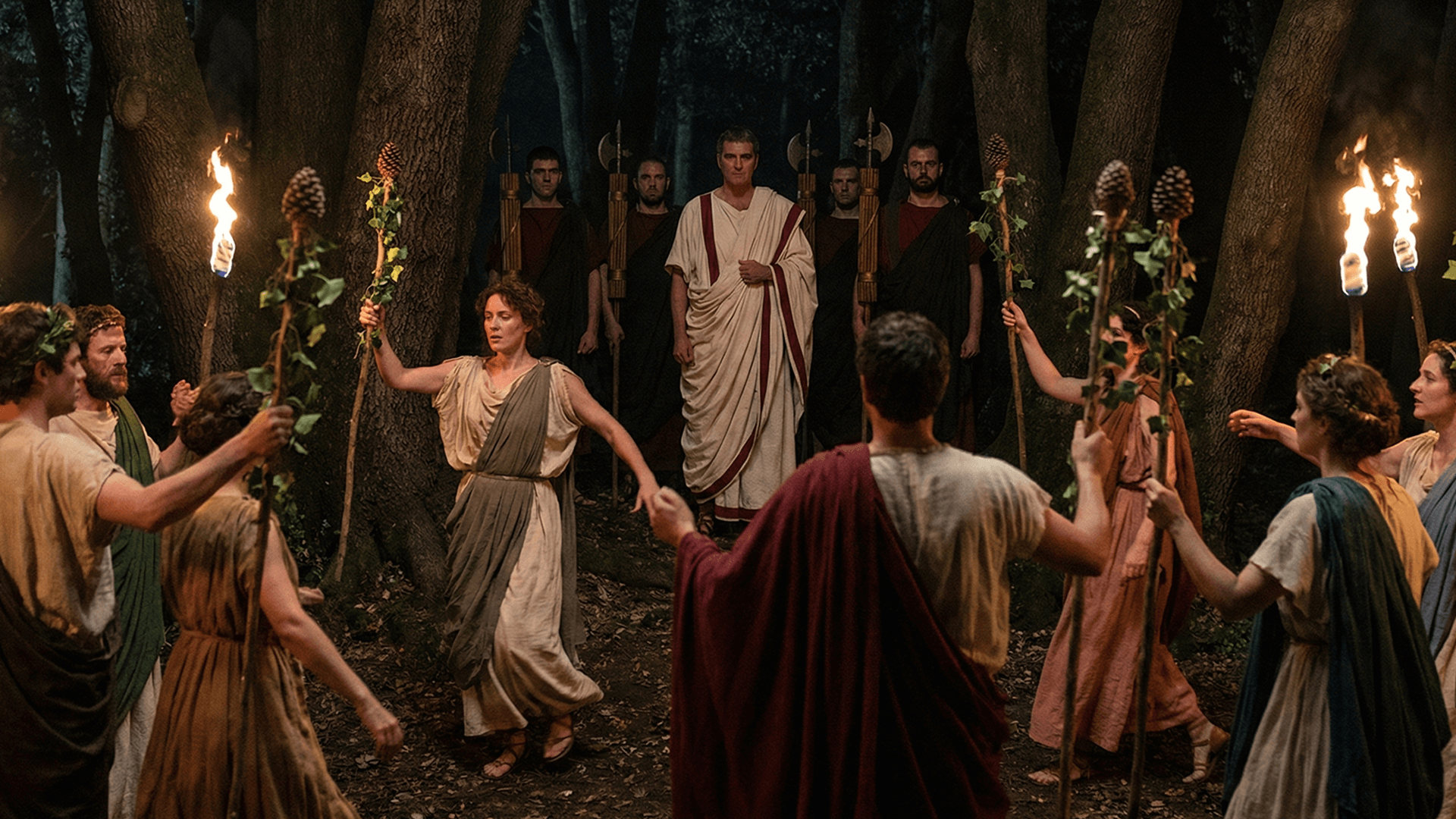
In 186 BC, the Roman Republic had recently emerged victorious from the wars against Carthage and Macedon. Rome was the master of the Mediterranean, yet the Senate was gripped by a terrifying fear. It was not a foreign army that kept the consuls awake at night, but a shadowy enemy from within. This period is remembered for the Bacchanalia scandal, a moment of mass hysteria and brutal repression that historians often describe as Rome’s first “witch hunt.”
The cult of Bacchus (the Roman name for the Greek god Dionysus) had existed in Italy for some time, but it had recently transformed. Originally a rite performed by women during the day, it had evolved into nocturnal gatherings that included men, freedmen, and slaves. Rumors began to swirl through the city: these were not just religious rites, but breeding grounds for debauchery, forgery, poisoning, and—most dangerously—political conspiracy. To the conservative Roman elite, the secrecy of these rites looked like “a state within a state.”
Exposing the Bacchanalia Scandal
The investigation that blew the lid off the cult reads like a detective novel recorded by the historian Livy. The conspiracy was exposed by an unlikely whistleblower: Hispala Faecenia, a freedwoman and courtesan. She was motivated by fear for her lover, a young Roman named Publius Aebutius, whose family was trying to force him into the cult to seize his inheritance.
Hispala revealed the cult’s dark secrets to the Consul Spurius Postumius Albinus. She described nightmarish scenes: loud drums and cymbals used to drown out the screams of victims, ritual violence where individuals were dragged off into caves and purportedly “taken by the gods” (a euphemism for murder), and oaths of loyalty that superseded allegiance to Rome. Postumius, realizing the scale of the threat, bypassed the tribunes and took the matter directly to the Senate.
The Senate’s Brutal Response
The Senate’s reaction was swift and merciless. They viewed the cult not merely as a religious deviation, but as a military threat to the Republic’s stability. They passed the famous Senatus Consultum de Bacchanalibus, a bronze tablet of which was discovered in Calabria and confirms Livy’s account. This decree effectively dismantled the cult’s structure to end the panic:
- No gathering of more than five people was permitted.
- Common funds and priesthoods were banned.
- Secret oaths were strictly prohibited.
- Men were forbidden from becoming priests of Bacchus.
The consuls were granted extraordinary powers to seek out and punish the cultists. The gates of Rome were guarded to prevent suspects from fleeing. The investigation spread throughout Italy, leading to a massive purge. According to Livy, over 7,000 people were implicated. Those who had merely participated in the rites were imprisoned, but those found guilty of crimes—or simply of swearing the secret oath—were executed.
Consequences of the Bacchanalia Scandal
The suppression of these rites was a watershed moment in Roman history. It established a precedent: the Roman state claimed the authority to regulate what citizens did in their private lives and religious devotion. While Rome was generally tolerant of foreign gods, it drew a hard line at secrecy and subversion.
The brutality of the crackdown suggests that the Senate’s fear was genuine. In a society built on public duty (pietas) and open hierarchy, a secret society that mixed genders and classes—where a slave could be a priest and a senator a subordinate—was an intolerable inversion of the natural order. The Bacchanalia scandal proved that while Rome could conquer the world, it remained deeply paranoid about losing its own soul.
FAQ: The Bacchanalia Scandal
1. What was the Bacchanalia?
The Bacchanalia were Roman festivals celebrating Bacchus (Dionysus), the god of wine, freedom, and ecstasy. Originally restricted to women, they evolved into secret, mixed-gender nocturnal rites that alarmed the Roman state.
2. Why did the Roman Senate ban the Bacchanalia?
The Senate feared the cult was a front for a massive conspiracy. They believed the secrecy, mixed classes, and alleged crimes (poisoning, murder, forgery) threatened the stability and moral fabric of the Republic.
3. How many people were executed?
According to the historian Livy, around 7,000 men and women were implicated in the conspiracy. The majority of those found guilty of taking the cult’s oaths were executed.
4. Did the worship of Bacchus completely disappear?
No. The Senate did not ban Bacchus himself, as that would have angered the gods. They banned the organization of the cult. Individuals could still worship Bacchus, but only with specific permission from the Urban Praetor and in very small groups.