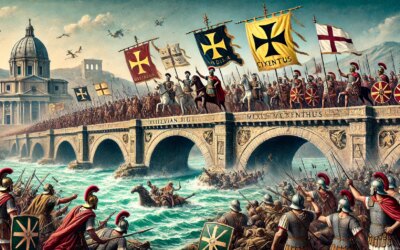
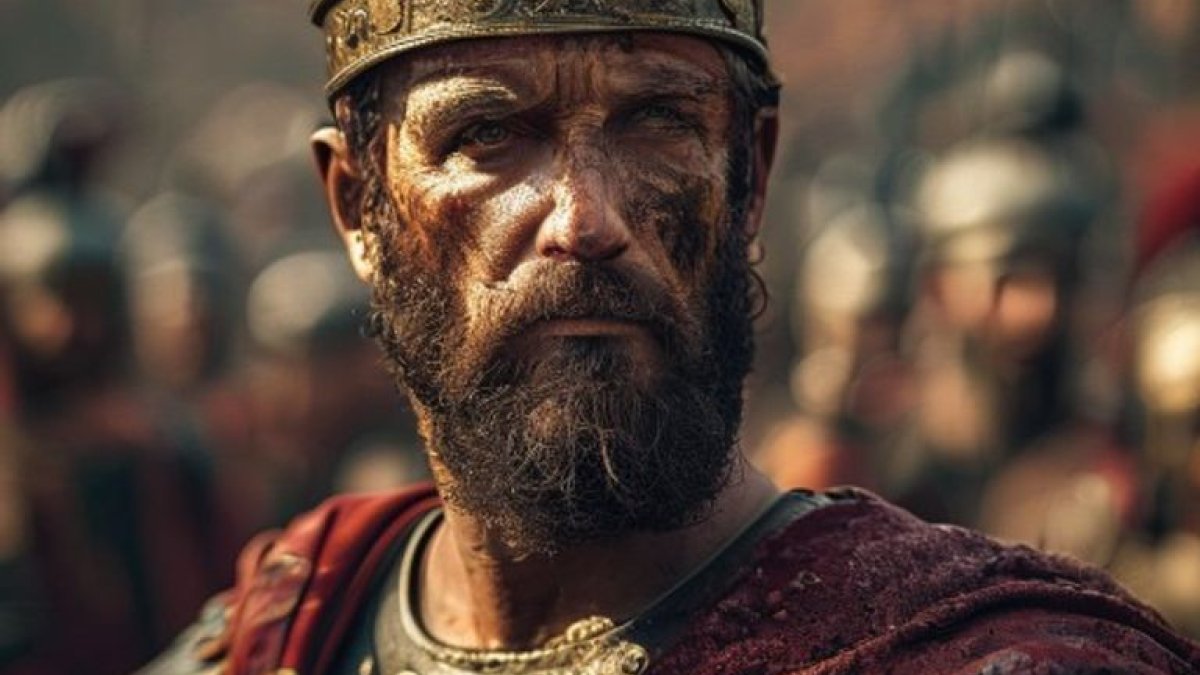
The year 324 AD marked a profound turning point in Roman history, culminating in the decisive Battle of Chrysopolis. This monumental clash near modern-day Üsküdar, on the Asian side of the Bosphorus, represented the ultimate confrontation between the two remaining Roman emperors, Constantine I and Licinius. After years of simmering tension and intermittent warfare, Chrysopolis was not merely another engagement; it was the battle that solidified the future direction of the Roman Empire under a single ruler. It was here that Constantine’s Final Triumph was truly secured, paving the way for his sole emperorship, the establishment of Constantinople as the new capital, and the acceleration of Christianity’s rise within the empire. Understanding this battle is crucial to grasping the foundational changes that swept across the Roman world in the 4th century CE.
The Brewing Storm: Constantine and Licinius’ Rivalry
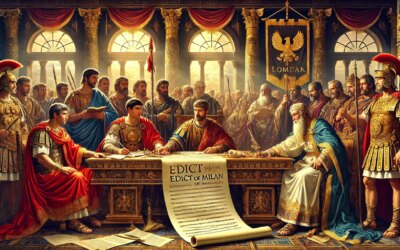
The uneasy alliance between Constantine and Licinius, forged after the Edict of Milan in 313 AD, was destined to fracture. Both emperors shared the vast Roman Empire, but their ambitions and increasingly divergent religious policies fueled an inevitable conflict. Constantine, a staunch proponent of Christianity, viewed Licinius’s renewed persecutions of Christians in the East as an affront, while Licinius grew wary of Constantine’s ever-growing power and influence. The first major conflict in 316 AD, though inconclusive, set the stage for a final showdown. By 324 AD, the rivalry had reached its apex, with both sides marshalling massive forces for a struggle that would determine the fate of the empire.
- Early Tensions: The initial period of cooperation quickly dissolved into mistrust and proxy conflicts.
- Religious Divide: Constantine’s Christian patronage clashed with Licinius’s conservative pagan leanings, which eventually led to persecution.
- Naval Superiority: Constantine’s son, Crispus, won a crucial naval victory at the Battle of the Hellespont, clearing the sea lanes and allowing Constantine’s forces to cross into Asia Minor.
The Battle of Chrysopolis: A Decisive Confrontation
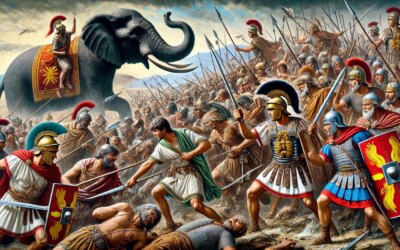
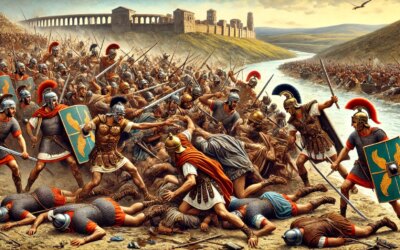
With his naval forces shattered and his land army under severe pressure, Licinius gathered his remaining legions, estimated to be around 110,000 to 140,000 men, at Chrysopolis, positioned strategically across from Byzantium. Constantine, leading a more experienced and religiously motivated force of approximately 120,000 to 150,000, was eager to press his advantage. The battle on September 18, 324 AD, was fiercely contested, but Constantine’s tactical brilliance and the morale of his troops, reportedly fighting under the Christian Chi-Rho standard, proved overwhelming. Licinius’s forces were utterly routed, suffering heavy casualties, estimated at 25,000 to 30,000 slain.
Constantine’s Strategy and Victory
Constantine employed a direct and aggressive strategy, engaging Licinius’s forces in a pitched battle rather than a prolonged siege. His experience and leadership inspired his troops, who, according to contemporary accounts, fought with exceptional zeal. The sheer weight of Constantine’s assault broke Licinius’s lines, turning the tide irrevocably. The outcome was a crushing defeat for Licinius and a clear demonstration of Constantine’s military prowess, solidifying Constantine’s Final Triumph on the battlefield.
Aftermath and the Dawn of a New Era
The defeat at Chrysopolis marked the end of Licinius’s reign and the beginning of Constantine’s undisputed control over the entire Roman Empire. Licinius initially fled but was eventually captured and, despite promises of clemency, executed a few months later. This eliminated the last serious challenge to Constantine’s authority, allowing him to fully implement his vision for a unified, Christianized empire. The battle directly led to the founding of Constantinople, a “New Rome” that would serve as the empire’s Christian capital for over a millennium.
- Sole Emperorship: Constantine became the sole Augustus, ending the Tetrarchy and ushering in an era of centralized imperial power.
- Christian Hegemony: With Constantine’s unwavering support, Christianity’s influence rapidly expanded, setting the stage for its eventual status as the state religion.
- Founding of Constantinople: The victory provided the stability and resources necessary for Constantine to dedicate himself to constructing his magnificent new capital, dedicated in 330 AD.
The Battle of Chrysopolis was not just a military victory; it was a watershed moment that reshaped the political, religious, and geographical landscape of the Roman world, leaving an indelible mark on history.
Frequently Asked Questions
What was the main cause of the conflict between Constantine and Licinius?
The primary causes included their clashing ambitions for sole control of the Roman Empire, coupled with their increasingly divergent religious policies, where Constantine promoted Christianity while Licinius resumed persecutions in the East.
Where exactly did the Battle of Chrysopolis take place?
The battle took place near the ancient city of Chrysopolis, which is located on the Asian side of the Bosphorus Strait, directly opposite Byzantium (modern-day Istanbul, Turkey). Today, this area is known as Üsküdar.
What was the immediate impact of Constantine’s victory at Chrysopolis?
Constantine’s victory at Chrysopolis led to the immediate surrender and eventual execution of Licinius, leaving Constantine as the undisputed sole emperor of the entire Roman Empire. It solidified his authority and paved the way for his major reforms.
Did the Battle of Chrysopolis have any religious significance?
Yes, it is often seen as having immense religious significance. Constantine’s forces reportedly fought under the Chi-Rho symbol, a Christian emblem. His victory was interpreted by many as divine affirmation of his Christian faith and a triumph for Christianity within the Roman Empire.
How did this battle contribute to the founding of Constantinople?
By securing his sole emperorship, the Battle of Chrysopolis gave Constantine the unchallenged power and stability needed to pursue his grand project of establishing a new imperial capital. He chose Byzantium, renamed Constantinople, as this new Christian capital, beginning its construction shortly after his victory.