The early 6th century witnessed a tumultuous transformation across what was once the Western Roman Empire, with new Germanic kingdoms vying for control and shaping the future of Europe. Among the most decisive conflicts of this era was the Battle of Vouillé 507 AD, a confrontation that dramatically altered the political landscape of Gaul and set the stage for the enduring dominance of the Frankish kingdom. This pivotal engagement saw the forces of Clovis I, the ambitious king of the Salian Franks, clash with the Visigoths under King Alaric II. More than just a military victory, Vouillé cemented Clovis’s authority, expanded Frankish territory significantly, and marked a critical step in the formation of what would become modern France. Understanding this battle is essential to grasping the complex transition from the Roman world into the nascent medieval order, illustrating how strategic military triumphs laid the groundwork for new dynastic powers.
Gaul on the Eve of Conflict: Visigoths, Franks, and Romans
Following the collapse of effective Roman administration in the West by 476 AD, the vast territories of Gaul became a patchwork of emergent Germanic kingdoms. To the south and west, the powerful Visigothic Kingdom, with its capital at Toulouse, controlled a significant portion, extending into Hispania. Their rule, however, was often resented by the Gallo-Roman population, largely due to the Visigoths’ adherence to Arian Christianity, which contrasted sharply with the Nicene (Catholic) Christianity of the Romans. This religious divide would prove to be a crucial factor in the upcoming struggles for supremacy.
To the north, the Salian Franks, under the leadership of King Clovis I, had been steadily expanding their influence. Clovis, a cunning and ruthless ruler, unified various Frankish tribes and famously converted to Nicene Christianity around 496 AD after his victory at the Battle of Tolbiac. This conversion was a masterstroke, garnering him the support of the Gallo-Roman episcopate and population, who saw him as a liberator from the Arian Visigoths. By 507 AD, Clovis had already conquered the last vestiges of Roman authority in northern Gaul (the Domain of Soissons) and pushed back the Alamanni. His ambition now turned southward, directly challenging the Visigothic hegemony.
Armies Converge: Tactics and Personalities at Vouillé
The stage for the decisive confrontation was set near Vouillé, a location in Aquitaine, close to Poitiers. Clovis gathered his Frankish warriors, bolstered by considerable Gallo-Roman support and possibly even detachments from the allied Burgundians. His army was likely composed primarily of infantry, known for their ferocity and their iconic throwing axe, the francisca, though cavalry would have played a role in reconnaissance and pursuit. Alaric II, leading the Visigothic host, probably relied more heavily on cavalry, a traditional strength of Gothic armies. Despite warnings from his advisors to avoid a direct engagement with Clovis, Alaric felt compelled to defend his territories and face the Frankish threat head-on.
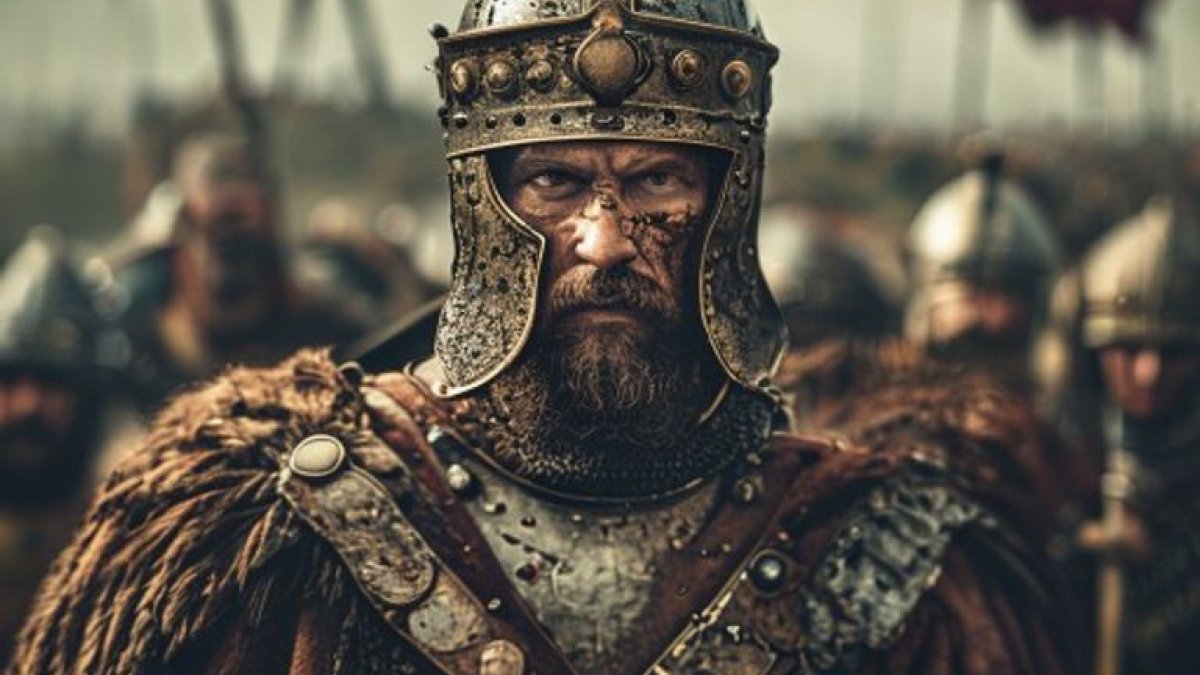
The battle itself was fierce and bloody. Contemporary accounts, notably by Gregory of Tours, emphasize the personal bravery of Clovis, who reportedly killed Alaric II in single combat. While this dramatic detail may be embellished, it underscores the perceived leadership of the Frankish king. The Frankish tactic of a disciplined, heavy infantry charge, combined with their superior numbers and the morale boost from their Catholic faith, proved overwhelming. The Visigothic line eventually broke, leading to a catastrophic rout. Alaric’s death on the battlefield deprived his forces of leadership and ensured the completeness of the Frankish victory. Many Visigothic warriors were slain or captured during the pursuit.
A New Order: Frankish Hegemony and the Shape of Western Europe
The consequences of the Battle of Vouillé 507 AD were immediate and profound. With Alaric II dead and his army shattered, the Visigothic Kingdom in Gaul collapsed. Clovis swiftly moved to annex most of Aquitaine, pushing the remaining Visigothic forces into Hispania, where they would establish a new, albeit diminished, kingdom. Only Septimania, a narrow strip of territory along the Mediterranean coast, remained under Visigothic control in Gaul, primarily due to intervention from the Ostrogothic king Theodoric the Great, Alaric’s father-in-law.
This victory solidified the Frankish kingdom as the undisputed dominant power in Gaul. Clovis returned to Tours and later to Paris, which became his capital, hailed as a new Constantine by the Roman Church. His conversion to Nicene Christianity, coupled with the military triumph, allowed for a relatively smooth integration of the Gallo-Roman elite into his administration, further strengthening his rule. The Battle of Vouillé was not just a battle; it was a foundational moment, ensuring that Gaul would develop under Frankish, rather than Visigothic, influence. It laid the groundwork for the Merovingian Dynasty and ultimately for the very concept of France, permanently altering the trajectory of Western European history and leaving a lasting legacy for centuries to come.
Frequently Asked Questions
Who was Clovis I and why was he significant before the Battle of Vouillé?
Clovis I was the king of the Salian Franks who, before Vouillé, had already unified many Frankish tribes and eliminated the last Roman presence in northern Gaul. His conversion to Nicene Christianity around 496 AD was particularly significant, gaining him the support of the Gallo-Roman population and the Church, providing a crucial ideological advantage over the Arian Visigoths.
What was the religious difference between the Franks and the Visigoths at the time?
The Franks under Clovis I had converted to Nicene (Catholic) Christianity, aligning them with the majority Gallo-Roman population. The Visigoths, however, were Arian Christians, a theological difference that created tension and alienation with their Catholic subjects, weakening their hold on the population.
What were the immediate territorial gains for the Franks after the Battle of Vouillé?
Immediately following the Battle of Vouillé, the Franks under Clovis I annexed almost all of Aquitaine from the Visigoths. This vast territory significantly expanded the Frankish kingdom and pushed the Visigothic realm primarily into Hispania, leaving them with them with only a small strip of land in Gaul called Septimania.
How did the Battle of Vouillé influence the long-term development of France?
The Battle of Vouillé was a pivotal moment in the formation of France. By establishing Frankish dominance over Gaul, it ensured that the region would develop under a single, unified Frankish rule rather than being fragmented among various Germanic kingdoms. This laid the essential political and cultural groundwork for the later Merovingian and Carolingian dynasties, ultimately leading to the kingdom of France.