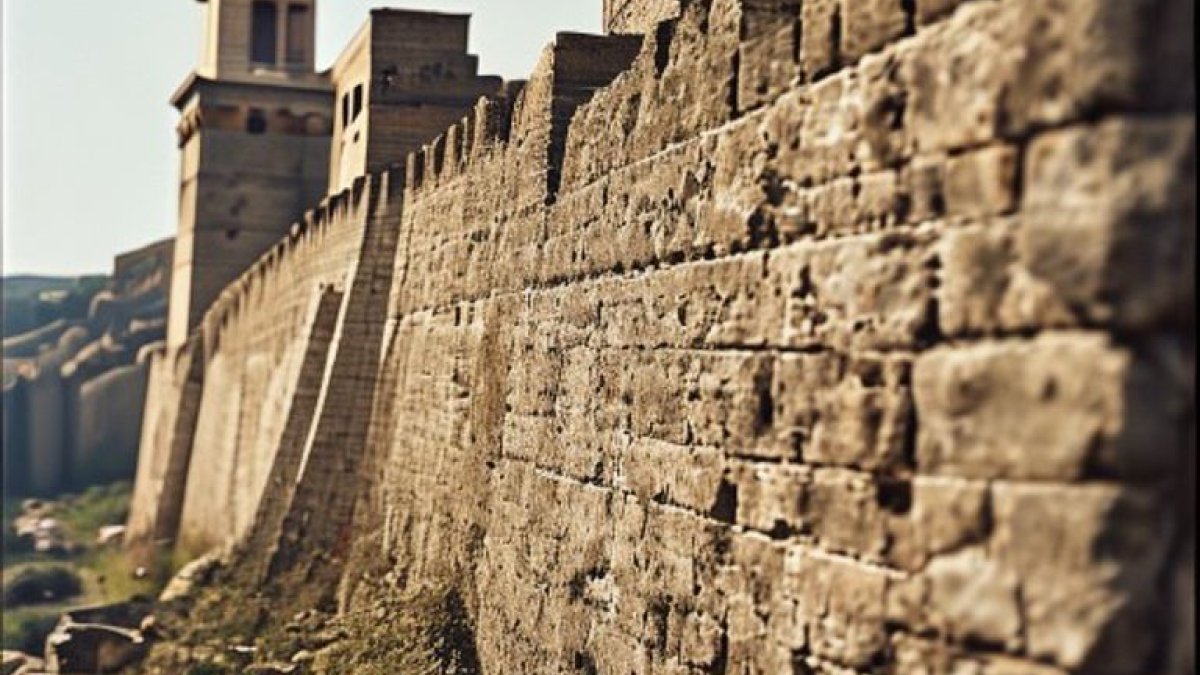
In the early 2nd century AD, the Roman Empire under Emperor Hadrian embarked on one of its most ambitious engineering projects: the monumental structure known today as Hadrian’s Wall. Spanning 80 Roman miles (approximately 73 modern miles or 117 kilometers) across the narrowest part of northern Britannia, this formidable barrier was a declaration of Roman power and a defined limit to their expansion. The decision for Hadrian’s Wall construction was made during the emperor’s visit to Britain in 122 AD, following a period of unrest and consolidation. Its purpose was multifaceted: to delineate the boundary of Roman territory, to control the movement of people and goods, and to project an image of impregnable strength against the indigenous tribes to the north. Unlike earlier, more temporary defensive lines, Hadrian’s Wall was conceived as a permanent stone and turf structure, complete with forts, milecastles, and turrets, representing an enormous undertaking in logistics, labor, and architectural ingenuity that shaped the Roman presence in Britain for centuries. This enduring monument remains a powerful symbol of Roman ambition and engineering prowess.
Emperor Hadrian’s Vision for Britannia
Emperor Hadrian, known for his administrative reforms and extensive travels across the empire, arrived in Britannia in 122 AD. His visit followed a period where Rome’s hold on the northern reaches of the province was precarious, marked by barbarian incursions and the need for a more stable frontier. Rather than endless expansion, Hadrian favored consolidation and defense, a policy encapsulated by the wall’s construction. He envisioned a clear demarcation line, a physical barrier that would both protect the Roman province from raids by the Picts and other northern tribes, and act as a customs barrier, controlling trade and preventing illicit crossings. This strategic shift marked a turning point in Rome’s imperial policy, moving from aggressive conquest to a more defensive posture, and it manifested in stone and turf across the British landscape.
Engineering the Frontier: Design and Construction Challenges
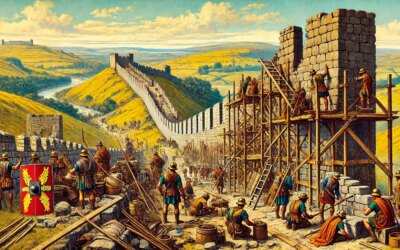
The scale of Hadrian’s Wall construction was immense. The wall itself varied in design: a broad stone wall in the east, narrowing towards the west, and a turf wall in the westernmost sections. Accompanying the wall was a complex system of fortifications:
- Milecastles: Small forts placed at intervals of approximately one Roman mile, each with two gateways for passage through the wall.
- Turrets: Smaller observation posts situated between milecastles, providing regular lookout points.
- Forts: Larger garrisons, initially built along the Stanegate road to the south, were later integrated directly into the wall’s line.
South of the wall, a massive ditch and earthwork known as the Vallum was excavated, creating an additional military zone. Construction relied on legions stationed in Britannia, particularly Legio II Augusta, Legio VI Victrix, and Legio XX Valeria Victrix, who used local stone and timber. The logistics of moving building materials, feeding thousands of soldiers, and coordinating such a vast project across varied terrain presented significant challenges, yet the work was completed in a remarkably short period, primarily between 122 and 128 AD.
Life and Control Along the Wall
Hadrian’s Wall was more than just a military barrier; it was a living frontier. Thousands of Roman soldiers and auxiliary troops were garrisoned in the forts and milecastles, their presence shaping the local economy and culture. Civilian settlements, known as vici, grew up around the larger forts, housing families of soldiers, traders, and craftsmen. These communities fostered a vibrant, if rugged, provincial life. The wall facilitated controlled movement, with gates at the milecastles acting as checkpoints for those seeking passage. This control allowed Rome to tax goods and monitor potential threats. While it primarily functioned as a deterrent against large-scale invasions, its daily role involved border control, customs duties, and maintaining Roman authority in a challenging environment. The cultural exchange between Romans, Britons, and various auxiliary forces from across the empire also left a rich archaeological legacy.
The Wall’s Enduring Legacy and Preservation
After Hadrian’s death, the wall saw periods of abandonment and reoccupation, notably during the reign of Antoninus Pius, who built the Antonine Wall further north. However, Hadrian’s Wall remained the primary northern frontier for most of Roman rule in Britain until the late 4th century AD. Following the Roman withdrawal from Britain in the early 5th century, the wall gradually fell into disrepair, with much of its stone repurposed for local buildings over the centuries. Despite this, significant stretches of the wall and many of its associated structures have survived, offering a tangible link to Rome’s past. Today, Hadrian’s Wall is a UNESCO World Heritage Site, a testament to Roman ingenuity and imperial ambition, attracting countless visitors who come to walk its ancient path and contemplate the edge of a vanished empire. Its preservation continues to be a crucial effort for understanding Roman Britain.
Frequently Asked Questions
Why was Hadrian’s Wall built?
Hadrian’s Wall was primarily built to mark the northern boundary of the Roman Empire in Britannia, provide defense against raids from northern tribes, and control the movement of people and trade across the frontier.
How long is Hadrian’s Wall?
Hadrian’s Wall spans approximately 80 Roman miles, which is about 73 modern miles or 117 kilometers, stretching from the River Tyne near the North Sea to the Solway Firth on the west coast of England.
What materials were used to construct Hadrian’s Wall?
The eastern sections of Hadrian’s Wall were built primarily from stone, while the western sections were initially constructed using turf. Both parts utilized locally available materials, with stone quarried nearby and turf cut from the surrounding land.
What were milecastles and turrets?
Milecastles were small forts positioned at roughly one Roman mile intervals along Hadrian’s Wall, serving as gateways and barracks. Turrets were even smaller observation posts located between milecastles, providing constant surveillance along the frontier.
Can I visit Hadrian’s Wall today?
Yes, Hadrian’s Wall is a popular tourist destination and a UNESCO World Heritage Site. Many sections are accessible to the public, offering walking trails, museums, and archaeological sites that provide insight into its history and construction.