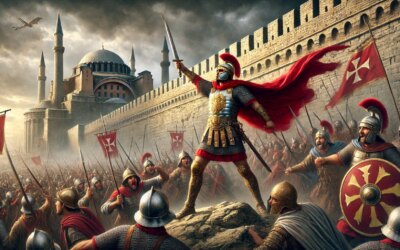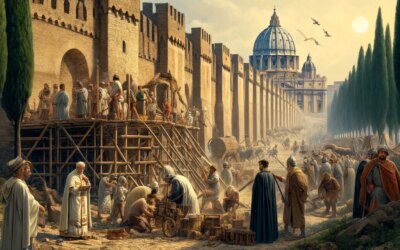
The year 1054 AD marks a watershed moment in Christian history, a seismic event often referred to as the East-West Schism 1054. This profound rupture saw the formal separation of the Latin Church, headquartered in Rome, and the Eastern Orthodox Church, centered in Constantinople. While often simplified to a single date and event, the Schism was in fact the culmination of centuries of growing theological, political, and cultural divergences between the two halves of what was once a unified Christian world. Disputes over papal authority, the Nicene Creed’s “Filioque” clause, differing liturgical practices, and political rivalries between the Pope and the Patriarch of Constantinople all contributed to an escalating tension that ultimately proved insurmountable, leaving an indelible mark on the religious and geopolitical landscape of Europe and the Near East for generations to come.
The Deep-Seated Causes of the Schism
The East-West Schism 1054 was not an isolated incident but the culmination of centuries of evolving differences between the Eastern and Western branches of Christianity. From the division of the Roman Empire into Latin West and Greek East, distinct linguistic, cultural, and political identities began to emerge, influencing ecclesiastical structures and practices. While both revered the Nicene Creed, the Western Church’s unilateral addition of the “Filioque” clause (“and the Son”) to describe the Holy Spirit’s procession became a significant point of contention. The East viewed this as an unauthorized alteration of an ecumenical council’s decree, diminishing the role of the Father.
Differences in Authority and Practice
Beyond theological disagreements, differing conceptions of authority played a crucial role. In the West, the Bishop of Rome (the Pope) asserted universal primacy, claiming direct succession from Saint Peter and supreme jurisdiction over all Christendom. Conversely, the Eastern Patriarchs, particularly the Patriarch of Constantinople, recognized the Pope as ‘first among equals’ (primus inter pares) but resisted any claims to absolute judicial authority over their sees. They maintained a more collegial view of church governance. Liturgical practices also diverged; the West used unleavened bread for the Eucharist, while the East used leavened. Clerical celibacy was enforced in the West, but married priests were common in the East.
- Linguistic Divide: Latin in the West, Greek in the East.
- Theological Variations: Filioque clause, nature of original sin, use of icons.
- Liturgical Practices: Unleavened vs. leavened bread, fasting customs.
- Papal Authority: Universal jurisdiction vs. primus inter pares.
The Unfolding Drama of 1054
The immediate catalyst for the East-West Schism 1054 was a legatine mission sent by Pope Leo IX to Constantinople in 1054. The Pope, then imprisoned by Normans in Southern Italy, dispatched Cardinal Humbert of Silva Candida, Frederick of Lorraine (the future Pope Stephen IX), and Archbishop Peter of Amalfi. Their primary objective was to forge an alliance with Emperor Constantine IX Monomachus against the Normans and to address several ecclesiastical disputes raised by Patriarch Michael Cerularius of Constantinople.
A Clash of Personalities and Edicts
From the outset, the mission was plagued by miscommunication and personal animosity. Cardinal Humbert, known for his rigid and uncompromising demeanor, viewed Cerularius as an illegitimate usurper of patriarchal authority. The Patriarch, in turn, challenged the legitimacy of the papal legates, particularly after Pope Leo IX’s death in April 1054, which technically rendered the legates’ authority void. Relations quickly deteriorated, with Cerularius refusing to acknowledge the legates’ credentials and questioning certain Western practices.
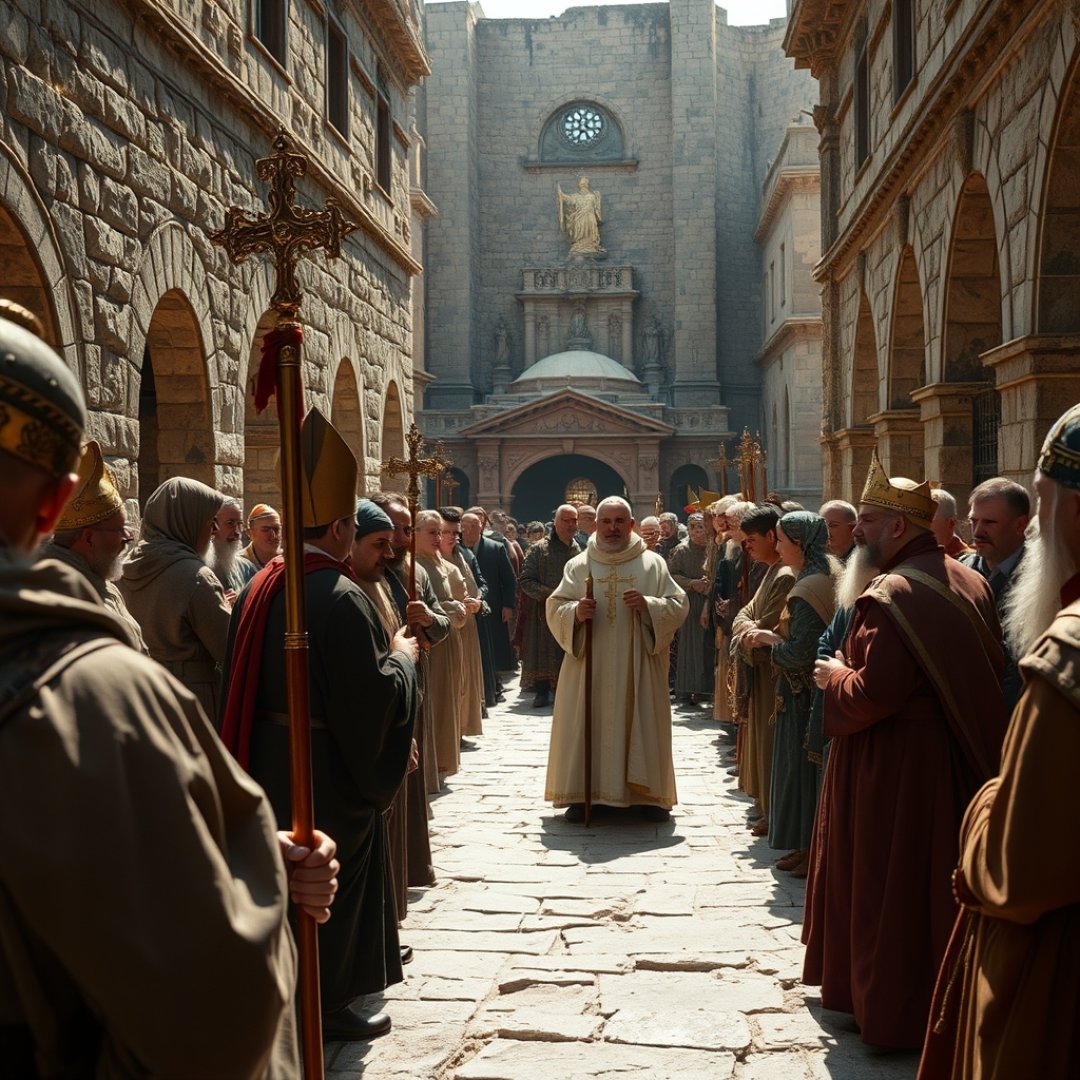
On July 16, 1054, in an act of profound historical significance, Cardinal Humbert entered the Hagia Sophia during divine liturgy and laid a Bull of Excommunication on the altar, excommunicating Patriarch Michael Cerularius and his chief associates. This highly provocative act accused the Eastern Church of various heresies. Cerularius, supported by the Emperor and the populace, responded by convening a synod that, on July 24, excommunicated Humbert and the other legates, effectively solidifying the formal break.
The Enduring Legacy of the Great Schism
The East-West Schism 1054 was not immediately perceived as a permanent separation by contemporaries; many hoped it was a temporary dispute that would eventually be resolved. However, the events of 1054 formalized existing divisions and set the two halves of Christendom on distinct paths. Over time, the schism deepened, exacerbated by subsequent events such as the Crusades, particularly the Sack of Constantinople by Latin crusaders in 1204, which instilled deep-seated resentment and distrust in the East.
Separate Destinies and Modern Dialogue
The Roman Catholic Church and the Eastern Orthodox Church developed independently, each preserving its unique traditions, theology, and ecclesiastical structures. The schism had profound geopolitical implications, weakening Byzantium’s position and contributing to its eventual decline. Despite numerous attempts at reconciliation throughout the centuries, including councils and diplomatic efforts, the fundamental theological and jurisdictional differences remained unresolved.
In the 20th century, significant steps towards dialogue and understanding were made. Most notably, in 1965, Pope Paul VI and Patriarch Athenagoras I of Constantinople mutually rescinded the excommunications of 1054 in a powerful gesture of reconciliation, though the formal schism itself remains. Today, both churches recognize each other as sister churches, engaging in ongoing theological dialogue aimed at healing the wounds of centuries past and fostering greater unity among Christians.
Frequently Asked Questions
What were the primary causes leading to the East-West Schism of 1054?
The primary causes included theological differences, most notably the “Filioque” clause, divergent liturgical practices (such as unleavened vs. leavened bread for the Eucharist), and fundamental disagreements over papal authority and universal jurisdiction versus the collegial model of the Eastern Patriarchs.
Who were the key figures involved in the excommunications of 1054?
The key figures were Cardinal Humbert of Silva Candida, representing Pope Leo IX (though the Pope had died), and Patriarch Michael Cerularius of Constantinople. It was Humbert who issued the bull of excommunication against Cerularius, and Cerularius who, in turn, excommunicated Humbert and the papal legates.
Did the East-West Schism instantly create two separate churches?
While the excommunications of 1054 formalized the break, the complete separation was a gradual process. Many contemporaries initially viewed it as another temporary dispute. However, it cemented existing divisions, and subsequent events like the Fourth Crusade’s Sack of Constantinople in 1204 deeply intensified the rift, leading to two distinct ecclesiastical traditions.
What is the “Filioque” clause, and why was it so contentious?
The “Filioque” (Latin for “and the Son”) clause was an addition to the Nicene Creed by the Western Church, stating that the Holy Spirit proceeds from the Father “and the Son.” The Eastern Church objected because it was added unilaterally, without an ecumenical council, and they believed it altered the traditional understanding of the Trinity, emphasizing the Father as the sole source of divinity.
Have there been any attempts to heal the East-West Schism since 1054?
Yes, there have been several attempts. Notably, at the Second Council of Lyon (1274) and the Council of Florence (1439), attempts were made to reunite the churches, but these were ultimately unsuccessful. More significantly, in 1965, Pope Paul VI and Patriarch Athenagoras I of Constantinople mutually rescinded the excommunications of 1054, opening a new era of dialogue and understanding between the Roman Catholic and Eastern Orthodox Churches.