Introduction: A Defining Moment for Faith and Empire
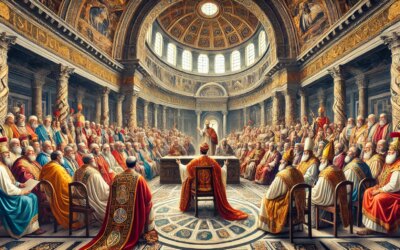
In 380 AD, the Roman Empire underwent a transformation that would resonate for centuries. Through the Edict of Thessalonica, Emperor Theodosius I—along with his co-emperors Gratian and Valentinian II—declared Nicene Christianity the official religion of the empire. This marked the end of Rome’s traditional religious pluralism and the beginning of a new era where Christianity would shape every facet of imperial life.
Background: Religious Diversity and Controversy
Before 380 AD, Rome had tolerated a vast array of religious traditions. Even after Constantine’s Edict of Milan in 313 AD legalized Christianity, the empire remained religiously diverse. However, theological disputes, especially between Nicene Christians and Arian Christians, had fractured the Church. The Council of Nicaea in 325 AD had established a foundational creed, affirming the divinity of Christ, but enforcement remained inconsistent across the empire.
The Rise of Theodosius I
Theodosius I came to power during a time of political fragmentation and religious unrest. A staunch Nicene Christian, he sought to heal religious division by aligning imperial authority with orthodoxy as defined by the Nicene Creed. His vision extended beyond tolerance—he aimed for doctrinal unity enforced by imperial power.
The Edict: A Bold Declaration
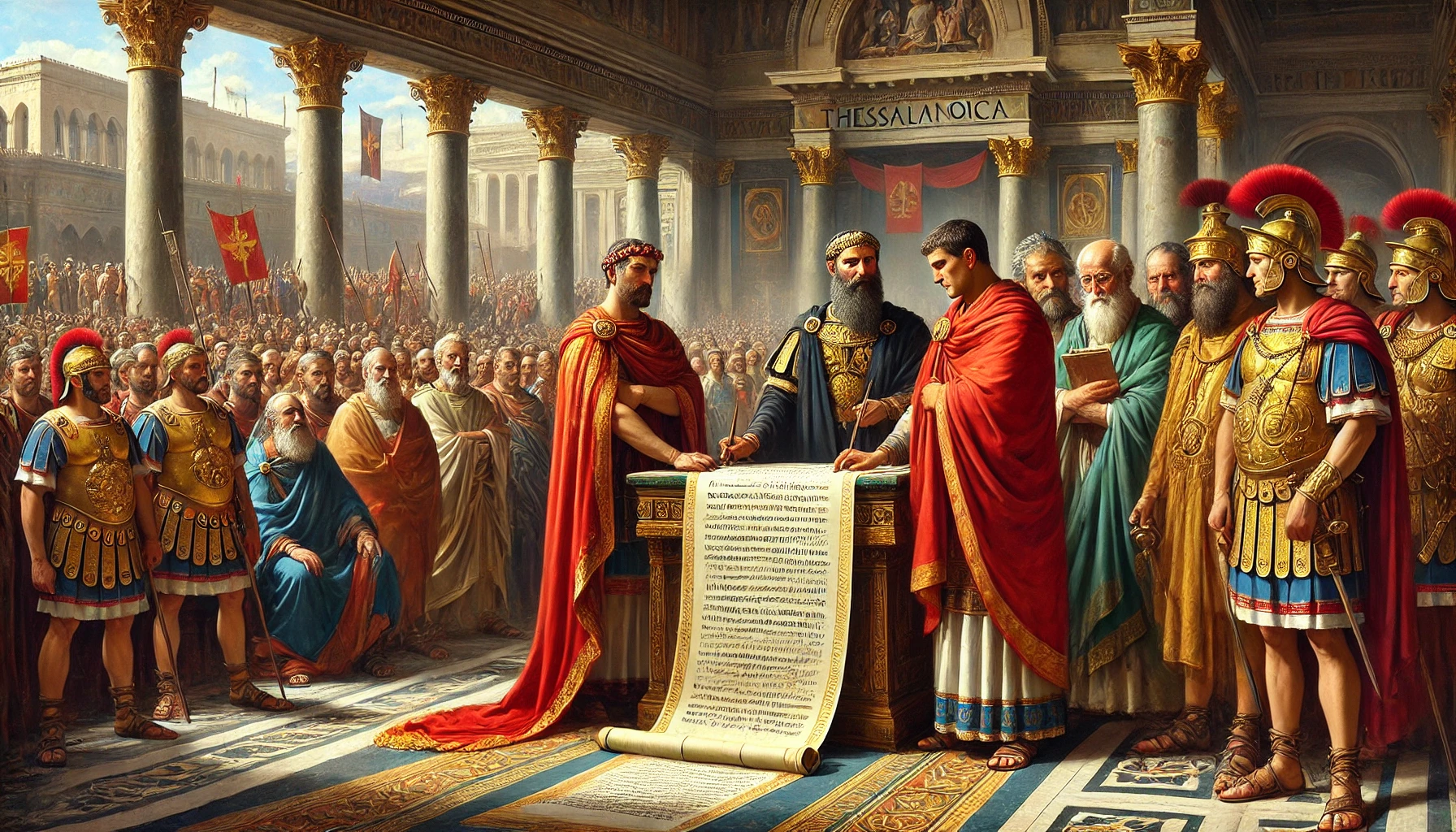
On February 27, 380 AD, in the city of Thessalonica, the emperors issued a decree known as the Cunctos populos. It stated that all Roman citizens were to adhere to the faith “delivered to the Romans by the divine Apostle Peter”—that is, Nicene Christianity. It officially recognized the authority of Pope Damasus in Rome and Bishop Peter in Alexandria, condemning all other interpretations of Christianity as heretical.
Textual Highlights
The edict reads in part:
We desire that all peoples… shall believe in that form of religion which the divine Apostle Peter delivered to the Romans… This is the religion that we shall maintain… and we command that those who follow this rule shall embrace the name of Catholic Christians. The rest… shall be branded as heretics and may face divine and earthly punishment.
Immediate Effects
The edict granted legal status and state patronage to Nicene Christianity while delegitimizing rival sects, particularly Arianism. Bishops not aligned with the Nicene Creed were deposed or exiled. Pagan practices and temples began to face increasing legal restrictions. The Church became a partner in governance, with bishops gaining influence in legal and civil affairs.
Long-Term Consequences
The Edict of Thessalonica laid the foundation for Christendom, where Church and State operated in tandem. It shifted the center of Roman identity from its pagan heritage to a Christian worldview, setting the stage for the medieval synthesis of Roman law, Christian theology, and imperial administration. Over time, Christianity evolved from a persecuted faith to the dominant cultural and moral authority in the West.
Legacy of Theodosius I
Theodosius is remembered as the emperor who transformed the Roman Empire into a Christian state. He convened the First Council of Constantinople in 381 AD to reaffirm Nicene orthodoxy and continued suppressing paganism and heresy until his death in 395 AD. His reign marked the decisive end of Rome’s religious pluralism and the dawn of the Christian empire.
Conclusion: Faith Forged in Law
The Edict of Thessalonica was more than a legal decree—it was a declaration of identity. By making Nicene Christianity the state religion, Theodosius and his fellow emperors redefined the Roman world, influencing the development of both Western civilization and the global Christian tradition. The moment in Thessalonica reverberated across history, cementing faith as the foundation of imperial power.