A Defining Moment for Rome
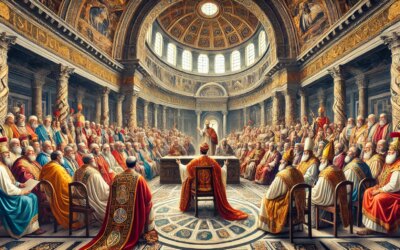
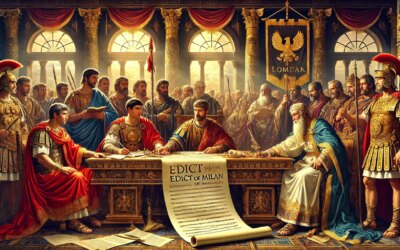
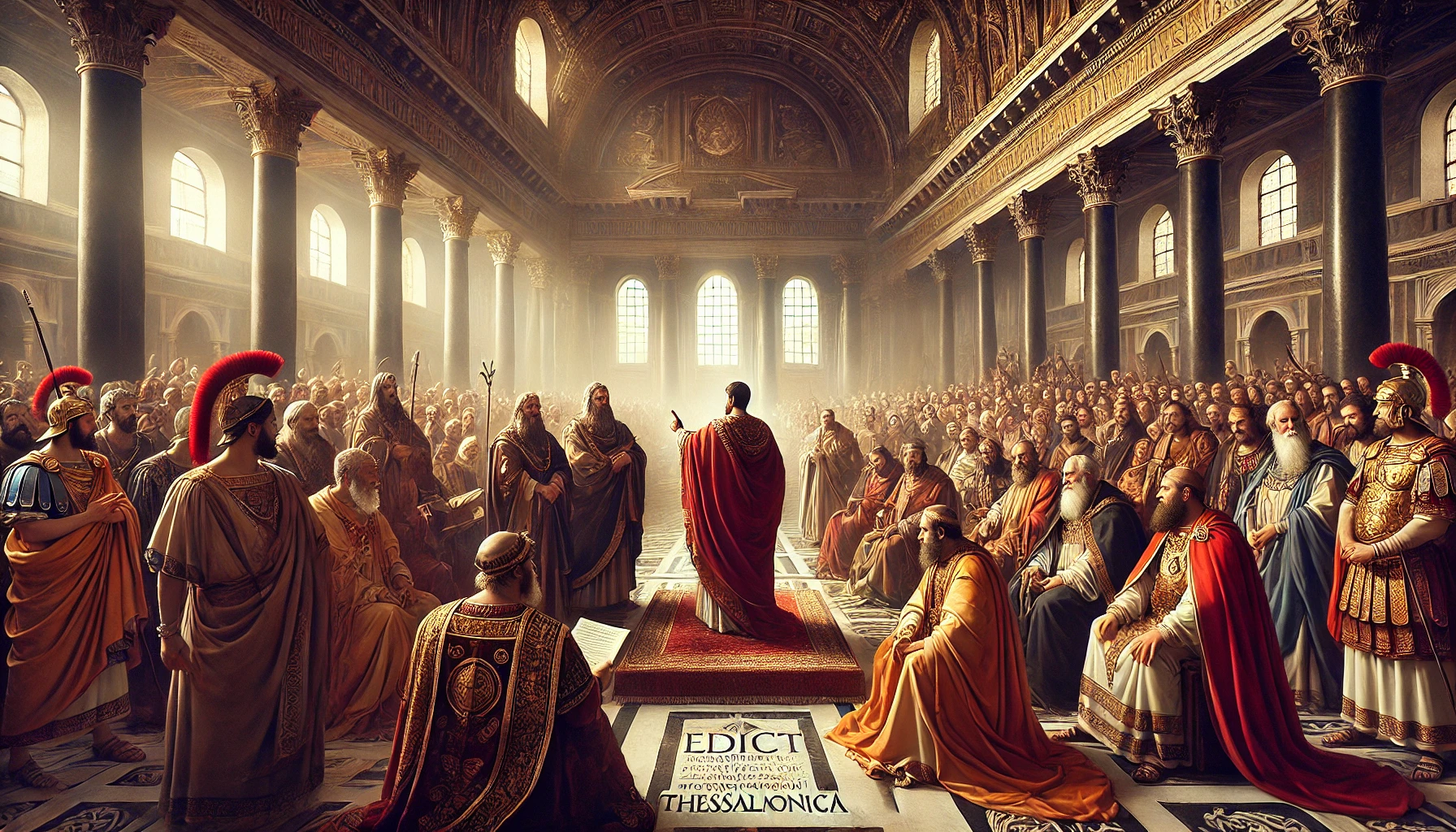
On February 27, 380 CE, Emperor Theodosius I issued the Edict of Thessalonica, a decree that would reshape the religious landscape of the Roman Empire. The edict officially made Nicene Christianity the state religion, ending centuries of religious pluralism and cementing the Church’s role in imperial affairs.
Theodosius I: Defender of the Faith
As Rome’s political and military challenges mounted, Theodosius sought unity through faith. His edict declared that all Roman citizens must follow the doctrine established at the First Council of Nicaea in 325 CE, rejecting Arianism and other Christian sects deemed heretical.
The End of Pagan Rome
Theodosius took further steps to suppress paganism. He banned sacrifices, closed temples, and ended state funding for traditional Roman cults. His policies culminated in the outlawing of the Olympic Games in 393 CE, marking the symbolic end of classical pagan traditions.
The Church and the State
The Edict of Thessalonica strengthened the power of bishops, particularly in Rome and Constantinople. Religious leaders gained influence in imperial politics, shaping laws and moral codes that would define medieval Christendom.
A Legacy That Endures
Theodosius’ decree transformed Rome into the spiritual center of Christianity, setting the stage for the rise of the papacy and the medieval Church. The Edict of Thessalonica remains one of the most significant turning points in world history, marking the moment when the Roman Empire fully embraced Christianity.