Introduction: The Last Emperor and the Last City
On May 29, 1453, the city of Constantinople—capital of the Byzantine Empire for over a thousand years—fell to the forces of the Ottoman Sultan Mehmed II. At the heart of the defense was Emperor Constantine XI Palaiologos, the final Roman emperor, who perished in battle while defending his city. The Fall of Constantinople marked the definitive end of the Eastern Roman Empire and the close of the medieval era, echoing through the annals of history as both a tragedy and a turning point.
Background: A Fragile Remnant of Rome
By the mid-15th century, the Byzantine Empire had shrunk to little more than the city of Constantinople and a few outlying territories. Surrounded by rising Ottoman power, the empire relied heavily on diplomacy, tribute, and fleeting Western support. Constantine XI, a courageous and pious ruler, ascended the throne in 1449 amid growing threats and diminishing resources.
The Ottoman Advance
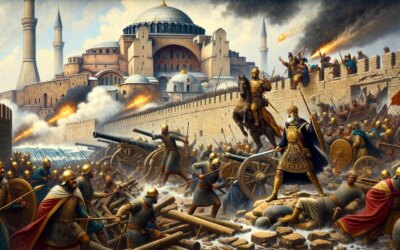
Sultan Mehmed II, ambitious and determined, viewed the conquest of Constantinople as the crowning achievement of his reign. In April 1453, he brought an army of up to 80,000 men, equipped with the most advanced siege artillery of the day—including massive bombards—to the city’s gates. The Byzantines, numbering perhaps 7,000 including foreign mercenaries, prepared for a desperate defense behind their ancient walls.
The Siege Begins
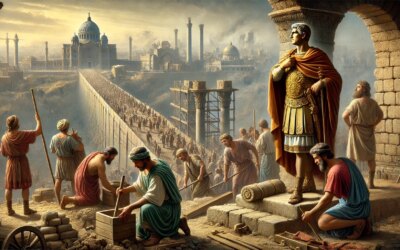
For over seven weeks, the city endured relentless bombardment, assaults, and psychological warfare. The Theodosian Walls, which had repelled invaders for centuries, were battered daily. Meanwhile, the Byzantines employed every resource at their disposal, patching breaches, conducting sorties, and praying for divine intervention or Western reinforcements that never came in time.
Constantine XI: The Warrior Emperor
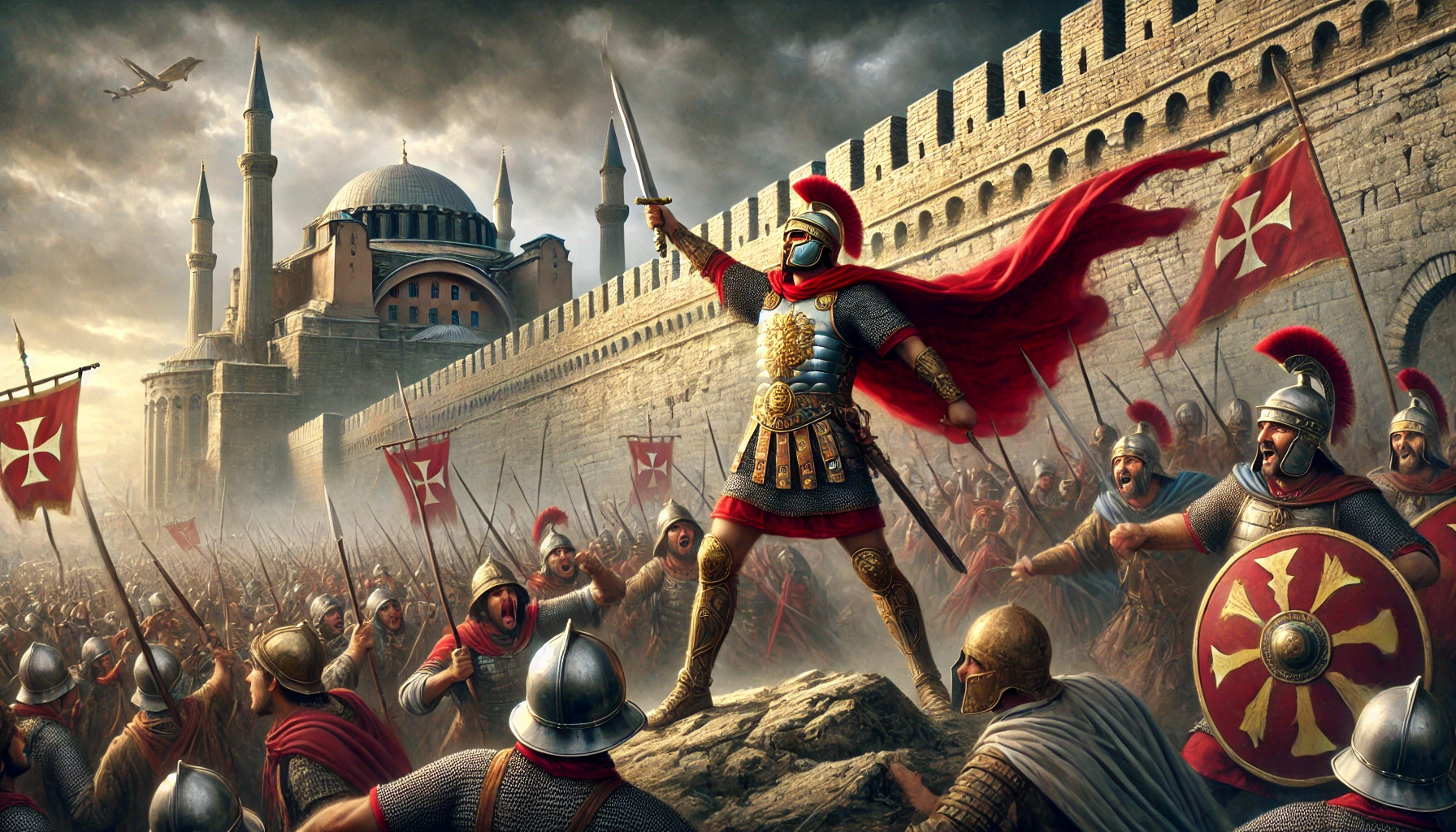
Constantine XI led from the front. Refusing to abandon his people, he fought alongside his soldiers, encouraging them, participating in repairs, and joining the defense in person. His leadership was both practical and symbolic—embodying the ancient spirit of Roman resilience. On the night before the final assault, he addressed his men in a farewell speech, reportedly affirming his readiness to die for faith, city, and empire.
The Final Assault and Death of Constantine
In the early hours of May 29, Ottoman forces launched a coordinated, multi-pronged assault. After fierce fighting and a breach at the Kerkoporta gate, Turkish troops poured into the city. Constantine, shedding his imperial regalia, fought and fell in the melee. His body was never conclusively identified, but his legacy endured as a martyr-emperor—Rome’s last true sovereign, dying in defense of his people.
The Aftermath: A New Era Begins
With the capture of Constantinople, Mehmed II declared himself “Caesar of the Romans” and made the city the capital of the Ottoman Empire. Hagia Sophia was converted into a mosque, and the Byzantine cultural and religious legacy was woven into the Ottoman fabric. The fall of the city sent shockwaves through Europe, prompting renewed calls for crusade and symbolizing the ultimate triumph of Islam over Byzantium in the eastern Mediterranean.
Legacy of the Fall
The Fall of Constantinople is often viewed as the end of the Middle Ages and the beginning of the Renaissance and modern era. Greek scholars fled westward, bringing classical knowledge that enriched the intellectual revival of Western Europe. For Orthodox Christians, Constantine XI remains a saintly figure, and for historians, the event stands as a dramatic bookend to the long saga of the Roman Empire, born in 753 BC and extinguished in 1453 AD.
Conclusion: The End of Rome, the Birth of a Legend
The Fall of Constantinople was not merely the loss of a city—it was the end of a civilization. Yet within that twilight emerged stories of valor, sacrifice, and transformation. Constantine XI’s final stand encapsulated the spirit of an empire that, though shattered, left a legacy of faith, art, and resilience that would resonate far beyond the city’s broken walls.