The Last Days of Byzantium
By the mid-15th century, the Byzantine Empire, once the dominant power of the Eastern Mediterranean, had been reduced to a shadow of its former glory. Constantinople, its magnificent capital, was all that remained. Surrounded by the rising Ottoman Empire, the city faced its ultimate test when Sultan Mehmed II launched a massive siege in April 1453.
The Siege Begins
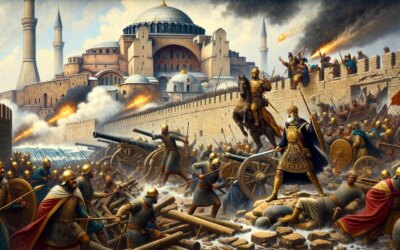
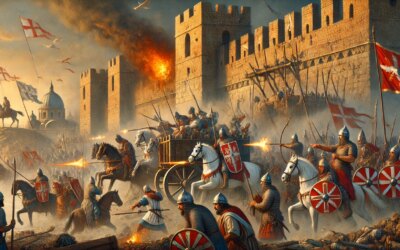
With an army of nearly 80,000 men and advanced artillery, the Ottomans laid siege to Constantinople’s legendary walls. The Byzantines, under Emperor Constantine XI, had only about 7,000 defenders, including mercenaries and Genoese allies. Despite their small numbers, they mounted a determined resistance, using the city’s formidable Theodosian Walls to repel waves of Ottoman assaults.
Mehmed II’s Secret Weapon
The Ottomans brought an unprecedented force to the battlefield: massive cannons, including the infamous Basilica, a supergun capable of shattering the city’s defenses. Day after day, the walls crumbled under relentless bombardment, and morale among the defenders began to wane.
The Final Assault
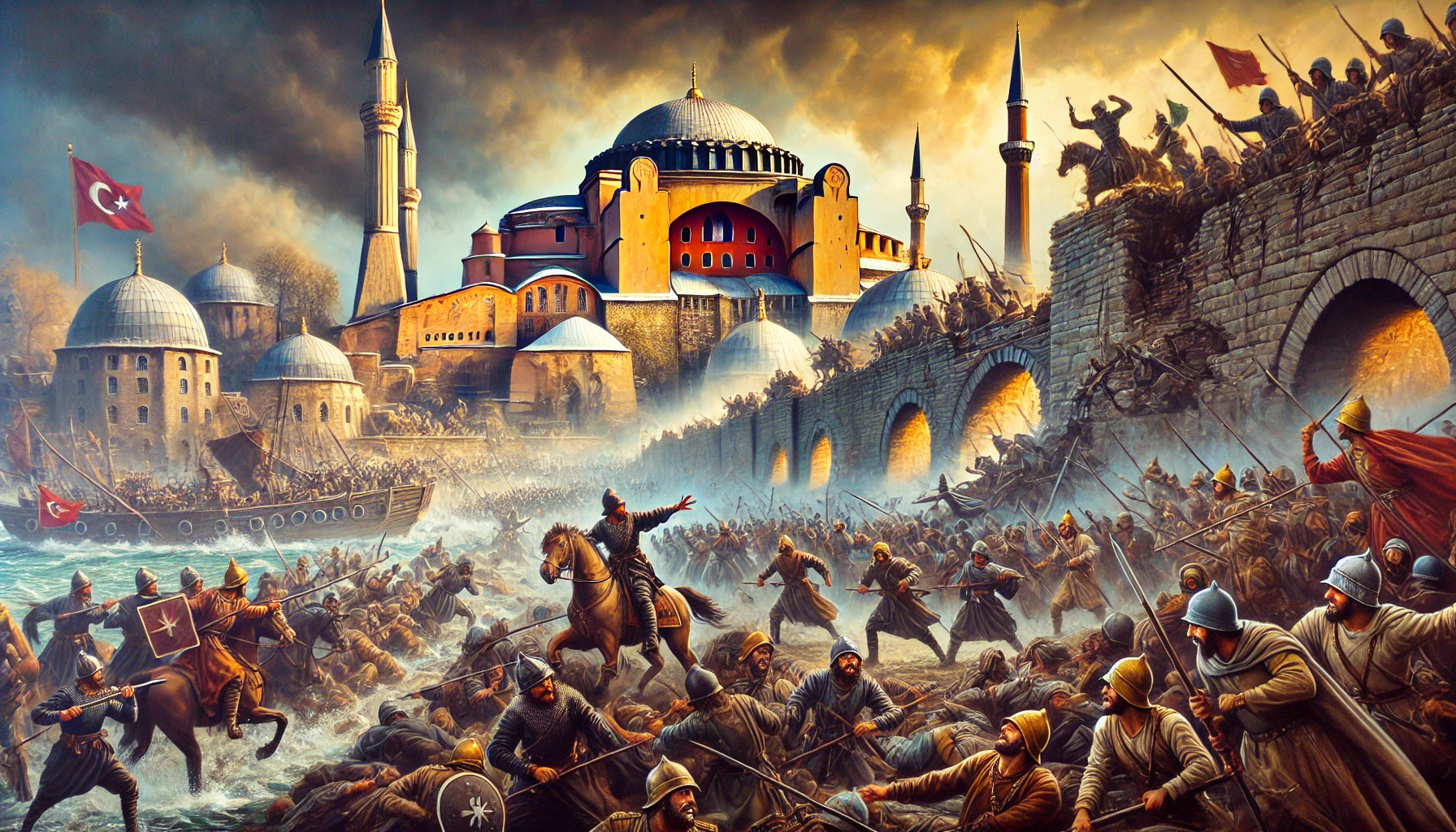
On May 29, 1453, Mehmed II ordered an all-out attack. After hours of brutal fighting, Ottoman troops breached the city. Emperor Constantine XI fought bravely but was eventually killed in the chaos. The city fell, and for three days, it was subjected to looting and destruction, marking the end of the Byzantine Empire.
A New Era Begins
Mehmed II entered the city and declared it the new capital of his empire. One of his first acts was to convert the Hagia Sophia, the greatest church of Eastern Christianity, into a mosque. Constantinople—now Istanbul—became the heart of the Ottoman world.
The fall of Constantinople was more than the end of an empire—it was the beginning of a new global order. It shifted the balance of power, forced Europeans to seek new trade routes, and marked the true end of the Middle Ages. Today, the city remains a bridge between East and West, its history forever shaped by the events of 1453.