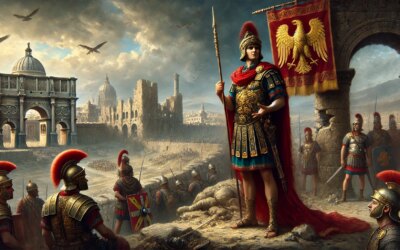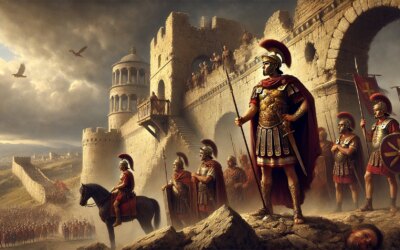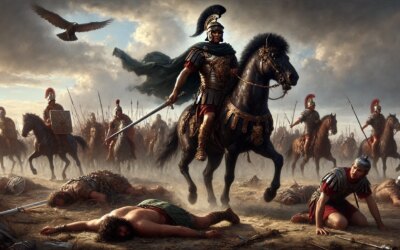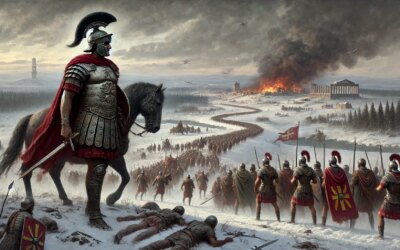

In the tumultuous mid-3rd century AD, the Roman Empire was reeling from a seemingly endless succession of crises: rampant inflation, civil wars, and relentless barbarian incursions. This period, known as the Crisis of the Third Century, saw the vast imperial structure strained to its breaking point, particularly in the western provinces. Amidst this chaos, a remarkable event unfolded that further fractured the empire’s unity: the Formation of the Gallic Empire under the leadership of the Roman general Postumus around 260 AD. This breakaway state, encompassing Gaul, Britannia, and Hispania, represented a pragmatic, albeit rebellious, response to Rome’s inability to protect its furthest territories. It was a time when local solutions were sought in the face of imperial impotence, forever altering the geopolitical landscape of the Roman world and highlighting the profound decentralization of power that defined this turbulent era. Postumus’s bold move marked a significant chapter in Rome’s struggle for survival and a fascinating study in regional resilience.
The Roman West in Turmoil: Seeds of Secession
By the middle of the 3rd century AD, the Roman Empire’s western provinces, particularly Gaul and Britannia, faced an escalating crisis. Constant incursions from Germanic tribes such as the Franks and Alamanni threatened critical frontiers, while the central imperial government under Emperor Valerian and his son Gallienus was largely preoccupied with defending the eastern borders against the aggressive Sassanid Persians. This left the western legions and their commanders feeling increasingly isolated and unsupported.
Resources were scarce, and official reinforcements from Rome were often delayed or non-existent. Local governors and military leaders were forced to improvise, raising their own forces and devising strategies to protect their territories. The prevailing sentiment among the populace and military alike was one of abandonment, setting the stage for a radical shift in regional governance.
Postumus’s Usurpation and the Birth of a New Empire
It was against this backdrop that Marcus Cassianius Latinius Postumus, a Roman general of considerable talent and experience, rose to prominence. Likely serving as the governor of Germania Inferior or a significant military commander along the Rhine, Postumus achieved decisive victories against Germanic raiders in 259-260 AD, securing much-needed peace for the region. His popularity among the legions soared, contrasting sharply with the perceived ineffectiveness of Emperor Gallienus.
The catalyst for usurpation came with a dispute over spoils of war, possibly involving Gallienus’s young son and Caesar, Saloninus, whom Postumus’s troops killed. Fearing reprisal from the central government, Postumus’s legions, unwilling to hand over their popular commander, proclaimed him emperor around 260 AD. He quickly established his authority over Gaul, Britannia, and parts of Hispania, creating an independent political entity often referred to as the Gallic Empire. This was not an act of anti-Roman sentiment, but rather a pragmatic move to ensure stability and defense in the face of central imperial collapse.
Administration and Legacy of the Gallic Empire
The newly formed Gallic Empire functioned as a mirror image of the main Roman Empire, complete with its own Senate, consuls, and imperial mints. Its capital was likely Augusta Treverorum (modern Trier) or Colonia Agrippinensis (Cologne). Postumus proved to be a capable administrator and military leader, providing the western provinces with a period of relative peace and prosperity that the legitimate emperors could not guarantee. His coinage, often of higher quality and purity than that issued by Gallienus, reinforced his legitimacy and control.
The existence of the Gallic Empire, along with the later Palmyrene Empire in the East, profoundly illustrated the profound decentralization of power during the Crisis of the Third Century. Although an act of secession, Postumus’s creation inadvertently served to preserve Roman culture and structures in the West, as it continued to defend its borders using Roman military organization and administrative practices. The Gallic Empire would persist for approximately 14 years, seeing several successors to Postumus before being eventually reintegrated into the central Roman Empire by Emperor Aurelian in 274 AD.
Frequently Asked Questions
What was the Gallic Empire?
The Gallic Empire was a breakaway state from the main Roman Empire, established around 260 AD by the Roman general Postumus. It encompassed the Roman provinces of Gaul, Britannia, and initially, parts of Hispania, functioning independently with its own emperors, administration, and coinage for approximately 14 years.
Who was Postumus, the founder of the Gallic Empire?
Marcus Cassianius Latinius Postumus was a Roman general, likely a governor or military commander in Germania Inferior, who rose to power amidst the Crisis of the Third Century. After successfully defending the Rhine frontier against Germanic invaders, his troops proclaimed him emperor in opposition to the central Roman authority of Emperor Gallienus.
Why did the Formation of the Gallic Empire occur?
The Gallic Empire formed primarily due to the central Roman Empire’s inability to effectively protect its western provinces from persistent barbarian incursions, especially along the Rhine frontier. With emperors like Valerian and Gallienus preoccupied with threats in the East, local commanders like Postumus stepped in to provide stability and defense, eventually leading to their secession.
How long did the Gallic Empire last?
The Gallic Empire endured for about 14 years, from its formation under Postumus around 260 AD until its reintegration into the main Roman Empire by Emperor Aurelian in 274 AD. During this period, it saw several emperors succeed Postumus.
What was the impact of the Gallic Empire on the wider Roman world?
The Gallic Empire, despite being a secessionist state, paradoxically helped stabilize the western provinces during a period of immense crisis by providing effective defense and administration that the central empire could not. Its existence highlighted the extreme decentralization of power in the 3rd century and foreshadowed the eventual division of the empire.