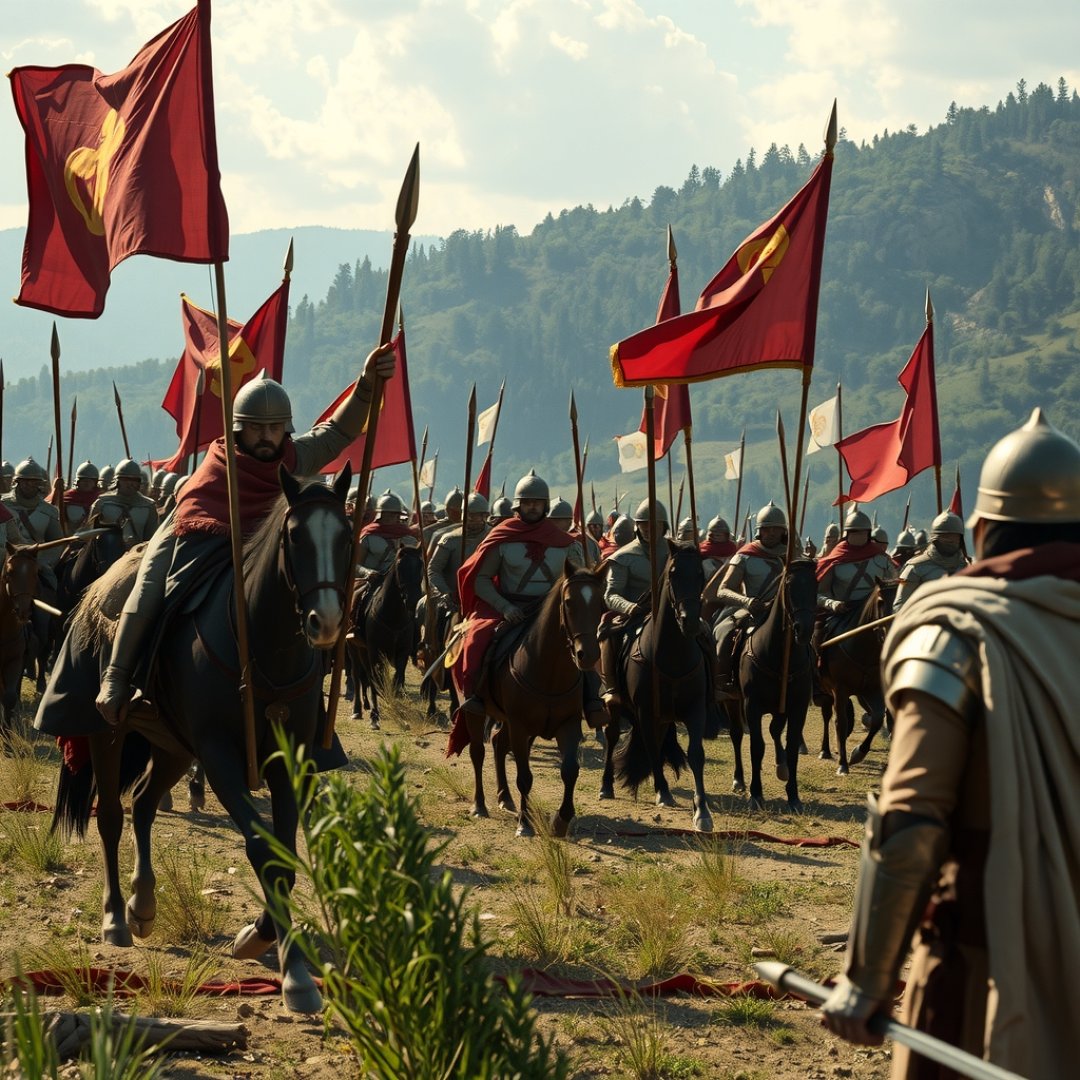
In the waning years of Emperor Justinian I’s ambitious reign, after decades of exhaustive wars to reclaim the Western Roman Empire, the Eastern Roman Empire faced a sudden and terrifying threat from its northern borders. The year 559 AD saw the largely unexpected Kutrigur invasion 559, a devastating incursion by a Hunnic-Bulgar people led by their formidable khan, Zabergan, who swept through the Balkans and came perilously close to the walls of Constantinople itself. This event served as a stark reminder of the empire’s enduring vulnerability, even as it celebrated its reconquest of Italy and North Africa, forcing the ageing Justinian to call upon his most storied general, Belisarius, for one last, desperate defense of the imperial capital against a horde that seemed unstoppable, highlighting the constant pressure on Rome’s fractured but still formidable successor.
An Empire Exhausted and Exposed
By the mid-6th century, the Byzantine (Eastern Roman) Empire under Justinian I had achieved monumental successes, particularly with the reconquest of parts of the Western Empire from Ostrogoths and Vandals. However, these victories came at an immense cost. The long and brutal Gothic War in Italy (535-554 AD), coupled with ongoing conflicts against the Sasanian Persians in the east and internal struggles, had severely depleted the imperial treasury and manpower. The Balkan provinces, crucial for recruiting troops and a breadbasket for the capital, had been repeatedly ravaged by various barbarian groups like the Slavs and Antes. This constant drain left the Thracian and Illyrian defenses dangerously undermanned and neglected, a fatal weakness that the Kutrigurs were poised to exploit.
The Legacy of Justinian’s Wars
Justinian’s ambitions, while glorious, stretched the empire to its breaking point. While Narses consolidated Byzantine control in Italy, the Danube frontier, traditionally a bulwark against northern incursions, was increasingly porous. Fortifications crumbled, garrisons dwindled, and local populations bore the brunt of constant raids. This precarious situation set the stage for the audacious Kutrigur incursion, demonstrating that even a triumphant empire could be vulnerable to a swift, unexpected strike.
Zabergan’s Lightning Campaign
In 559 AD, the Kutrigurs, led by Khan Zabergan, crossed the frozen Danube River, circumventing the weakened imperial defenses. Their invasion was characterized by speed and ferocity. Unlike previous raiders who sought plunder and retreated, Zabergan aimed for a grander prize. He divided his forces into three main columns:
- One headed south through Thrace, aiming directly for Constantinople.
- Another veered west into Macedonia and Thessaly, plundering as it went.
- A third moved further west into Illyricum, causing widespread devastation.
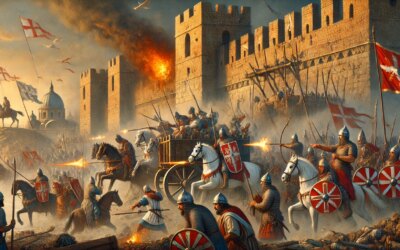
The column targeting Constantinople, estimated at around 7,000 horsemen, swept across the Chersonese peninsula, sacking cities and towns, reaching the suburbs of the capital itself. Panic gripped Constantinople, a city not directly threatened by barbarians for over a century. The famed Anastasian Wall, built to protect the capital’s hinterland, was old and poorly maintained, offering little resistance.
The Psychological Impact of the Advance
The sheer speed of Zabergan’s advance created a sense of terror. Citizens of Constantinople could see the smoke from burning villages from their walls. The imperial guards, consisting mainly of ceremonial units rather than battle-hardened veterans, were no match for the experienced Kutrigur cavalry. The situation demanded an extraordinary response from the aging emperor.
Belisarius’s Last Stand and the Imperial Response
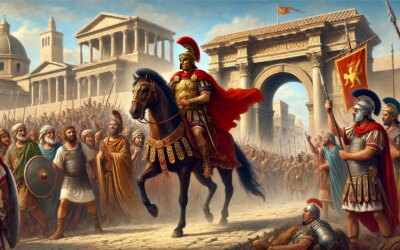
Facing an existential crisis, Emperor Justinian turned to the legendary general Belisarius, now an old man in semi-retirement, who had orchestrated many of the empire’s greatest victories. Belisarius, despite his age, rallied what few forces he could: a contingent of 300 veterans, along with hastily armed citizens and even monks. He used his tactical genius to compensate for his numerical inferiority.
Tactical Deception at the Melantias Bridge
At the Melantias Bridge, just 20 miles from Constantinople, Belisarius employed a clever stratagem. He ordered fires to be lit at night, simulating a larger army, and used loud noises to amplify the impression of a vast host. In the morning, he ambushed the Kutrigur vanguard, causing significant casualties and spreading confusion. This small but decisive victory demoralized the Kutrigurs, who had expected an easy march on the capital.
Simultaneously, Justinian engaged in diplomatic efforts, sending envoys to the Utigurs, a rival Hunnic-Bulgar group, offering them bribes to attack the Kutrigurs in their homeland. This external pressure, combined with Belisarius’s unexpected resistance and the exhaustion of their supplies, compelled Zabergan’s forces to withdraw from the immediate vicinity of Constantinople. Though the Kutrigurs continued to raid parts of the Balkans, the capital was saved.
The Lingering Aftermath and Future Vulnerabilities
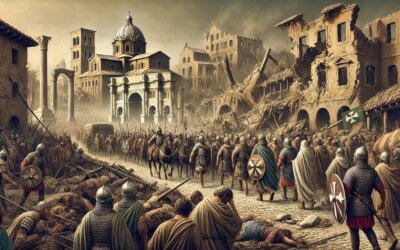
The Kutrigur invasion 559, though ultimately repelled from Constantinople, left a deep scar on the Byzantine psyche and inflicted significant damage on the Balkan provinces. The raids plundered vast amounts of wealth, captured numerous inhabitants, and destroyed infrastructure, further weakening an already fragile region. More importantly, it exposed the profound vulnerability of the Eastern Roman Empire’s northern frontier, even in the zenith of Justinian’s reign.
A Precursor to Future Invasions
The events of 559 AD served as a grim foreshadowing of the larger, more destructive invasions by the Avars and Slavs that would soon follow. These groups would permanently alter the demographic and political landscape of the Balkans, eventually leading to a significant contraction of Byzantine control in the region. The Kutrigur incursion was a painful reminder that the empire’s power, however extensive, was constantly contested and that its heartland could be threatened by swift-moving nomadic raiders.
Frequently Asked Questions
Who were the Kutrigurs?
The Kutrigurs were a Hunnic-Bulgar nomadic group that inhabited the steppes north of the Black Sea during the 6th century. They were fierce horsemen and frequent raiders of the Byzantine Empire’s northern frontiers.
Where did the Kutrigur invasion of 559 AD take place?
The invasion primarily targeted the Balkan provinces of the Eastern Roman Empire, specifically Thrace, Macedonia, Thessaly, and Illyricum, with one column advancing to the very walls of Constantinople.
How did Constantinople defend itself during the 559 AD invasion?
Constantinople’s defense relied on a combination of military tactics and diplomacy. The legendary general Belisarius mustered a small force and used deception to deter the Kutrigur vanguard, while Emperor Justinian bribed a rival Hunnic-Bulgar group, the Utigurs, to attack the Kutrigurs in their homeland, forcing their withdrawal.
What was the significance of Belisarius’s role in the Kutrigur invasion?
Belisarius, despite his old age and limited resources, effectively commanded a small, improvised force that managed to halt the Kutrigur advance towards Constantinople. His tactical brilliance and reputation were crucial in preventing the fall of the capital, marking his last significant military command.
What was the long-term impact of the Kutrigur invasion of 559 AD?
The invasion highlighted the severe strain on the Byzantine Empire’s resources after decades of war and exposed the vulnerability of its Balkan frontiers. It served as a precursor to future, more destructive incursions by other nomadic groups like the Avars and Slavs, contributing to the eventual decline of Byzantine control in the region.