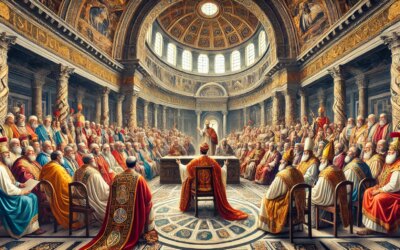
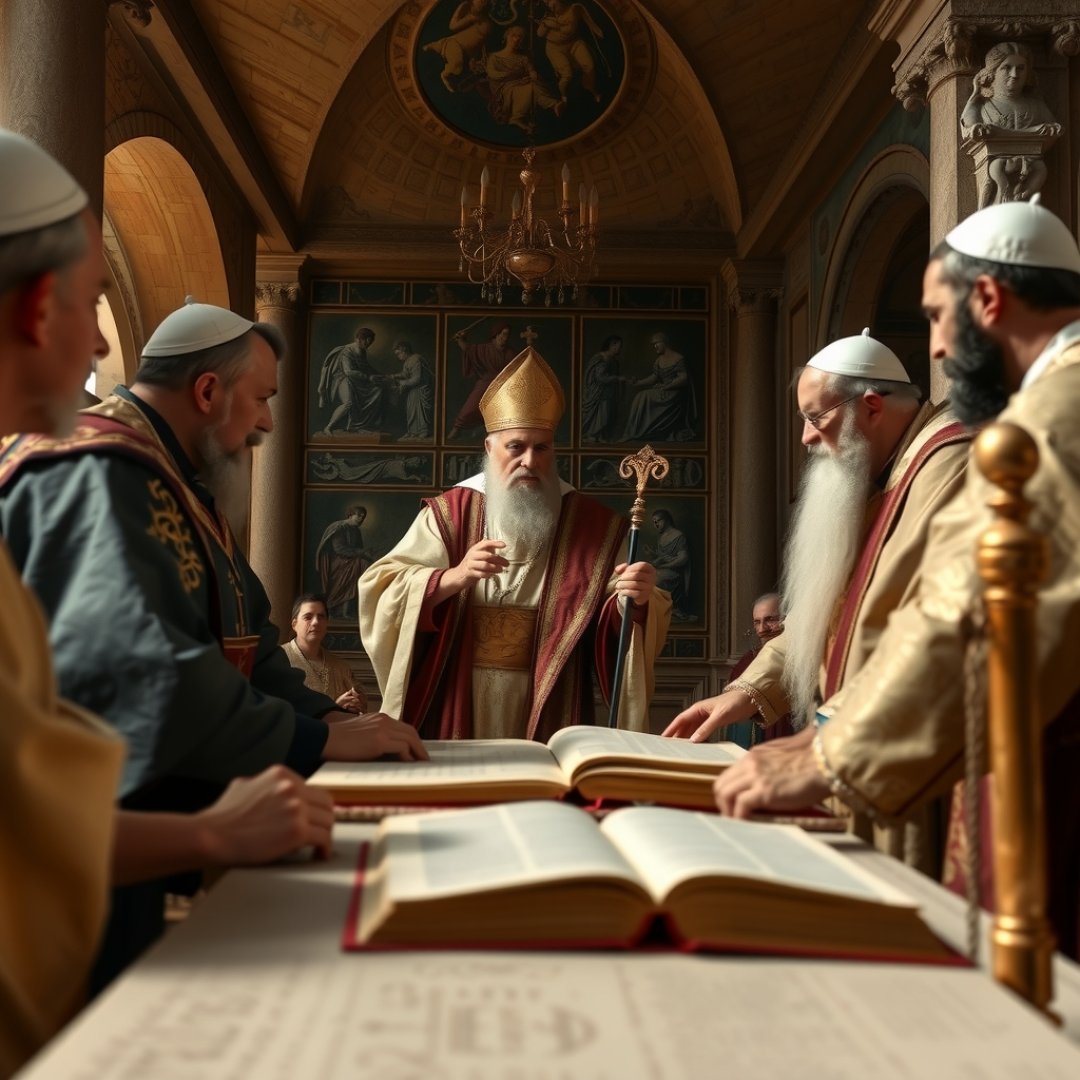
The year 366 AD witnessed one of the most violent and contentious episodes in the early history of the Roman Church: the Papal Schism 366 AD. Following the death of Pope Liberius, the struggle for the coveted Roman bishopric plunged the Eternal City into a bloody conflict that would have lasting repercussions for the nascent Christian hierarchy. This was no mere theological dispute but a brutal power struggle, reflecting the growing temporal influence of the Bishop of Rome. Two factions, one supporting Damasus and the other backing Ursinus, clashed in the streets, catacombs, and basilicas, leaving a trail of death and destruction. This turbulent election highlighted the immense authority associated with the Roman See, even as the empire itself faced external pressures. The subsequent triumph of Damasus I would profoundly shape the future trajectory of the papacy and its role within the Roman world, laying groundwork for its later spiritual and political dominance.
The Contenders and the Contested See
The Death of Liberius and the Vacuum of Power
Upon the death of Pope Liberius in September 366 AD, the Roman bishopric, already a position of considerable spiritual and increasing secular influence, became an intensely coveted prize. Liberius’s papacy had been tumultuous, marked by his exile under Emperor Constantius II due to the Arian controversy and his eventual return. His death left the Roman Christian community divided, especially between those who had remained loyal during his exile and those who had accepted the anti-Pope Felix II. This underlying tension set the stage for the dramatic events of the Papal Schism 366 AD.
The Candidacy of Damasus and Ursinus
Two primary figures emerged as strong contenders for the vacant See. Damasus I, a Roman of Spanish descent, was a seasoned cleric from a prominent family, known for his administrative skills and connections among the city’s wealthy elite. He had served under Pope Liberius and possessed significant support from the deaconate and the populace. His rival, Ursinus, was a deacon who garnered support from a different segment of the Roman clergy, particularly those who had resisted Liberius’s return and those who favored a more ascetic, less worldly approach to the episcopacy. The election was not merely a matter of theological preference but a clash of powerful social and political networks.
Bloodshed in the Basilicas: The Violent Election
Initial Clashes and the Basilica of Sicininus
The election quickly devolved into outright violence. Within days of Liberius’s death, supporters of Ursinus gathered in the Basilica Iulii (later Santa Maria in Trastevere) and elected him bishop. In response, a rival faction, comprising many of the wealthier lay aristocrats and clergy, proclaimed Damasus as bishop in the Basilica of San Lorenzo in Lucina. The two sides then clashed violently, leading to street battles across Rome. The most infamous incident occurred at the Basilica of Sicininus (now Santa Maria Maggiore), where a large number of Ursinus’s followers had barricaded themselves. Damasus’s supporters, allegedly spurred on by him, stormed the basilica, resulting in a brutal massacre. Sources like the contemporary pagan historian Ammianus Marcellinus report that 137 bodies were found in the basilica after the assault, a testament to the savagery of the conflict.
Imperial Intervention and the Role of the Prefect
The Roman prefect, Juventius, initially attempted to restore order but found himself overwhelmed by the scale of the violence. His efforts to expel Damasus from Rome were met with strong resistance from Damasus’s supporters. Ultimately, imperial authority was invoked. Emperor Valentinian I, ruling from the West, largely sided with Damasus, possibly swayed by his powerful allies and the chaotic nature of Ursinus’s support base. Ursinus and his principal adherents were exiled, marking a significant victory for Damasus and demonstrating the increasing reliance of the Roman bishop on secular power for legitimacy and enforcement.
Damasus’s Legacy and the Ascendancy of the Roman See
Consolidating Power and Shaping the Papacy
With Ursinus exiled, Pope Damasus I set about consolidating his power and legitimizing his position. He aggressively pursued his rivals, using both ecclesiastical and imperial decrees to silence opposition. Damasus was a highly energetic and effective administrator, instrumental in promoting the Latin language as the liturgical language of the Western Church, commissioning St. Jerome to revise the Latin Bible (the Vulgate), and fostering the cult of martyrs through inscriptions in the Roman catacombs. His pontificate saw a significant increase in the prestige and authority of the Roman See, not only within Italy but across the Western Empire.
The Bishop of Rome’s Growing Influence
The aftermath of the Papal Schism 366 AD underscored the evolving nature of the Roman bishopric. No longer just a spiritual leader, the Pope was increasingly a figure of political and social power, whose election could incite civil unrest and demand imperial intervention. Damasus successfully navigated this complex landscape, laying crucial groundwork for the future expansion of papal authority. His reign witnessed the strengthening of Rome’s claim to primacy among Christian sees, a development that would have profound implications for the subsequent history of Christianity and the shaping of the medieval papacy.
Frequently Asked Questions
What was the primary cause of the Papal Schism 366 AD?
The Papal Schism of 366 AD erupted immediately after the death of Pope Liberius due to a deep division within the Roman Christian community over who should succeed him, particularly between factions supporting Damasus and Ursinus.
Who were Pope Damasus I and Ursinus?
Pope Damasus I was a prominent Roman cleric with aristocratic connections, eventually elected bishop. Ursinus was a deacon supported by a segment of the clergy and populace, who favored a more traditional and less worldly approach to the papacy.
How violent did the struggle for the Roman bishopric become?
The conflict was extremely violent, characterized by street battles and sieges of basilicas. The most notorious incident was the massacre at the Basilica of Sicininus (Santa Maria Maggiore), where 137 people were reportedly killed by Damasus’s supporters.
What role did the Roman Emperors play in resolving the schism?
Emperor Valentinian I, the Western Roman Emperor, eventually intervened, siding with Damasus and ordering the exile of Ursinus and his main followers. This imperial backing was crucial in solidifying Damasus’s position.
What lasting impact did Pope Damasus I have on the Roman Church?
Damasus I significantly strengthened the authority and prestige of the Roman See. He promoted Latin as the liturgical language, commissioned the Vulgate translation of the Bible by St. Jerome, and actively fostered the cult of martyrs, contributing to the papacy’s future dominance.