The early 8th century marked a critical juncture for the Byzantine Empire, facing relentless pressure from the burgeoning Umayyad Caliphate. One of the most significant confrontations of this era was the pivotal Siege of Constantinople (717-718), an event that would ultimately shape the geopolitical landscape of the early Middle Ages. For over a year, the imperial capital, a bastion of Christian civilization, endured a massive combined assault by land and sea, its very survival hanging in the balance. This epic struggle showcased the resilience of Byzantine military engineering, the ingenuity of its strategic leadership under Emperor Leo III, and the devastating power of its secret weapon: Greek Fire. The successful defense of Constantinople against what was arguably the largest Arab invasion force ever assembled was not merely a local victory; it was a triumph that halted the eastward expansion of the Caliphate into Europe, providing a crucial buffer and allowing Western European cultures to develop largely unhindered by direct Islamic conquest.
The Umayyad Advance and Byzantine Preparations
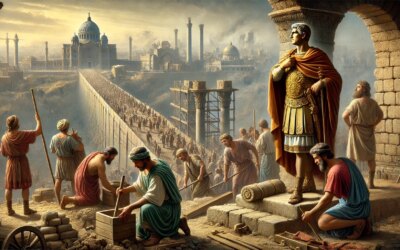
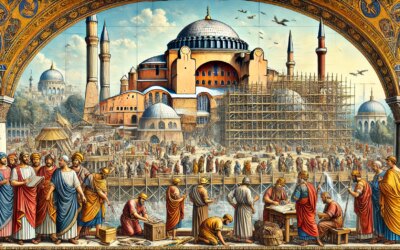
By the early 8th century, the Umayyad Caliphate had established a vast empire, stretching from the Iberian Peninsula to the borders of India. Constantinople, the jewel of the Byzantine Empire, represented the next great prize. Following a series of successful campaigns that had pushed Byzantine forces back into Anatolia, the Caliph Sulayman ibn Abd al-Malik resolved to deliver a decisive blow. Preparations for the Siege of Constantinople (717-718) were immense, reportedly involving a fleet of 1,800 ships and a land army estimated to be between 100,000 and 200,000 men. Meanwhile, within Constantinople, Emperor Leo III the Isaurian, who had only recently seized the throne amidst internal turmoil, wasted no time. He immediately began strengthening the city’s formidable Theodosian Walls, ensuring ample food supplies were stored, and organizing the defense with a ruthless efficiency that belied his short time in power. His ability to rally the city and consolidate his authority under such extreme duress proved instrumental.
The Combined Assault and the Power of Greek Fire
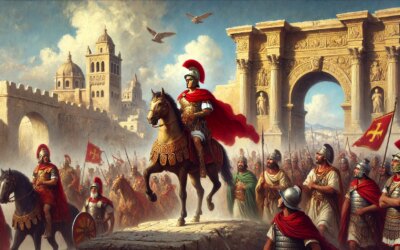
In the summer of 717 AD, the Umayyad fleet, under the command of Maslama ibn Abd al-Malik, arrived off the shores of Constantinople, establishing a tight naval blockade across the Bosphorus. Simultaneously, the massive land army encircled the city’s formidable triple walls. The initial naval engagements were fierce, but the Byzantines possessed a technological edge that would prove decisive: Greek Fire. This incendiary weapon, projected from siphons, ignited upon contact with water and clung to enemy ships, causing panic and widespread destruction. The Byzantine fleet, though smaller, used Greek Fire to devastating effect, breaking the Arab blockade and severely crippling their naval strength. On land, the Theodosian Walls held firm against repeated assaults, and the Byzantines’ disciplined defense thwarted every attempt to breach the fortifications. The Umayyad forces, accustomed to rapid conquests, found themselves locked in a protracted and brutal struggle against an unyielding enemy.
The Winter of Starvation and the Bulgarian Intervention
As autumn turned to winter, the greatest adversary for the besieging Arab forces became not the Byzantine defenders, but the elements themselves. The winter of 717-718 AD was exceptionally harsh, with heavy snow and freezing temperatures decimating the already strained Umayyad army. Shortages of food became critical, forcing the Arab soldiers to resort to cannibalism and consume their horses, camels, and even leather. Disease also spread rampant through their encampments. Sensing an opportunity, Emperor Leo III formed an alliance with the Bulgarians under Khan Tervel, who launched raids on the weakened Arab land forces, inflicting further heavy casualties. By spring, with the arrival of two relief fleets from the Caliphate—one from Egypt and one from Africa—the Byzantines again deployed Greek Fire with catastrophic results, effectively destroying these reinforcements. Faced with insurmountable losses, a shattered fleet, a depleted and starving army, and no prospect of breaching the walls, Maslama was forced to abandon the Siege of Constantinople (717-718) in August 718 AD. The retreat was a disaster, with further losses at sea due to storms, making it one of the most comprehensive military defeats in early Islamic history.
Frequently Asked Questions
Who led the Arab forces during the Siege of Constantinople (717-718)?
The Umayyad Caliphate’s forces were led by Maslama ibn Abd al-Malik, the brother of Caliph Sulayman ibn Abd al-Malik, and later Caliph Umar II.
What was ‘Greek Fire’ and how was it used in the siege?
Greek Fire was a mysterious incendiary weapon developed by the Byzantines, possibly a petroleum-based substance. It was projected from siphons mounted on ships and walls, igniting on contact and burning fiercely even on water, proving highly effective against the Arab fleet.
What was the main outcome and historical significance of the Siege of Constantinople (717-718)?
The siege resulted in a decisive Byzantine victory, halting the Arab eastward expansion into Europe for centuries. It preserved the Byzantine Empire, acted as a shield for Western Europe, and solidified Emperor Leo III’s authority, paving the way for the Isaurian dynasty.
How long did the Siege of Constantinople (717-718) last?
The siege lasted approximately thirteen months, from the summer of 717 AD to August 718 AD.
Did any other powers assist the Byzantines during the siege?
Yes, the Byzantine Emperor Leo III secured an alliance with the Bulgarian Khan Tervel, whose forces attacked the Umayyad land army during the harsh winter, inflicting significant casualties and further weakening the besiegers.