
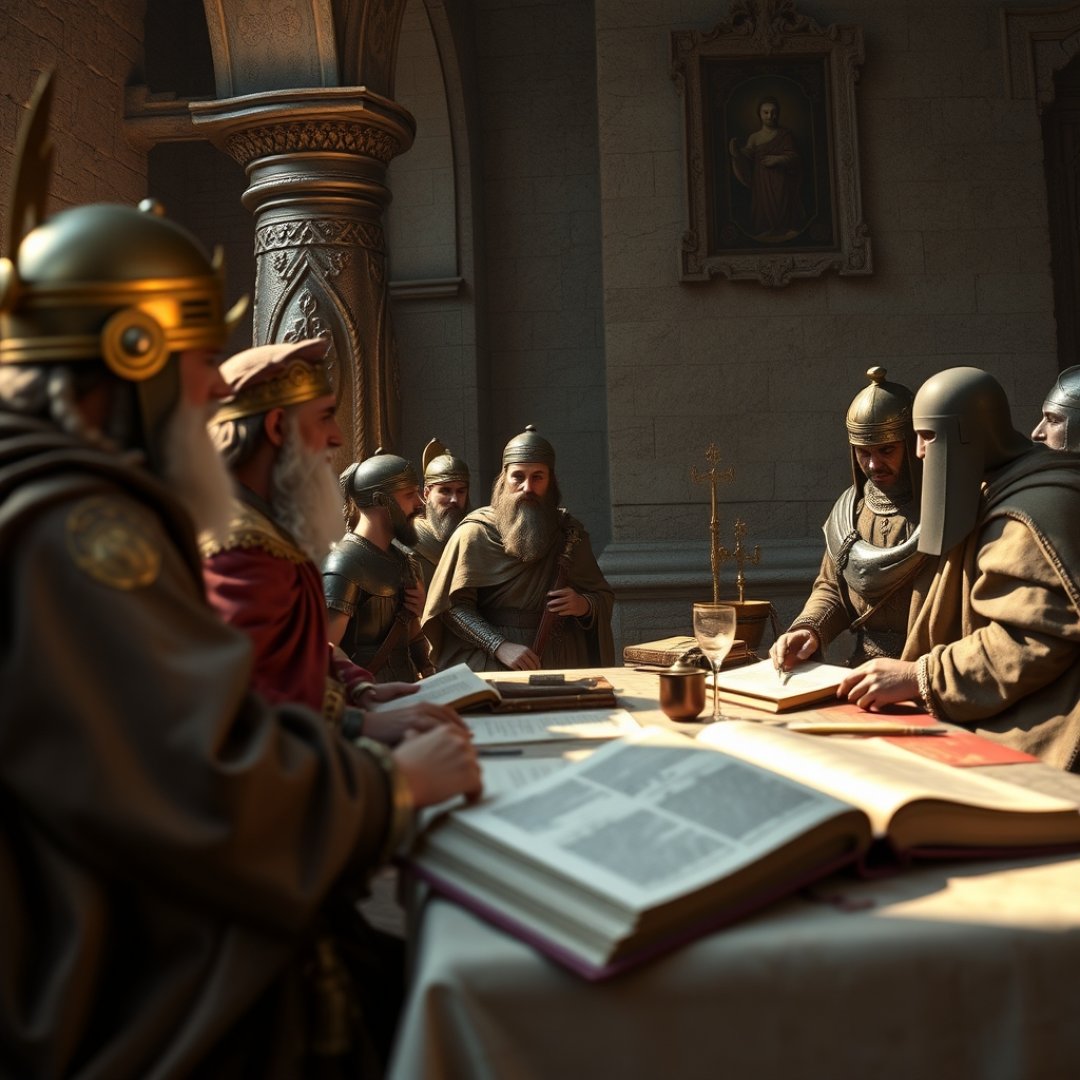
Following the catastrophic defeat at the Battle of Adrianople in 378 AD, where Emperor Valens and much of the Eastern Roman army perished, the Roman Empire faced an unprecedented crisis. The victorious Visigothic tribes roamed Thrace, unchecked and demanding settlement. It fell to the new Eastern Emperor, Theodosius I, to forge a path forward. His response, known as Theodosius’ Gothic Treaty of 382, represented a fundamental shift in Roman policy towards ‘barbarian’ peoples. This agreement, rather than expelling or assimilating the Goths by force, allowed them to settle within imperial borders as autonomous allies, or foederati. This pivotal moment not only brought a temporary peace but also inaugurated a new, complex relationship that would profoundly shape the destiny of the Western Roman Empire.
The Immediate Aftermath of Adrianople
The Battle of Adrianople was more than just a military defeat; it was a psychological blow to Roman prestige and a stark revelation of the empire’s vulnerabilities. For decades, Rome had largely managed its frontiers, but the arrival of the Huns in Europe had pushed vast numbers of Goths into imperial territory, seeking refuge. Mismanagement and corruption by Roman officials, particularly in Thrace, had led to a desperate revolt by the Goths under Fritigern, culminating in the devastating battle. After Valens’ death, the Goths were a formidable, mobile force within the empire, ravaging provinces and threatening cities. Theodosius, an experienced general, inherited a broken army and a deeply destabilized East. Conventional military solutions seemed impractical or too costly, necessitating a new approach to deal with the powerful Gothic presence.
Terms of Theodosius’ Gothic Treaty of 382
Facing a weakened military and the sheer logistical challenge of eradicating the Goths, Theodosius pursued diplomacy. Theodosius’ Gothic Treaty of 382 was not a treaty of subjugation but of accommodation. Its key terms included:
- Settlement as Foederati: The Visigoths were granted lands, primarily in Thrace and parts of Moesia, within the Roman Empire.
- Internal Autonomy: Crucially, they were allowed to retain their own leaders, laws, and customs. They were not integrated into the Roman administrative structure.
- Military Service: In exchange for land and provisions, the Goths were obligated to provide military service to the Roman Empire when called upon. However, they fought under their own commanders, maintaining tribal cohesion.
- No Roman Tribute: Unlike earlier treaties where subjugated peoples paid tribute to Rome, in this arrangement, Rome provided subsidies and supplies to the Goths.
This was a significant departure from previous Roman policy, acknowledging a powerful barbarian entity within its heartland.
Roman Reactions and Shifting Dynamics
The treaty was met with mixed reactions within the Roman world. To many, it was a pragmatic necessity, a way to stabilize the eastern frontier and replenish the depleted Roman army with experienced Gothic warriors. Others, however, viewed it as a humiliating concession and a dangerous precedent. Roman traditionalists bristled at the idea of barbarians living autonomously within the empire, maintaining their own identities, and even receiving Roman support. The Goths, on their part, though now settled, remained a distinct and often restless element. Their presence created a perpetual tension, as the promise of land and resources often clashed with the realities of Roman administration and the ambitions of Gothic leaders.
A Precarious Peace
While the treaty brought a period of relative peace to the Balkans, it did not resolve the underlying issues. The Goths, as foederati, were a double-edged sword: a valuable military asset but also a potential threat if their needs were not met or if Roman policies alienated them. This delicate balance would prove difficult to maintain in the decades that followed, setting the stage for future conflicts and further transformations of the Roman state.
Long-Term Consequences and the Fall of the West
Theodosius’ Gothic Treaty of 382 is often cited as a turning point in the relationship between the Roman Empire and barbarian peoples. By allowing a large, unassimilated barbarian group to settle within imperial borders with significant autonomy, Theodosius unintentionally created a precedent that future emperors would follow, often with less success. The policy inadvertently contributed to the ‘barbarization’ of the Roman army and the blurring of the lines between Roman and barbarian. The Goths, still a distinct political and military force, would eventually break free of the treaty’s constraints, culminating in Alaric’s Visigoths sacking Rome in 410 AD. The 382 treaty, therefore, stands as a complex legacy: a short-term solution to an immediate crisis that profoundly influenced the long-term decline and eventual fall of the Western Roman Empire.
Frequently Asked Questions
What led to the Treaty of 382?
The devastating Roman defeat at the Battle of Adrianople in 378 AD, where Emperor Valens was killed and a large portion of the Eastern Roman army destroyed, left the victorious Visigoths unchecked within the empire. Emperor Theodosius I, facing a severely weakened military, pursued a diplomatic solution rather than costly military engagement.
What were the main terms of Theodosius’ Gothic Treaty of 382?
The treaty allowed the Visigoths to settle within Roman territory as foederati (allies), granting them internal autonomy, including their own laws and leaders. In return, they were obliged to provide military service to Rome when required, fighting under their own commanders. Crucially, Rome also provided subsidies and provisions to the Goths.
Who was Emperor Theodosius I?
Theodosius I, also known as Theodosius the Great, reigned as Roman Emperor from 379 to 395 AD. He was the last emperor to rule over both the Eastern and Western halves of the Roman Empire. Besides the Gothic treaty, he is known for making Nicene Christianity the state religion of the Roman Empire through the Edict of Thessalonica in 380 AD.
How did the Romans view the Goths after the treaty?
Roman sentiment was mixed. While some saw the treaty as a pragmatic necessity to secure peace and gain military recruits, others viewed it as a humiliating concession to barbarians. There was resentment and suspicion towards the Goths, who were perceived as maintaining a distinct and potentially threatening identity within Roman lands.
What was the long-term impact of Theodosius’ Gothic Treaty of 382?
The treaty set a precedent for settling large, autonomous barbarian groups within imperial borders, contributing to the ‘barbarization’ of the Roman army and administration. It ultimately laid the groundwork for future tensions and conflicts, as the Goths, despite their ‘allied’ status, eventually challenged Roman authority, culminating in the sack of Rome in 410 AD and contributing to the eventual collapse of the Western Roman Empire.
Related posts:
 The Edict of Thessalonica: Theodosius I and the Birth of Christian Rome
 The Edict of Thessalonica: Christianity Becomes the Roman State Religion
 The Battle of Mursa Major (351 AD): Constantius II’s Pyrrhic Victory
 Emperor Valens’ Gothic Resettlement in Thrace (376 AD): A Policy with Dire Consequences