
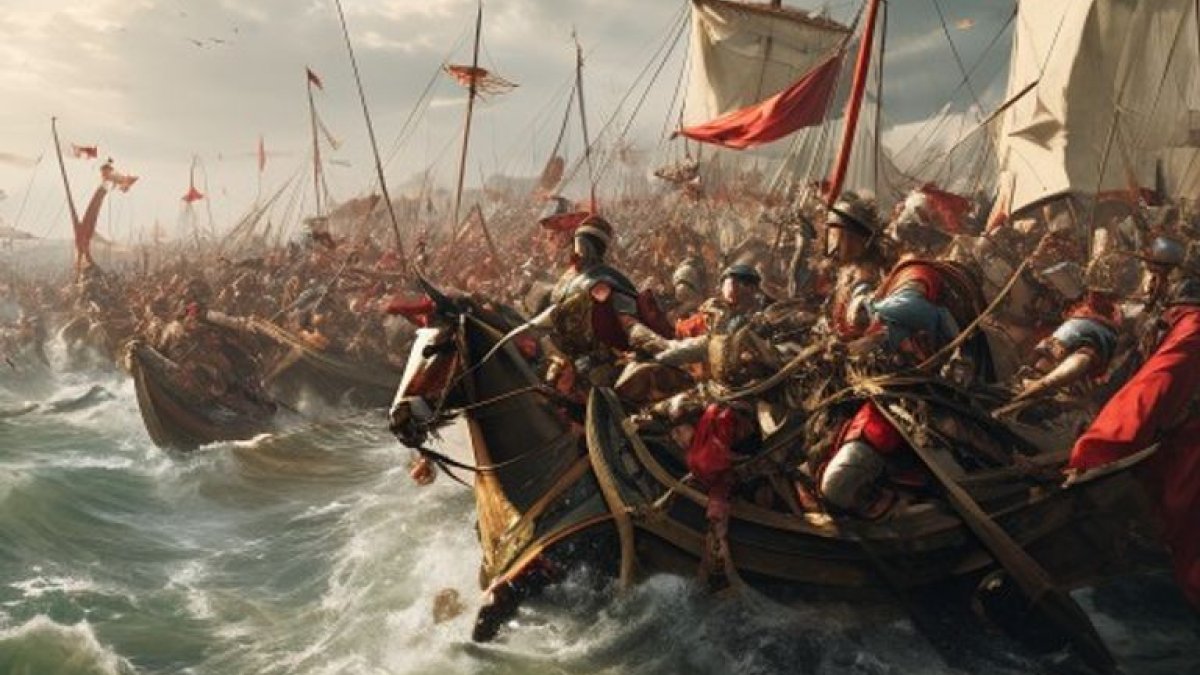
The Mediterranean Sea in the late 16th century was a cauldron of geopolitical tension, with the burgeoning Ottoman Empire posing an existential threat to Christian Europe. For decades, Ottoman naval power had swept across the eastern and central Mediterranean, culminating in the conquest of Cyprus in 1571. In response to this aggressive expansion, Pope Pius V, with immense diplomatic skill and unwavering determination, forged a formidable alliance known as the Holy League. This coalition, comprising the Papal States, Spain, Venice, Genoa, and other minor Italian states, aimed to confront the seemingly unstoppable Ottoman fleet head-on. The decisive encounter came on October 7, 1571, in the Gulf of Patras, off the western coast of Greece, where the Christian forces engaged in the monumental **Battle of Lepanto 1571**. This epic naval engagement was not merely a clash of ships and men; it was a desperate struggle for the soul of Europe, with Rome at its spiritual and strategic heart, championing the defense of Christendom against a formidable adversary. The scale of the battle and its immediate impact reverberated across the continent, shaping subsequent interactions between East and West.
The Gathering Storm in the Mediterranean
By the mid-16th century, the Ottoman Empire had solidified its control over vast swathes of the eastern Mediterranean, and its naval prowess was unparalleled. The Ottomans, under Sultan Selim II, viewed the Mediterranean as a natural extension of their dominion, continuously pressing westward. Their conquest of Cyprus in August 1571, a Venetian possession, served as the immediate catalyst for a unified Christian response. The fall of Famagusta, the last Venetian stronghold on Cyprus, after a brutal eleven-month siege, shocked Christian Europe and underscored the urgent need for a strong military counter-action against Ottoman aggression.
Ottoman Expansion and the Cypriot Crisis
- Strategic Importance of Cyprus: The island’s location made it a critical strategic point for controlling trade routes and projecting power in the Eastern Mediterranean.
- Venetian Control: For centuries, Venice had relied on Cyprus as a vital economic and military outpost, fueling its wealth and influence.
- Selim II’s Ambition: The Ottoman Sultan coveted Cyprus, using claims of piracy as a pretext for invasion, despite an existing peace treaty with Venice.
- Call for a Crusade: Pope Pius V, recognizing the gravity of the situation, tirelessly lobbied European powers to set aside their rivalries and form a defensive alliance.
The urgency of the situation was keenly felt in Rome, where Pope Pius V saw the Ottoman advance as a direct threat to Christendom. His pontificate was characterized by a fervent commitment to the Counter-Reformation and a staunch opposition to Ottoman expansion. He understood that a united naval force was the only viable option to halt the Ottoman tide and prevent further incursions into Christian territories. Diplomatic efforts intensified, pushing reluctant states to commit to a common cause, ultimately laying the groundwork for the monumental naval confrontation that was to follow.
Forging the Holy League
The formation of the Holy League was a testament to Pope Pius V’s diplomatic skill and moral authority. For months, he worked tirelessly to overcome the ingrained mistrust and political rivalries among the major Catholic powers, particularly between the Habsburg Spanish Empire and the Republic of Venice. Spain, under King Philip II, was wary of committing its powerful fleet to an eastern campaign, fearing distractions from its own interests in the Atlantic and against Protestant challenges. Venice, desperate to reclaim Cyprus and protect its trade routes, was eager for action but lacked the strength to face the Ottomans alone.
Key Architect of Unity: Pope Pius V
- Papal States’ Contribution: The Papal States contributed significant funds, ships, and troops, demonstrating the Pope’s commitment beyond mere rhetoric.
- Diplomatic Pressure: Pius V employed spiritual appeals, excommunications, and political maneuvering to bring the disparate powers together. He declared the enterprise a Holy War, granting indulgences to participants.
- Terms of the Alliance: The treaty establishing the Holy League was signed in Rome on May 25, 1571. It stipulated a shared command structure and an agreement on the distribution of spoils.
The eventual agreement saw Spain provide the largest contingent of galleys and its most experienced admiral, Don John of Austria, the half-brother of King Philip II. Venice contributed a substantial fleet, and the Papal States, though smaller, provided crucial leadership and motivation. Other Italian states, including Genoa (which also contributed many experienced sailors and ships), Savoy, and the Knights of Malta, also joined, pooling their resources for what would become one of history’s largest naval engagements. This unprecedented alliance was a direct result of Rome’s enduring influence, showcasing the Papacy’s capacity to mobilize a continent in defense of shared values, even centuries after the ancient Roman Empire’s collapse.
The Clash at Sea: October 7, 1571
On October 7, 1571, off the coast of Lepanto (modern Nafpaktos), the Holy League fleet, comprising over 200 galleys and 6 galleasses, encountered the Ottoman armada, which boasted an even larger number of galleys, estimated at around 250-300. The battle itself was a chaotic, brutal affair, fought at close quarters, often devolving into hand-to-hand combat as ships grappled. The Holy League’s strategic advantage lay in its superior artillery, particularly the innovative Venetian galleasses—heavily armed sailing warships that could devastatingly broadside enemy galleys before they even closed ranks.
Naval Tactics and Key Moments
- Deployment: Don John of Austria skillfully deployed his fleet in a crescent formation, with a strong center led by his flagship, the Real, and flanking wings commanded by Giovanni Andrea Doria and Agostino Barbarigo.
- Ottoman Strategy: Ali Pasha, the Ottoman commander, mirrored the crescent formation, attempting to outflank the Christian wings. His flagship, the Sultana, engaged directly with the Real.
- The Galleasses’ Impact: The six Venetian galleasses, positioned at the forefront, inflicted heavy damage on the advancing Ottoman lines, disrupting their formation and morale.
- Turning Point: The fierce struggle in the center, where Don John personally led the charge, saw the capture of the Sultana and the death of Ali Pasha, severely demoralizing the Ottoman forces.
- Heroic Stands: Numerous acts of bravery occurred, including the valiant fight on the Holy League’s left wing, which prevented an Ottoman encirclement despite heavy losses.
The battle raged for several hours. The superior firepower and disciplined tactics of the Holy League, combined with the inspired leadership of Don John, ultimately overwhelmed the Ottoman fleet. Thousands of men perished, and a vast number of Ottoman ships were captured or sunk. The victory was comprehensive, with Christian losses significantly lighter than those of the Ottomans. This victory, achieved through the concerted efforts instigated by Rome, resonated across Europe as a miracle, a divine intervention, and a dramatic turning point in the struggle for control of the Mediterranean, firmly establishing the Papacy’s crucial role in safeguarding European Christendom.
Aftermath and Enduring Legacy
The immediate aftermath of the Battle of Lepanto 1571 was marked by widespread rejoicing throughout Christian Europe. Bells rang across Rome, and Pope Pius V, upon hearing the news, is said to have wept tears of joy, attributing the victory to divine intervention and the intercession of the Virgin Mary. He subsequently established the Feast of Our Lady of Victory (later renamed Our Lady of the Rosary) to commemorate the triumph. While the battle did not immediately lead to the collapse of the Ottoman Empire, it shattered the myth of its invincibility at sea and permanently altered the naval balance of power in the Mediterranean.
Impact and Historical Significance
- Psychological Victory: Lepanto inflicted a severe blow to Ottoman morale and prestige, while simultaneously boosting Christian confidence and unity.
- Naval Power Shift: Although the Ottomans rebuilt their fleet within a few years, they never fully regained their undisputed naval supremacy in the Western Mediterranean.
- Strategic Implications: The victory secured the southern flank of Italy and prevented further major Ottoman incursions into the western Mediterranean for decades, allowing Europe to focus on other internal and colonial developments.
- Roman Influence: The battle solidified the Papacy’s role as a leading political and spiritual force in Europe, capable of rallying diverse states against a common foe. It demonstrated the enduring moral and political authority emanating from Rome, even in an era of waning imperial power.
In the long term, Lepanto marked a strategic inflection point rather than a definitive end to conflict. The Ottoman Empire remained a formidable land power, and conflicts continued. However, the battle ensured that the Mediterranean would not become an Ottoman lake, preserving Christian Europe’s access and influence. The memory of the Holy League’s triumph, born from Roman initiative, continued to inspire European resistance against Ottoman expansion for generations, cementing its place as one of the most significant naval engagements in world history.
Frequently Asked Questions
What was the primary cause of the Battle of Lepanto?
The primary cause was the relentless expansion of the Ottoman Empire into the Mediterranean, culminating in their conquest of the Venetian-held island of Cyprus in 1571, which prompted Pope Pius V to form the Holy League to counter the Ottoman threat.
Who were the main leaders on each side during the Battle of Lepanto?
On the Holy League side, the supreme commander was Don John of Austria, the half-brother of King Philip II of Spain. The Ottoman fleet was commanded by Admiral Müezzinzade Ali Pasha.
What was the significance of Rome’s role in the Holy League?
Rome, through Pope Pius V, was the driving force behind the formation of the Holy League. The Pope’s diplomatic efforts, financial contributions from the Papal States, and his rallying of Catholic Europe were crucial in overcoming internal rivalries and uniting disparate powers against the Ottomans.
How did the Battle of Lepanto impact the balance of power in the Mediterranean?
The Battle of Lepanto significantly shifted the psychological and naval balance of power. It shattered the myth of Ottoman invincibility at sea, secured the strategic security of Italy, and curtailed major Ottoman naval incursions into the western Mediterranean for decades, though the Ottomans did rebuild their fleet.
What were the long-term consequences of the Battle of Lepanto for the Ottoman Empire?
While the Ottoman Empire managed to rebuild its fleet, Lepanto severely crippled its immediate naval capabilities and prevented further rapid expansion into the central and western Mediterranean. It forced a strategic reassessment and highlighted the limits of Ottoman sea power against a unified European force.
Related posts:
 Augustine’s Mission to England in 597 AD: Spreading Christianity to the Anglo-Saxons
 Heraclius’s Persian Campaign of 622 AD: Reclaiming the East for Byzantium
 The Parthian War of Lucius Verus (161–166 AD): Rome’s Eastern Triumph and Hidden Peril
 The Death of Lucius Verus: The Sole Reign of Marcus Aurelius (169 AD)