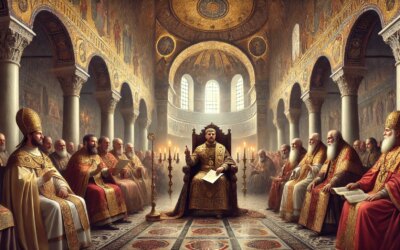
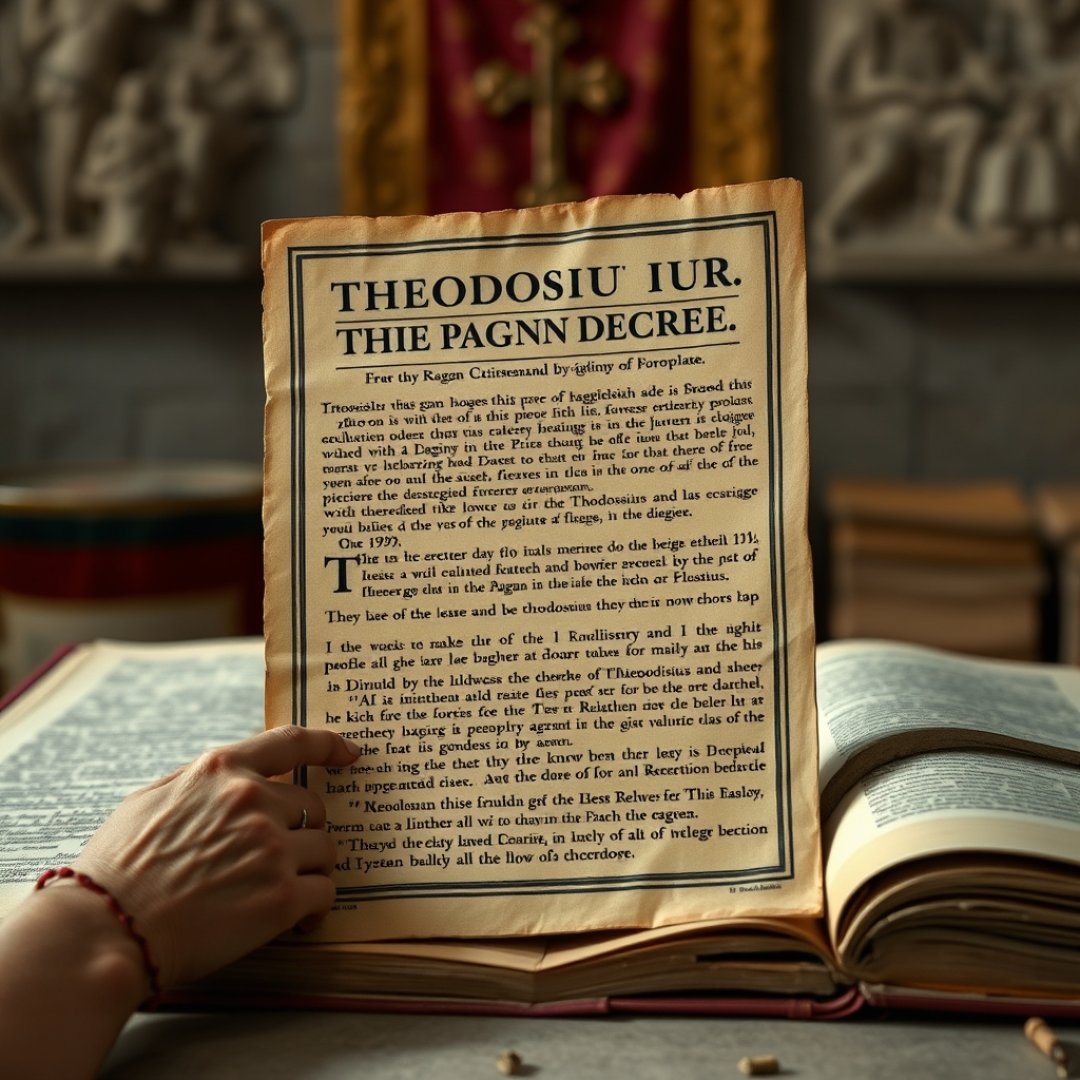
In 391 AD, the Roman Empire witnessed a monumental shift in its religious landscape with the promulgation of Theodosius’s Pagan Decree. Emperor Theodosius I, already a staunch proponent of Nicene Christianity, escalated his anti-pagan legislation, effectively making traditional Roman polytheism an illegal practice throughout the empire. This series of edicts marked a definitive turning point, moving Rome from a centuries-old tradition of tolerance, albeit selective, towards the enforced dominance of Christianity. The decree was not merely symbolic; it led to the closure of temples, the cessation of sacrifices, and a fundamental reordering of civic and religious life, signifying the official end of state-supported paganism and laying the groundwork for a Christian empire. It fundamentally altered the cultural fabric that had sustained Rome for over a millennium, ushering in an era where the ancient gods would largely recede into history.
Historical Context: The Ascendancy of Christianity
By the late 4th century, the religious dynamic within the Roman Empire was rapidly transforming. Christianity, once a persecuted minority faith, had gained significant traction and imperial favor, particularly after Constantine’s conversion and the Edict of Milan in 313 AD. Emperor Theodosius I, who ascended to power in 379 AD, was a devout Christian and took decisive steps to establish Nicene Christianity as the sole state religion. His predecessors, notably Constantius II, had already begun to restrict pagan practices, closing temples and forbidding sacrifices in certain areas. However, paganism, deeply interwoven with Roman identity, traditions, and the fabric of daily life, still held considerable sway among segments of the aristocracy and the populace, especially in the Western provinces and rural areas.
Earlier Imperial Decrees Against Paganism
- Edict of Thessalonica (380 AD): Theodosius, Gratian, and Valentinian II declared Nicene Christianity the official state religion of the Roman Empire.
- Gratian’s Measures: Emperor Gratian, particularly influenced by Ambrose of Milan, began actively dismantling pagan institutions, removing the Altar of Victory from the Senate House in Rome in 382 AD and confiscating temple revenues.
- Growing Christian Influence: Bishops and other Christian leaders wielded increasing political and social power, advocating for the complete eradication of polytheistic worship.
The Edict of 391 AD: Prohibitions and Penalties
Theodosius I issued a series of increasingly stringent decrees against paganism, culminating in the legislation of 391 AD, often referred to collectively as Theodosius’s Pagan Decree. The specific law, sometimes attributed to February 24, 391, and addressed to the Urban Prefect of Rome, Tatianus, was a sweeping prohibition that left little room for traditional polytheistic rituals. It built upon earlier legislation but was far more comprehensive in its scope and penalties.
Key Prohibitions of the Decree
- Public and Private Sacrifices: The decree explicitly forbade the consultation of entrails, the offering of sacrifices, and the worship of idols in any public or private setting. Violators faced severe penalties, including capital punishment for certain acts of divination.
- Temple Visits: Citizens were prohibited from visiting pagan temples, even simply for viewing, under threat of substantial fines. The decree effectively rendered temples obsolete as places of worship.
- Domestic Worship: Even humble household rituals, such as burning incense to the household gods (Lares and Penates) or decorating images with garlands, were now considered acts of sacrilege and carried penalties. This targeted the very foundation of private religious practice.
This legislation reflected a new level of intolerance, aiming to suppress all forms of pagan expression, from grand public festivals to intimate domestic devotions. It was enforced with varying degrees of intensity across the empire, often with the support of zealous Christian communities.
Profound Impact and Lingering Traditions
The immediate consequence of Theodosius’s Pagan Decree was a dramatic acceleration of the decline of formal paganism. Temples were closed, many were subsequently dismantled, repurposed for Christian use, or left to decay. Public funds that once supported pagan cults were reallocated. The decree provided legal backing for Christian officials and mobs to suppress pagan rituals, leading to events like the destruction of the Serapeum in Alexandria in 391 AD, a significant symbol of Hellenistic culture and pagan worship.
Long-Term Consequences and Cultural Shifts
- End of State Paganism: The decree effectively dismantled the centuries-old state-sponsored pagan religious framework that had been central to Roman identity and civic life.
- Rise of Christian Hegemony: It cemented Christianity’s position as the dominant and officially sanctioned religion, enabling its further expansion and institutionalization.
- Cultural Transformation: While public paganism was largely suppressed, elements of local traditions and festivals often persisted, sometimes blending with Christian practices or continuing in clandestine forms, especially in remote rural areas.
- Philosophical Resilience: Some pagan philosophical schools and intellectual traditions endured for decades, especially in centers like Athens, though their public influence waned considerably.
While paganism did not vanish overnight, Theodosius’s Pagan Decree decisively ended its official status and significantly marginalized its practice, propelling the Roman world firmly onto a Christian trajectory that would define the ensuing centuries.
Frequently Asked Questions
What was Theodosius’s Pagan Decree?
Theodosius’s Pagan Decree refers primarily to a series of stringent laws issued by Emperor Theodosius I in 391 AD, which outlawed all forms of public and private pagan worship throughout the Roman Empire. These edicts prohibited sacrifices, visiting temples, and even domestic rituals like burning incense to household gods.
Why was the Decree of 391 AD significant for Roman history?
This decree was profoundly significant because it represented the official and comprehensive suppression of state-sponsored paganism, which had been the cornerstone of Roman identity for over a millennium. It cemented Nicene Christianity as the sole legal religion of the empire, drastically reshaping the cultural, political, and religious landscape of the Roman world.
Did paganism disappear immediately after Theodosius’s Pagan Decree?
No, paganism did not disappear immediately. While the decree severely curtailed public pagan practices and led to the closure and destruction of many temples, traditional beliefs and rituals persisted, especially in rural areas and among some aristocratic families. It took many more decades, and even centuries in some regions, for paganism to fully recede from Roman society.
How did Theodosius’s Pagan Decree differ from previous anti-pagan measures?
While earlier emperors like Constantius II and Gratian had introduced measures restricting paganism, Theodosius’s Pagan Decree of 391 AD was far more absolute and comprehensive. It criminalized virtually all forms of pagan worship, both public and private, and imposed severe penalties, making it the most sweeping and definitive legislative act against paganism in Roman history.